Get AI Briefings, Transcripts & Alerts on Local & National Government Meetings — Forever.
Hearing sees split public testimony on resolution urging Texas trade office in Jerusalem
Loading...
Summary
A House concurrent resolution urging establishment of a Texas trade and investment office in Jerusalem drew both opposition and support during public testimony, with witnesses debating the economic rationale and human-rights concerns.
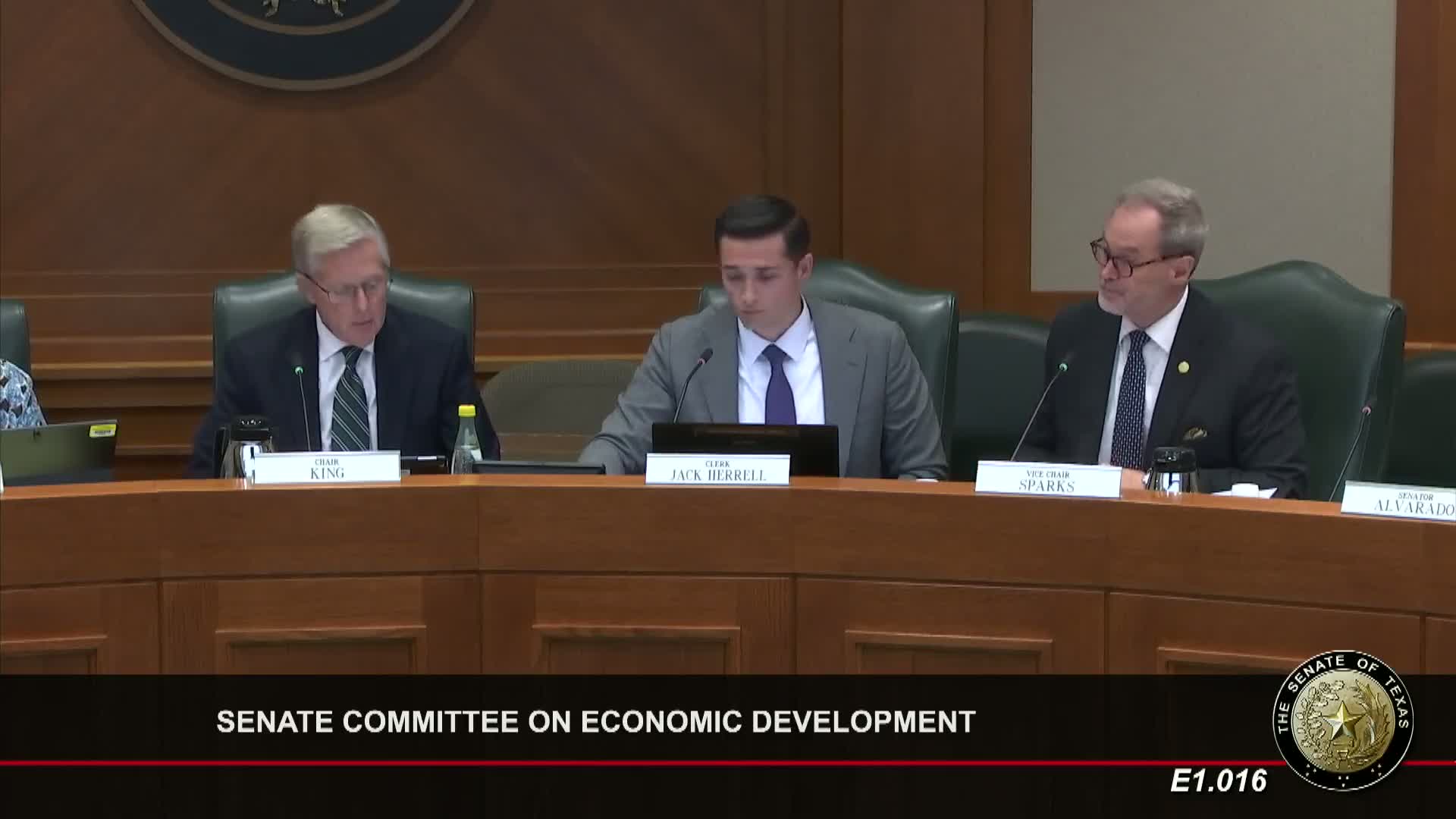
The committee considered House Concurrent Resolution 90, a companion resolution recognizing Texas' relationship with Israel and encouraging establishment of a Texas trade and investment office in Jerusalem.
Senator Bryan King, the Senate sponsor, described HCR 90 as the exact companion to a resolution the Senate already passed and said it "encourages the establishment of a Texas trade and investment office in Jerusalem." He framed the resolution as recognizing the "long history that we have, with Texas working with the nation of Israel."
Public testimony included both opposition and support. Hassib Abdullah, who registered as representing himself, opposed the resolution. He argued Israel is not a major Texas trading partner and raised human-rights concerns about actions in the region. "This country specifically does not share values. Not even close...by way of starvation, they're trying to either ethnically cleanse or religiously cleanse or potentially even murder almost 2 or 3,000,000 people," Abdullah said, and he urged senators not to support a trade office.
By contrast, Glenn Hamer, president and CEO of the Texas Association of Business, strongly supported HCR 90, saying Israel "does share the values of Texas and The United States" and highlighting Israel's innovation and opportunities for collaboration in AI, energy, water, cyber and defense. Hamer said a bipartisan Texas delegation had visited Israel and that Jerusalem is "the internal undivided capital of Israel," arguing it is the right place for a trade office.
The committee closed public testimony after hearing from the registered witnesses and left the resolution pending "subject to the call of the chair." No committee vote or formal action on the resolution was recorded in the transcript.
Because testimony included both policy and values claims, committee members did not adopt a position during the hearing; the resolution remains pending for future consideration.