Get Full Government Meeting Transcripts, Videos, & Alerts Forever!
Get email alerts on the Open Meetings Enforcement topic
No spam. Unsubscribe anytime.
Witness urges stronger enforcement mechanism for Open Meetings Act; committee hears House Bill 3711
Summary
House Bill 3711 would classify certain Open Meetings Act violations as offenses against public administration and allow the Public Integrity Unit to assist or take over investigations; a public commenter urged aligning enforcement with the Public Information Act so the Texas attorney general could take cases when local prosecutors decline.
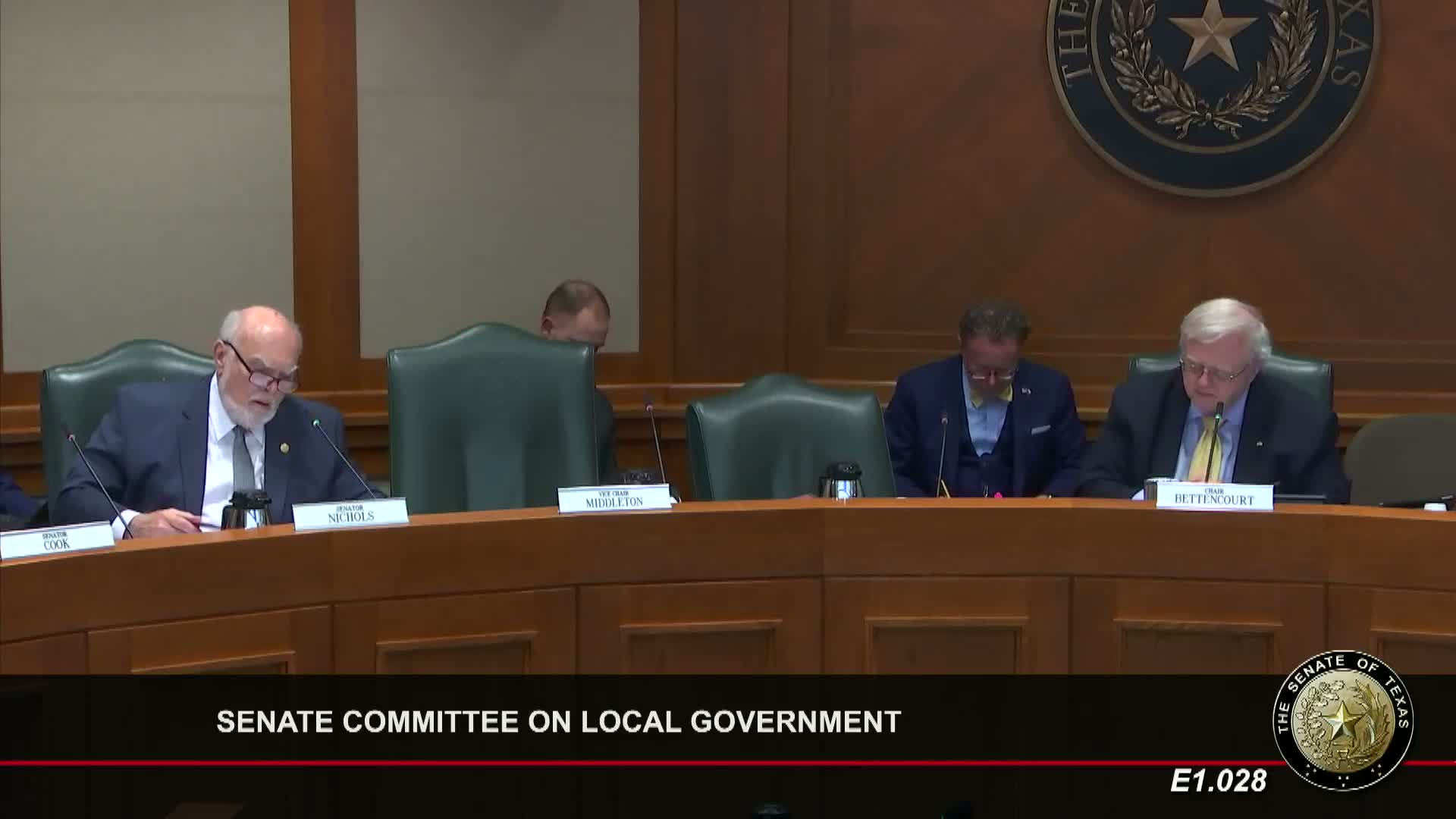
The Senate Committee on Local Government heard House Bill 3711, which would treat certain violations of the Texas Open Meetings Act as offenses against public administration and broaden enforcement options.
Sen. Nichols, explaining the bill, said it would add county, municipal and school board open‑meetings violations to the set of offenses classified as crimes against public administration so law enforcement and prosecutors have clear authority to investigate deliberate misconduct such as secret meetings or improper notice.
The bill does not raise penalties, Nichols said; it ‘‘simply ensures that existing laws are applied’’ and permits the Public Integrity Unit to assist or take over an investigation if a local prosecutor declines to act. It would require prosecutors who decline to file charges to publicly post their decision and reasoning.
During public testimony, Hassib Abdul, speaking for himself, said the bill is an improvement but urged the committee to align its enforcement mechanism with the Texas Public Information Act (Government Code §552). ‘‘If a person tries to take on a Texas Open Meetings Act violation, they have to take front their own cause for litigation,’’ Abdul said. He recommended giving the attorney general the authority to take such cases when local prosecutors decline, as the PIA process does under Gov. Code §552.
Committee members acknowledged the point and noted broader debates over local versus regional prosecution for governmental misconduct. The committee left the bill pending for further consideration.