Get Full Government Meeting Transcripts, Videos, & Alerts Forever!
Get email alerts on the Historic Preservation topic
No spam. Unsubscribe anytime.
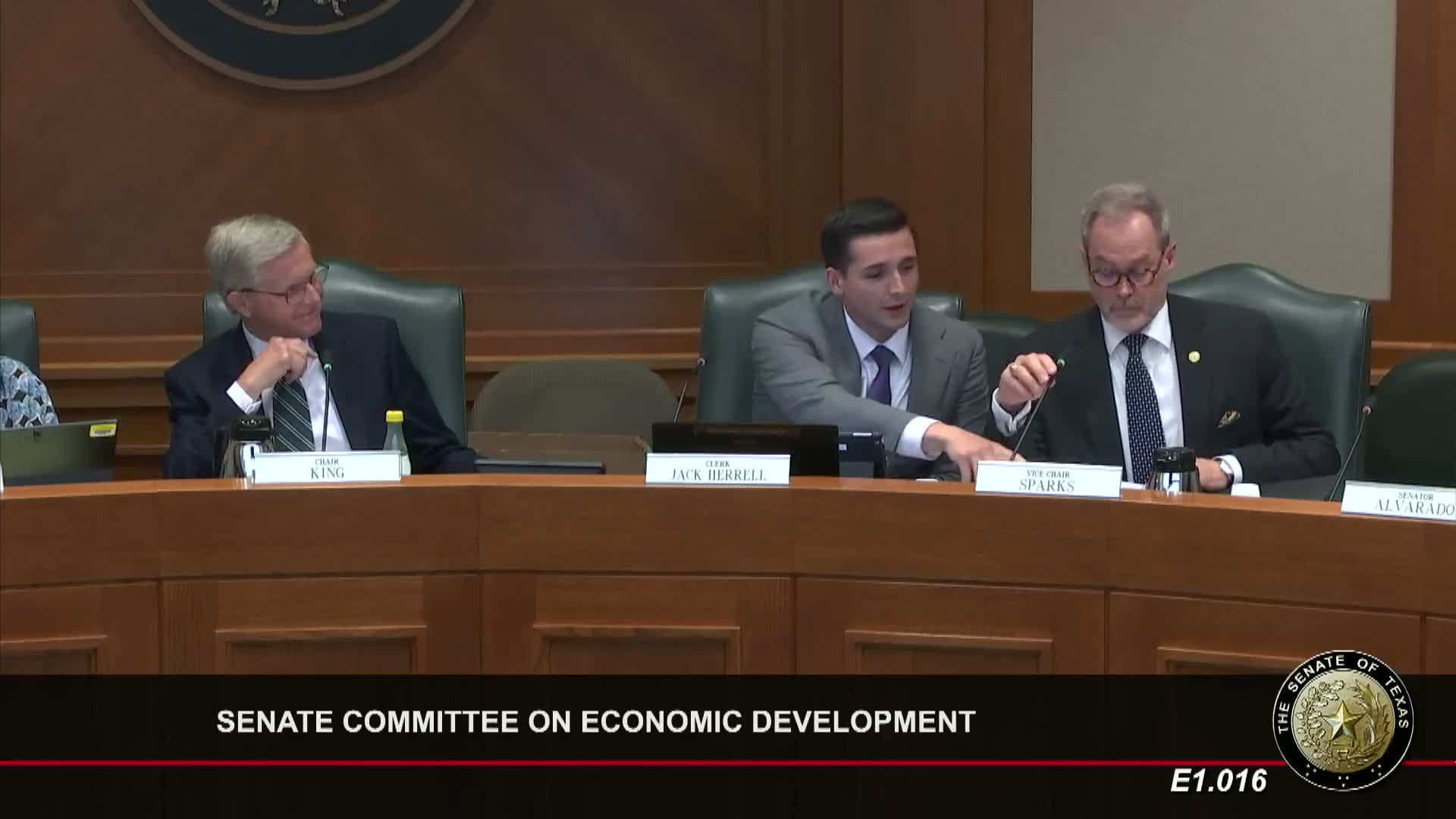
Senate committee reviews bill shifting responsibility for historic markers to Texas Historical Commission
Summary
A committee substitute for House Bill 41 87 would consolidate responsibility for historic markers and allow the Texas Historical Commission to use trust funds for site improvements, permit multiple affiliated nonprofits, and support retail operations; lawmakers and the commission described damaged markers and the need for a single steward.
House Bill 41 87, considered in committee as a committee substitute, would consolidate responsibility for a variety of state historic markers and authorize the Texas Historical Commission to use trust-fund dollars for improving historic sites.
The substitute, explained by Senator Lois Kolkhorst, adds a section allowing the commission to use funds from the Historic Infrastructure Sustainability Trust Fund to improve historic sites, permits the commission to have more than one affiliated nonprofit to support its operations, clarifies that the commission may spend appropriated funds to support retail operations at historic sites, and requires historians employed by the Historic Sites Division to develop an approved framework and training for staff and volunteers. "Section 3 was added, which incorporates language ... which will allow the historical commission to use funds from the historic infrastructure sustainability trust fund for improving historical sites," Kolkhorst said.
The measure grew into a longer discussion when senators asked about responsibility for older markers. Lon Aldridge of the Texas Historical Commission told the committee that the bill would create a clear steward for thousands of markers in need of repair. "That particular section of the bill is creating responsibility that THC would maintain and repair a lot of markers as many as 1,500 markers and smaller stand alone monuments across the state," Aldridge said, describing centennial markers placed in the 1930s and later additions.
Aldridge said the Attorney General's 2023 opinion found these markers to be state property even when they sit on private land, which contributed to uncertainty about who must maintain them. "The attorney general's opinion actually found that all of these creations were still property of the state of Texas, no matter whether they were on public land or private land," Aldridge said. He said most markers are in public right of way, but the commission would work with landowners when markers sit on private parcels.
Committee members asked whether the bill would transfer a responsibility not previously held by the state. Aldridge and others said it would, in response to prior gaps in stewardship noted by the Attorney General's office. The committee substitute also clarifies that trust-fund expenditures for improvements apply only to distributions made after the act's effective date.
No vote was taken. The substitute was left pending "subject to the call of the chair," the committee announced, and the committee indicated it may consider voting if a quorum is present at a later time.
The bill summary and committee substitute reference the Texas Historical Commission, the Historic Infrastructure Sustainability Trust Fund, and Centennial-era markers; the committee suggested the commission could duplicate and repair metal insignia that have been removed from some granite markers.