Get Full Government Meeting Transcripts, Videos, & Alerts Forever!
Get email alerts on the Municipal Governance topic
No spam. Unsubscribe anytime.
Committee advances bill allowing very small Texas cities to convert to Type C governance
Summary
House Bill 303 would remove a 501-resident floor so Type A and B general-law municipalities with populations under 501 can incorporate as Type C cities; the committee left the bill pending and later reported it favorably.
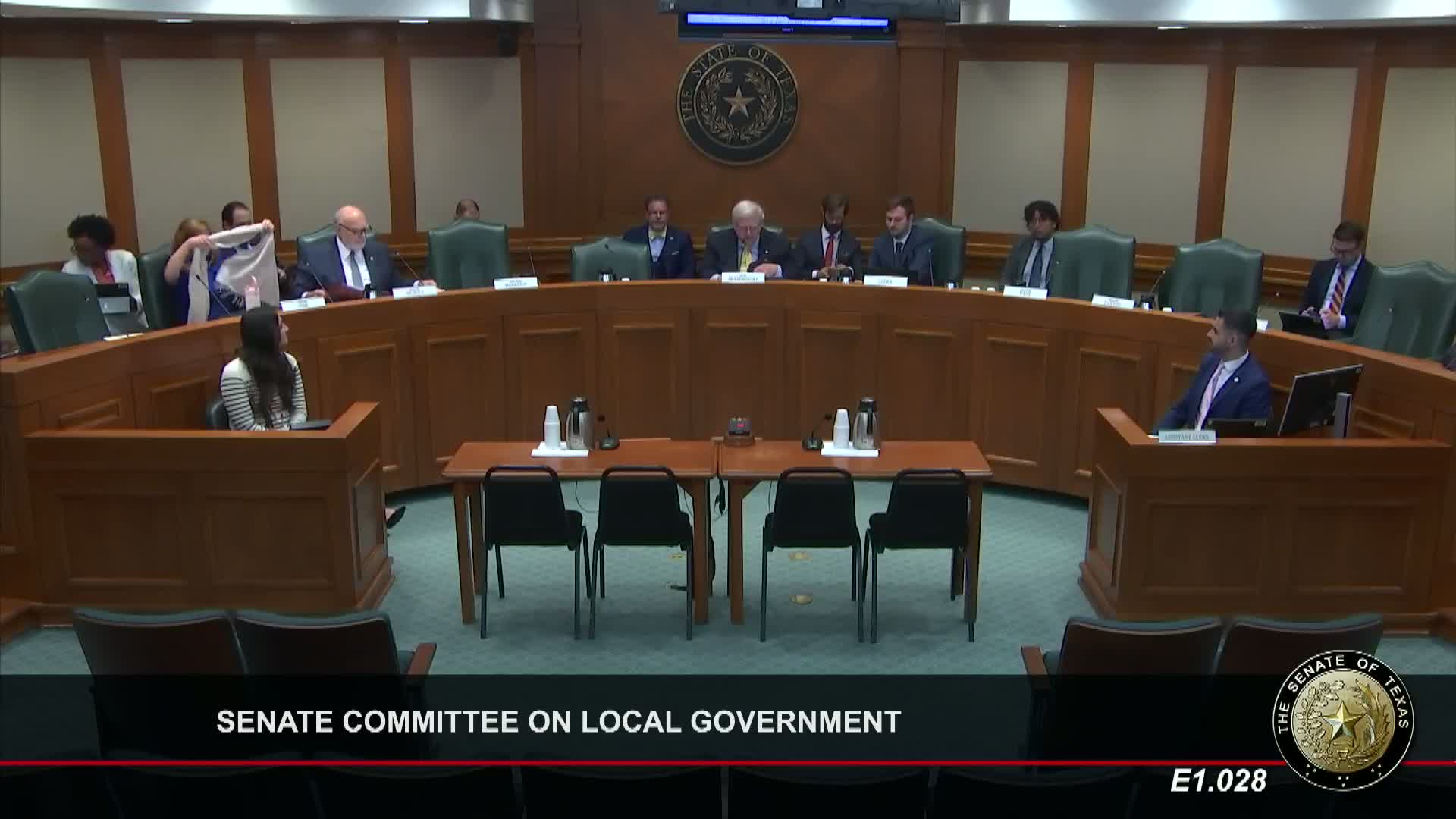
The Senate Committee on Local Government left pending House Bill 303, a bill that removes a population-floor requirement and would allow small Texas general-law municipalities to convert to Type C status.
Senate sponsor Sen. Hagan presented the bill and cited Quintana in Brazoria County as an example: ‘‘The village’s population has declined from close to 500 in 1890 to less than 30 residents today,’’ he said, adding that Quintana has difficulty meeting Type A governance obligations, which require a mayor and five aldermen.
Under current law, conversion from Type A or B to Type C is limited by population brackets that effectively prevent communities with fewer than 501 residents from becoming Type C cities. The bill would amend section 8.0288021 of the Local Government Code to remove the 501‑resident floor for Type A and B cities to incorporate as Type C municipalities.
Committee members opened public testimony and received no speakers; the chair left the bill pending. Later in the meeting the committee reported HB 303 to the full Senate and recommended it for the local and uncontested calendar with a recorded favorable vote.
Supporters said the change would let very small communities adjust government form to match current population and administrative capacity; no public opposition or legal impediments were raised in committee testimony.