Get AI Briefings, Transcripts & Alerts on Local & National Government Meetings — Forever.
Senate committee advances bill requiring occupational cancer screenings for firefighters
Loading...
Summary
The Senate Committee on Local Government left House Bill 198 pending after testimony from firefighters and sponsors who said annual screenings could detect cancer earlier and reduce long-term costs for departments and insurers.
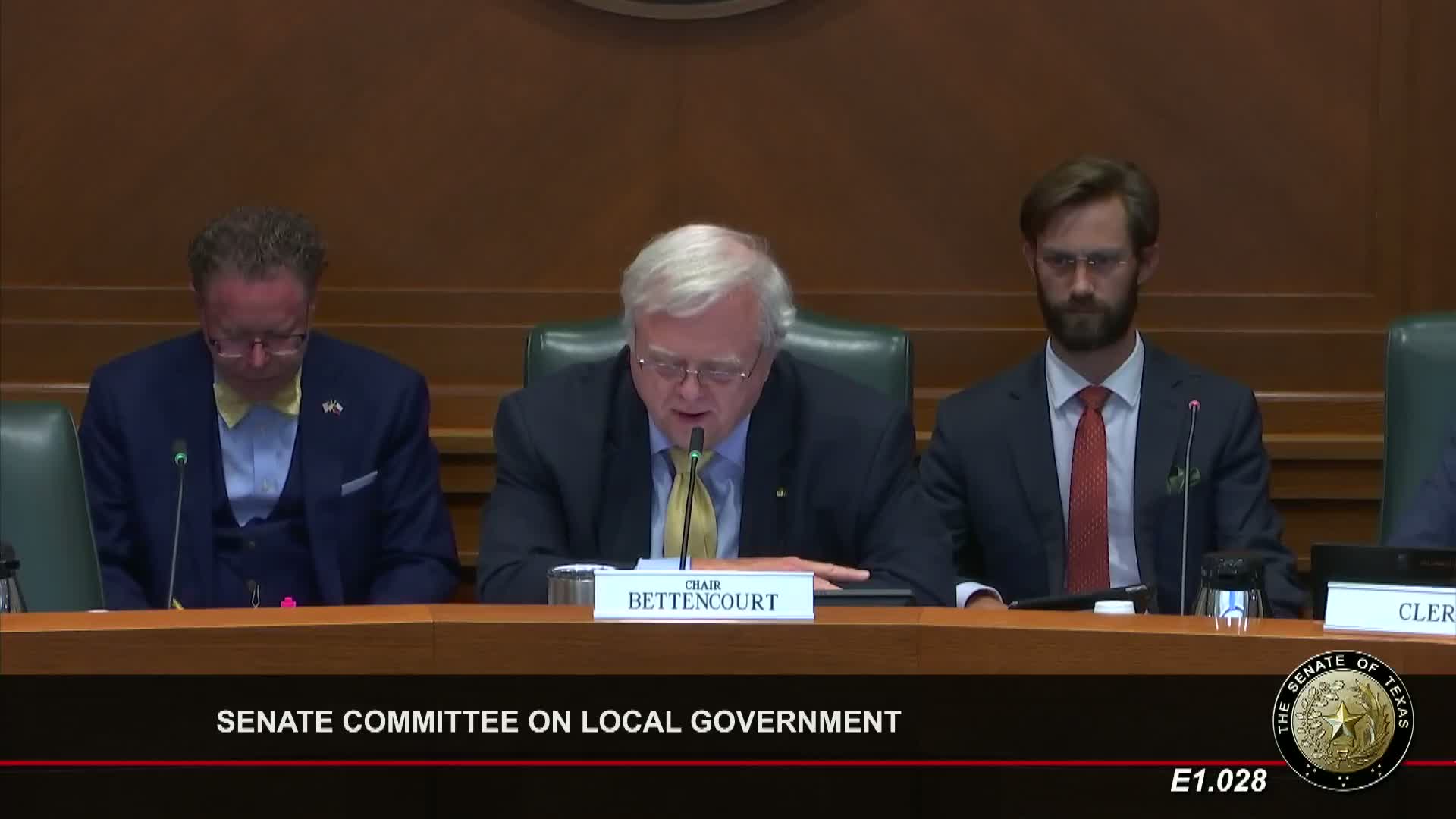
The Senate Committee on Local Government on Monday left pending House Bill 198, a measure that would require political subdivisions to offer occupational cancer screenings to firefighters.
Sponsor Sen. Drew Springer, speaking in place of the senate sponsor, said the bill responds to elevated cancer risk among firefighters and makes screenings confidential and annual after five years of employment. ‘‘Early detection is vital to fighting and treating many types of cancer,’’ Springer said.
The bill’s supporters told the committee the measure has a personal and fiscal rationale. Tim Mackling, representing Flower Mound Professional Firefighters Association Local 3649, said the legislation is connected to the death of firefighter Wade Cannon and urged the committee to act. ‘‘Early detection in stage 1 colorectal cancer has a 90 percent survival rate. As soon as it hits stage 4, it drops all the way down to 4 to 5 percent,’’ Mackling said.
John Riddle, president of the Texas State Association of Firefighters, said screenings also save employer and insurer costs. ‘‘When you consider an average of $500 [for a] cancer screening compared to the hundreds of thousands of dollars for advanced stage treatments and then possibly an additional half million dollars for a line of duty death benefit, it’s clear that they’re going to save a lot of money long term,’’ Riddle said.
The committee previously adopted a House floor amendment clarifying confidentiality, changing screening frequency to annual after five years of service, allowing existing comprehensive screening programs to continue, and delaying the bill’s effective date to June 1, 2026.
After testimony the committee left the bill pending; later in the session the committee reported HB 198 favorably by a 6-0 recorded vote and recommended it for the local and uncontested calendar.
If enacted, the bill would require political subdivisions — such as cities and volunteer or paid fire departments — to offer the screenings as described in the statute.
Supporters said the measure addresses both life‑saving medical benefits for firefighters and long‑term fiscal savings for employers and insurers.