Get Full Government Meeting Transcripts, Videos, & Alerts Forever!
Get email alerts on the Prosecution Ag Human Trafficking topic
No spam. Unsubscribe anytime.
Bill would let attorney general prosecute human‑trafficking cases if local prosecutors do not act in six months
Summary
House Bill 45 cleared committee; the bill requires local agencies to submit probable‑cause reports to the attorney general and allows the AG to step in to prosecute trafficking cases if the local prosecutor has not taken action within six months, with a judicial safety valve for local objection.
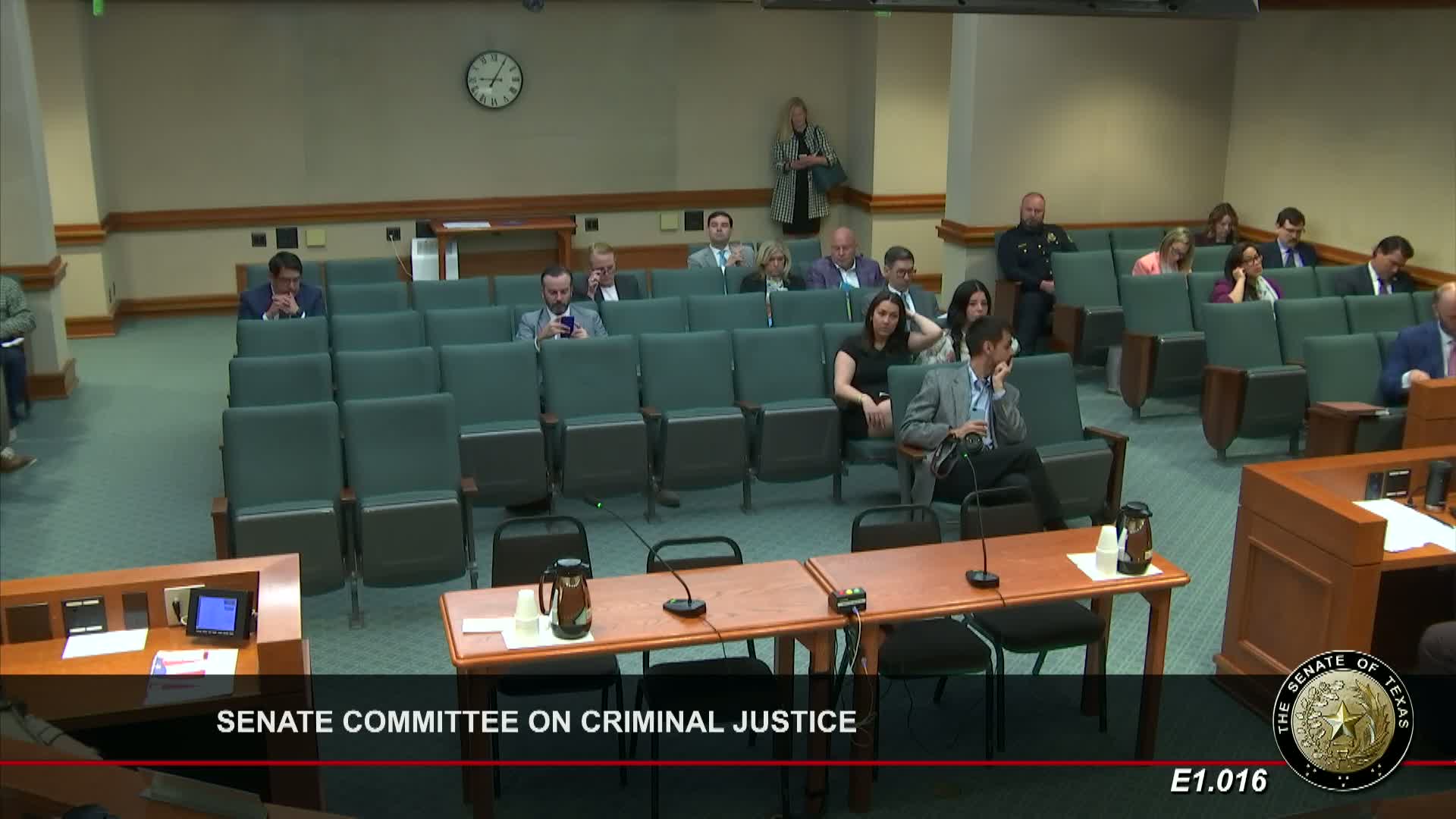
The Senate Committee on Criminal Justice voted to report House Bill 45 favorably to the full Senate after sponsors and members debated a mechanism that would allow the attorney general to take over human‑trafficking prosecutions when local prosecutors do not act within six months.
Senator Huffman, the bill sponsor, told the committee that trafficking cases can be unusually complex — spanning multiple jurisdictions, involving uncooperative victims and international evidence — and that the attorney general's Human Trafficking and Transnational Organized Crime Division has specialized capacity to pursue such prosecutions. Under the bill, local law enforcement would submit probable‑cause reports to the Office of the Attorney General (OAG) in addition to the local prosecutor; if a local prosecutor does not bring timely action within six months, the OAG may assume representation and prosecute, subject to a district‑court review if the local prosecutor objects.
Members replying to the sponsor raised concerns about local control and prosecutorial discretion. Senator Miles said large county district attorneys told him they need time to assemble complex cases, while other members said the measure is intended primarily to provide an alternative for backlogged or underresourced jurisdictions. The bill includes a judicial check: a prosecutor can seek a district court order showing the office is taking action and, if the court finds no action, the AG may step in.
Senators and witnesses framed the bill as a balance between respecting local prosecutors and ensuring trafficking cases receive attention and resources. The committee approved the bill 6–0 and advanced it to the full Senate.