Get Full Government Meeting Transcripts, Videos, & Alerts Forever!
Get email alerts on the Education Infrastructure topic
No spam. Unsubscribe anytime.
Committee hears school leaders and electricians on proposed five‑year delay for fluorescent lamp ban
Summary
House Bill 2,307 would exempt school districts from a statewide prohibition on certain fluorescent lamps until Jan. 2, 2030. Testimony centered on cost, technical constraints (ballasts), and the need to fold retrofits into capital projects rather than immediate operational budgets.
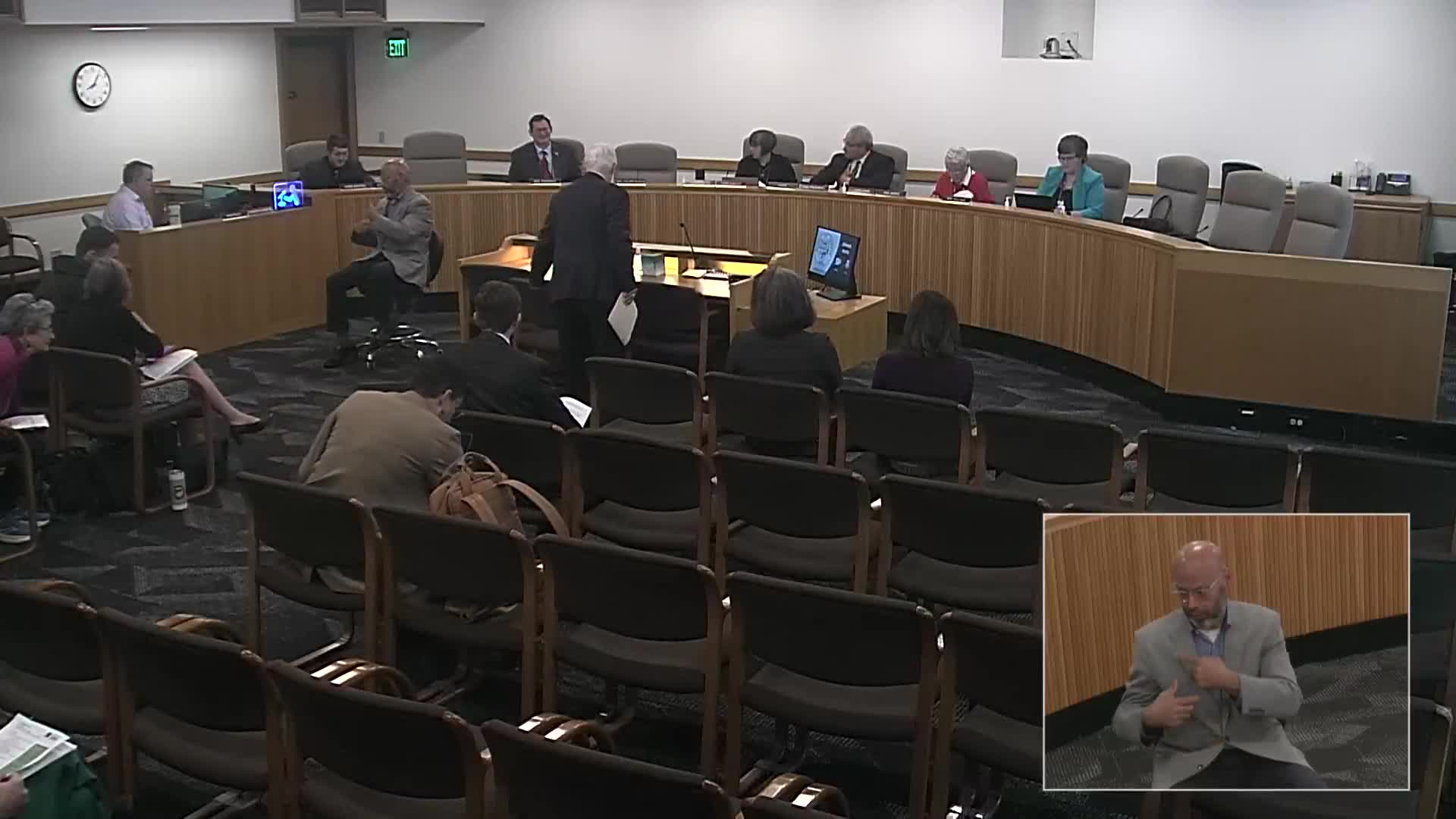
The Senate Committee on Education held testimony May 12 on House Bill 2,307, a proposal to exempt Oregon school districts from a prohibition on the sale or distribution of compact fluorescent and linear fluorescent lamps in Oregon until Jan. 2, 2030. The bill, described by a committee staffer at the hearing opening, also declares an emergency and would take effect on passage.
Representative Kevin Mannix, who sponsored the proposal, told the committee that the state’s move toward more energy‑efficient lighting can have substantial infrastructure consequences for schools because many buildings require fixture and ballast changes, not just bulb swaps. “This legislation … would extend the 01/01/2025 restriction on sales or distribution of fluorescent bulbs for school districts for 5 years, allowing the school districts the time to modernize their light fixtures,” Mannix said.
Superintendent Andre Castaneda of Salem‑Keizer Public Schools described the proposal as a way to “do it incrementally and to fold it into capital projects,” and warned that meeting the original timeline would force districts to draw funds from operating budgets. Castaneda said an immediate, system‑wide replacement under the existing restriction would cost Salem‑Keizer about $42,000,000, a figure the superintendent asked the committee to accept for planning purposes; he asked the legislature to allow districts to schedule retrofits alongside bond and capital work.
Lebanon Community School District Chief Operations Officer William Lewis said his district lacks capital project funds and estimated replacing about 5,600 lights would cost about $1,400,000 — roughly 2.7 percent of his district’s general fund — because many installations require electricians and ballast or fixture replacement rather than a simple bulb swap.
Marshall McGrady, a supervising electrician and 25‑year IBEW member, described the technical choices districts face: ‘‘plug‑and‑play’’ LED lamps that work with existing ballasts can be the least costly but yield mixed results and compatibility problems if ballasts are old; retrofits that replace drivers or entire fixtures yield better energy savings but require licensed electricians, more labor and up‑front cost, and are often most efficiently done during capital projects.
Supporters argued the delay would permit districts to plan, obtain bond financing or other capital funds, and install daylight sensors and occupancy controls that maximize energy savings; opponents were less prominent in the record. Morgan Allen, representing supporters, emphasized the bill is ‘‘not an exemption for schools. It is just an extended timeline’’ to allow proper system upgrades and avoid short‑term fixes that fail to deliver energy savings. The Oregon School Boards Association also supported the bill as a planning and budget relief measure.
Committee members asked for the documentation supporting the cost estimates discussed in testimony; Rep. Mannix and Superintendent Castaneda said they would provide details. No committee vote was taken on HB 2,307 during the May 12 session; the public hearing portion of the meeting was closed later that day and the committee moved on to several work sessions on other bills.
Testimony highlighted three implementation risks: (1) technical incompatibility of LED lamps with older ballasts, (2) labor and disposal logistics for mass ballast or fixture replacements, and (3) districts’ differing capital capacity — particularly districts that struggle to pass bonds or lack capital funds. Witnesses urged the committee to allow time for districts to fold installation into planned construction work so systems can include energy controls and produce the intended efficiency gains.