Get Full Government Meeting Transcripts, Videos, & Alerts Forever!
Get email alerts on the Education Technology topic
No spam. Unsubscribe anytime.
Senate Education Committee hears wide-ranging testimony on statewide cell‑phone ban in schools
Summary
The Senate Education Committee took public testimony May 12 on House Bill 2,251, which would require K–12 districts to adopt bell‑to‑bell prohibitions on student personal electronic device use, with supporters citing academic and mental‑health benefits and opponents urging local control and carve‑outs for caregiving and work duties.
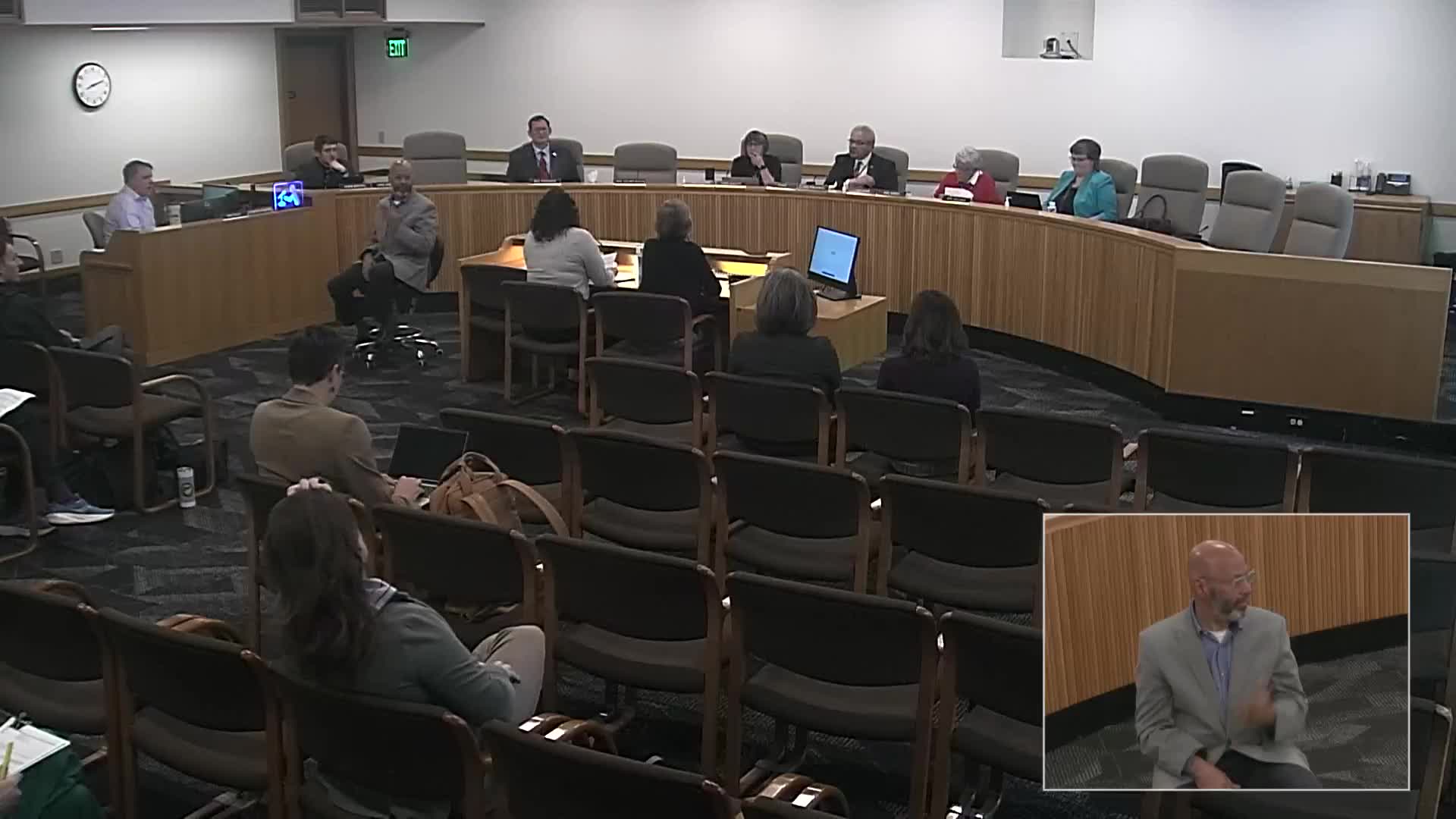
The Oregon Senate Committee on Education held a public hearing May 12 on House Bill 2,251, which would require school districts to adopt policies that prohibit routine student use of personal electronic devices during the regular school day, with limited exceptions for medical needs and individualized education plans.
Proponents said the policy would improve focus, decrease bullying and harassment, and support student mental health. State Representative April Dobson, who also serves on the North Clackamas School Board, told the committee her district instituted a bell‑to‑bell ban last school year and, “Compared to last year, classroom disruptions are down almost a third,” and that “98 percent of the teachers we surveyed said [the ban] has had a positive impact on their classrooms.”
Supporters included parents, pediatricians and mental‑health clinicians. State Senator Lisa Reynolds, a pediatrician, said she sees daily clinical evidence that phones undermine attention and wellbeing and told the committee that “this bill will truly move the needle on youth mental health.” Psychologist Doreen Dodgen McGee and teacher‑turned‑neuroscientist Jared Cooney Horvath said stronger, consistently enforced bans are necessary, arguing that soft or partial policies produce little compliance and that removing phones bell to bell allows habits to break and learning to recover.
Advocacy groups and local parents described research and district experience they say support the bill. Brandon Bufard of Fairplay, a children’s online‑safety nonprofit, cited studies that removing phones increases note‑taking and test performance and reduces cyberbullying. Parent and advocate Kristen Bridal described personal experience with cyberbullying in her family and urged passage of the strongest version of the bill.
State and local officials, and some parents and district representatives, urged caution about a one‑size‑fits‑all mandate. Nicole Peterson, legislative coordinator for the Oregon Department of Education, said ODE’s October 2024 guidance supports bell‑to‑bell restrictions but stops short of a statewide mandate and encourages local engagement; she told the committee the guidance and the bill “align well” on the policy approach but that ODE “does not have a position on the bill.”
The Oregon School Boards Association, represented by Adrienne Anderson, said many districts are already moving toward stricter policies but asked for more local flexibility and raised objections to the bill’s limited list of exceptions. Anderson noted the bill as drafted limits statutory exceptions to IEPs, Section 504 plans and medical conditions and said that districts need latitude to add other locally necessary exceptions (for example, students who are caregivers or who need phones for work). Several parents and district representatives asked for carve‑outs for students with caregiving or employment responsibilities and for additional resources to support enforcement and family communications if a statewide mandate is adopted.
Testimony included quantitative claims presented to the committee: Representative Dobson said classroom disruptions declined by 32 percent in North Clackamas after the ban; Senator Reynolds and others cited studies estimating an average of 1.5 hours of phone use during a school day and 250 daily notifications to youth. Expert witnesses cautioned that outcomes depend on compliance and enforcement, and Dr. Jared Cooney Horvath warned that “soft” policies with inconsistent enforcement show little benefit.
Committee Chair and members did not take a committee vote during the hearing. Committee staff kept the public hearing record open while other agenda items were taken up; proponents and opponents were told to review a pending A5 amendment and provide input. The committee closed the public hearing later in the meeting and indicated work‑session scheduling would follow.
Supporters asked the committee to advance the bill to create a consistent statewide standard; opponents and district associations asked the committee to add broader local‑control exceptions, remove Division 22 consequences from the bill, or adopt an amendment (A5) to make adoption optional for districts. The Oregon Department of Education said its guidance leaves room for local engagement and does not mandate a statewide rule.
The committee did not adopt policy language or vote on the bill on May 12; members said they would consider amendments and further testimony in subsequent work sessions.