Get Full Government Meeting Transcripts, Videos, & Alerts Forever!
Get email alerts on the Capital Construction Hearing topic
No spam. Unsubscribe anytime.
Capital construction subcommittee hears about roughly $2 billion in requests; about $500 million available
Summary
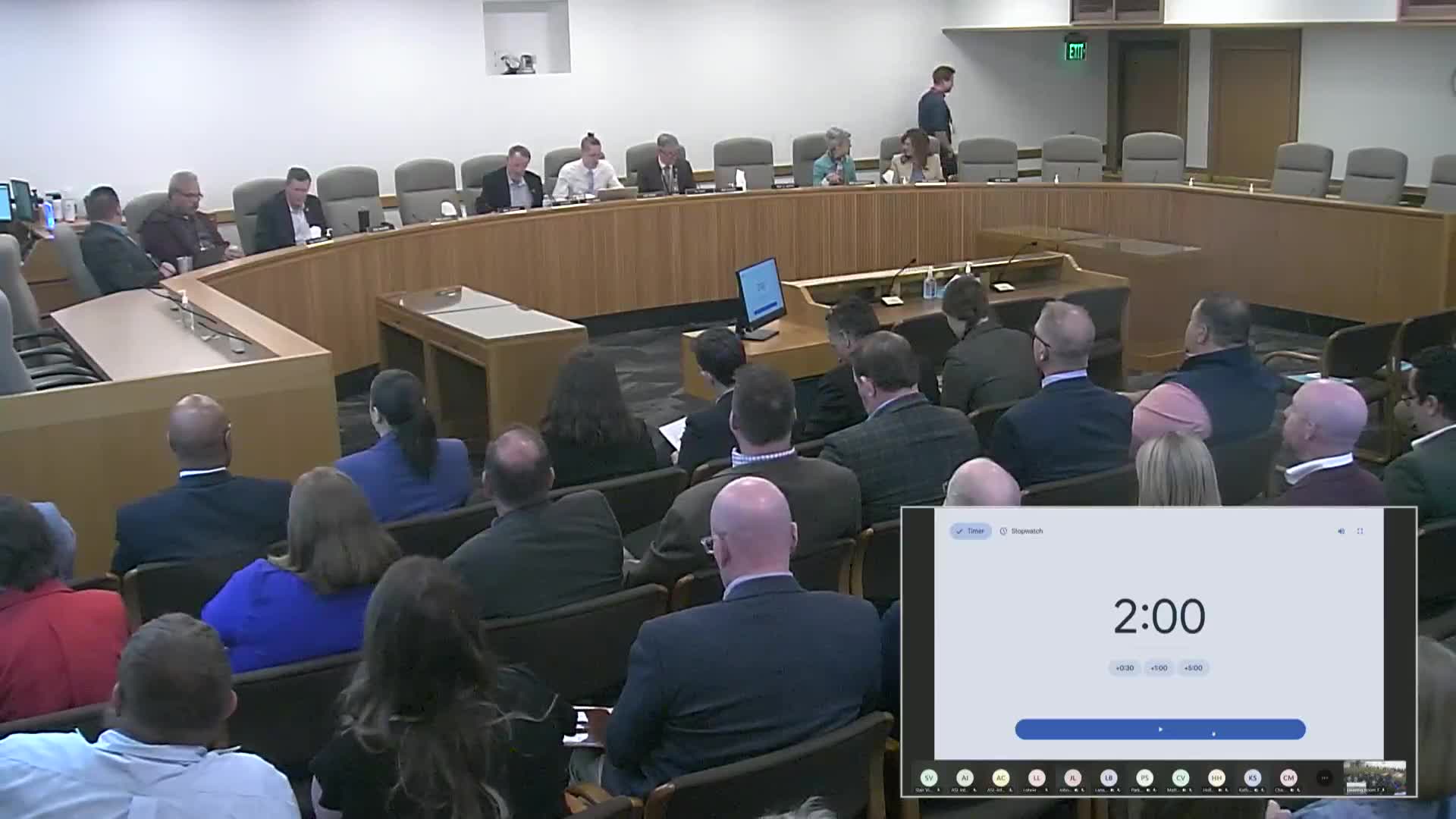
On May 9, 2025, the Senate capital construction subcommittee opened a public hearing on SB 5531. Committee leaders said roughly 257 people signed up to testify on a package of requests that together total about $2 billion; committee staff said roughly $500 million in lottery-backed bonds is available to allocate.
The Senate capital construction subcommittee opened a public hearing May 9 on Senate Bill 5531, receiving testimony from local leaders and nonprofit representatives seeking funding for hundreds of projects statewide. The committee’s presiding co-chair told the room that about 257 people had signed up and that the slate of funding requests totaled about $2,000,000,000 while roughly $500,000,000 in lottery-backed bond capacity was available to allocate.
The hearing was structured to allow broad participation: speakers were limited to two minutes “per project,” and the co-chair repeatedly reminded attendees the committee could not hear everyone in one day. Representative Knowles and other legislators took turns calling people to the dais; the subcommittee indicated remote testimony would be scheduled for subsequent sessions for those not heard.
Testimony ranged from large regional infrastructure projects and port dredging to small-city wastewater repairs, childcare centers, and community facilities. Examples included requests for a new hospital resiliency contribution, bridge replacement funding for the Hood River–White Salmon Bridge, dredging and container terminal support for the Port of Portland, and dozens of small and mid‑sized water and sewer projects in rural towns.
Speakers repeatedly emphasized that most proposals were “shovel ready,” that inflation and construction‑cost increases had widened funding gaps, and that many projects were tied to housing production, public‑safety resilience or regulatory compliance. Committee members and staff stressed tradeoffs: not every project could be funded and many requesters were likely to be disappointed.
The hearing closed after speakers from dozens of communities had presented; the co-chair said remote invited testimony would be scheduled the following week to accommodate those not heard in person.