Get Full Government Meeting Transcripts, Videos, & Alerts Forever!
Get email alerts on the Housing Land Use topic
No spam. Unsubscribe anytime.
Lawmakers hear debate over SB 974’s fast-track land-use rules and design waivers
Summary
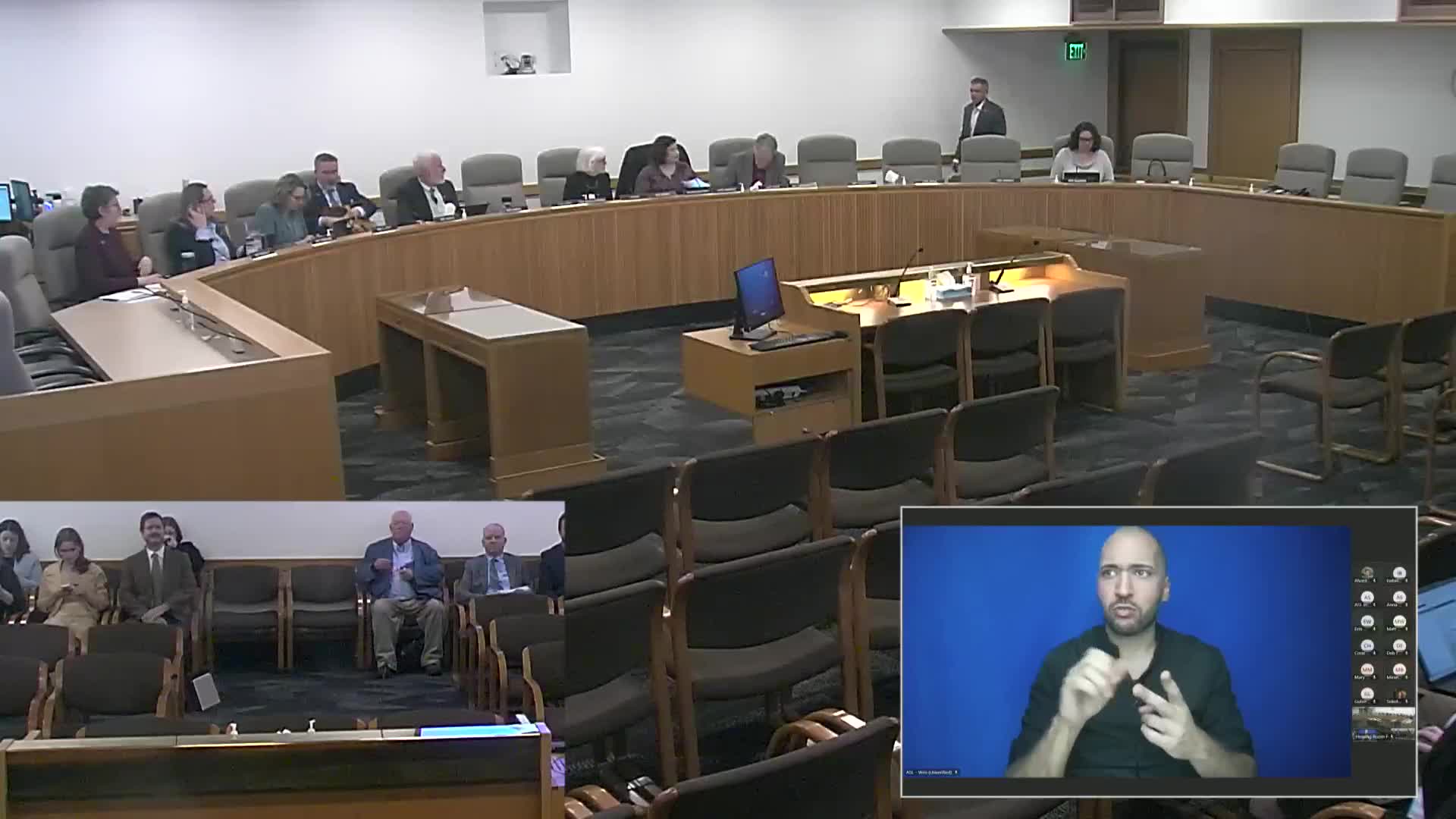
Salem — The House Committee on Housing and Homelessness opened a public hearing Monday on Senate Bill 974, a proposal to speed residential development by creating an expedited limited land‑use decision process, placing a 120‑day review clock on engineering approvals and allowing broader waivers of local design standards.
Salem — The House Committee on Housing and Homelessness opened a public hearing Monday on Senate Bill 974, a proposal to speed residential development by creating an expedited limited land‑use decision process, placing a 120‑day review clock on engineering approvals and allowing broader waivers of local design standards.
"We have one major item on the agenda and that is ... a public hearing on Senate Bill 974," Chair Marsh said as the committee convened. The bill’s sponsors and allied building‑industry groups urged changes aimed at reducing permitting time and cost; city and county officials, planning staff and some planners cautioned the legislation would be difficult to implement and could weaken local control.
Proponents, including Samantha Baer, policy representative for the Oregon Home Builders Association and the Oregon Property Owners Association, and Jody Hack of the Oregon Home Builders Association, said the bill would align engineering review with existing land‑use timetables and reduce subjective design requirements that, they said, add cost and delay. "Aesthetic design reviews do not make housing more affordable. They make it harder to build," Hack told the committee, citing a study she said showed prescriptive design standards increase costs.
Builders and developers who testified — including Deborah Flagan of Hayden Homes and Matt Wellner of Crandall Group — described multi‑year timelines from application to houses being finished and said predictable clocks would help projects avoid missing construction seasons. Patty Williamson, a Salem realtor and builder, said long approvals raise financing and labor costs that are passed to buyers.
Local governments and land‑use practitioners pushed back. Chris Crane, a land‑use attorney who represents cities, warned that applying limited land‑use decisions to rezones and comprehensive‑plan map amendments raises technical conflicts with existing law and could force staff to choose between applying comprehensive‑plan requirements or using the expedited process. "A process that doesn't allow us to apply our comprehensive plan wasn't gonna work," Crane said.
County and city officials argued the bill’s deadlines do not account for interagency reviews or limited local staff capacity. Clackamas County Commissioner Paul Savas said the proposal imposes administrative burdens and potential liabilities on counties that must coordinate reviews with other agencies such as water, sewer and fire districts. Washington County Assistant Director Erin Wardell and representatives from Eugene and other cities expressed similar concerns and requested more time to assess consequences and data on where delays actually originate.
A key implementation dispute is the treatment of engineering review: the sponsors have proposed mirroring the 120‑day timeline used in many land‑use entitlements, with stop‑the‑clock provisions and a 30‑day completeness check. Crane and several local officials pressed for retaining the existing judicial discretion over attorney‑fee awards instead of a one‑way fee provision that would require local governments to pay a developer’s fees when the developer prevails.
Another contested section would expand the waiver in last session’s SB 1537 — which made limited adjustments available for middle‑housing and multifamily projects — to allow outright waivers of aesthetic design standards for larger subdivisions and single‑family developments. Miranda Bachel, speaking for Hillsboro (transcript: Hillsendom), warned that waiving design and landscaping standards could undermine climate, stormwater and accessibility goals, and urged the committee to drop the design section or align its expiration with SB 1537 to avoid permanently favoring subdivisions.
Numerous witnesses asked for a longer implementation window. Crane and others noted the bill’s current 90‑day effective date would not allow jurisdictions time to draft and notice code amendments; Crane asked the committee to consider an effective date in mid‑2027, a roughly 24‑month delay. Witnesses also requested the proponents provide a crosswalk comparing SB 974’s design exemptions to SB 1537; Chair Marsh asked proponents to submit that analysis for the public record.
The committee did not take a vote. Members set a work session on the bill for the following Monday and an informational meeting for Wednesday (subject to the legislative floor schedule). Committee staff said they would accept the crosswalk and additional amendment language from stakeholders ahead of the next meeting.
The record of the hearing includes extensive technical discussion about how limited land‑use decision rules apply to rezone and map amendments, whether a separate statutory pathway should be created for those items, how to align the engineering clock with land‑use review and how to preserve avenues for public comment and appeal while reducing processing time. Several local government witnesses said they support speeding housing approvals in principle but need more time to craft implementable code changes.
The committee will take up SB 974 again next week; stakeholders on both sides signaled willingness to continue negotiations but remained far apart on the design‑waiver scope, implementation timeline and remedies for missed deadlines.