Get Full Government Meeting Transcripts, Videos, & Alerts Forever!
Get email alerts on the Firearms Regulation topic
No spam. Unsubscribe anytime.
Senate committee hears wide testimony on SB 243: bans on rapid‑fire devices and local control over guns at official meetings
Summary
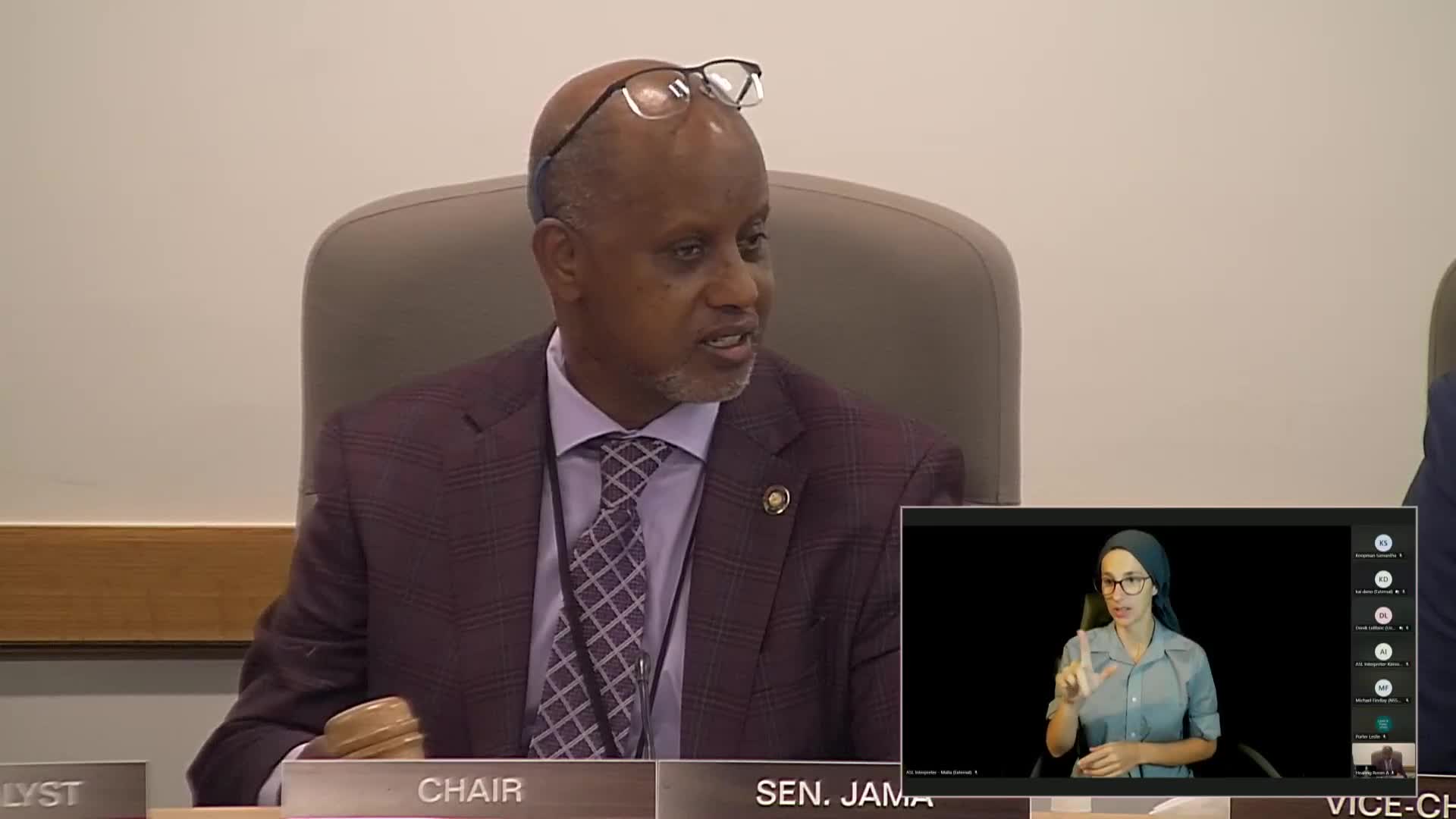
The Oregon Senate Rules Committee on May 12 heard several hours of testimony on Senate Bill 243, an omnibus firearms measure that would ban certain "rapid‑fire activators" and allow cities and counties to restrict firearms inside buildings used for official meetings.
SALEM, Ore. — The Oregon Senate Rules Committee on May 12 heard several hours of testimony on Senate Bill 243, an omnibus firearms measure that would ban certain "rapid‑fire activators" such as bump stocks and auto sears and give cities and counties the option to prohibit firearms inside buildings when they are used for official meetings.
The bill as amended (dash A7 and the proposed dash A9) would replace the bill's original name with the Community Safety Firearms Act; remove some previously proposed restrictions and clarify that local governing bodies may adopt policies saying the affirmative defense for concealed handgun license (CHL) holders does not apply inside buildings used for official meetings. The dash A9 amendment discussed at the hearing would also remove adjacent grounds of buildings from the public‑building definition for the measure.
Why it matters: proponents said the measure addresses the proliferation of cheap conversion devices that effectively turn semi‑automatic firearms into machine guns and would reduce injuries and deaths in high‑casualty incidents. Opponents said the language is vague, could criminalize law‑abiding owners and common aftermarket parts, and would burden CHL holders and other gun owners without preventing criminals from obtaining weapons.
Committee overview and amendments
A staff overview introduced the bill as an omnibus package that "establishes the Oregon Suicide Prevention and Community Safety Firearms Act" and includes restrictions on magazine capacity, new criminal offenses for violations, limits on possession in specified locations, and waiting requirements on purchases and transfers. Committee staff noted members had the dash A7 and A9 amendments before them. The dash A7 replaces the longer title with "Community Safety Firearms Act," removes adjacent grounds from areas that may be made off‑limits, and clarifies that a governing body may adopt policies making the CHL affirmative defense inapplicable during official meetings. The dash A9 contains the same changes as the A7 and further removes adjacent grounds from the public‑building definition.
Main provisions under discussion
- Rapid‑fire devices: The bill would make possession, sale and transfer of specified conversion devices unlawful. Witnesses and legislators discussed several device classes cited in the bill (bump stocks, binary triggers, auto‑sears, force‑reset triggers and "burst trigger systems") and pointed to a rise in recoveries of conversion devices in Oregon and nationwide.
- Local control for public meetings: The amendments would allow the governing body of a city, county or district to adopt a policy or ordinance declaring that CHL affirmative defenses do not apply to possession of firearms "within a building owned or controlled by the governing body if the building is used by the governing body for official meetings." The draft language and the definition of "official meeting" were discussed; legislative intent stated in the hearing equated "official meetings" with meetings subject to the state's open‑meetings law.
- Penalties and implementation: During committee Q&A a staff or legislator noted that transfer offenses carry a higher penalty than mere possession; committee discussion referenced transfer as a Class B felony and possession as a Class A misdemeanor. (Committee testimony included further questions about grandfathering, buybacks or an amnesty process for devices purchased legally prior to any effective date.)
Support and opposition in testimony
Supporters included advocacy groups and survivors who urged action to reduce the harm caused by conversion devices. Jess Marks, executive director of Alliance for a Safe Oregon, testified that "we lose 625 Oregonians to preventable gun tragedies" annually and cited data showing increases in firearm homicide and suicide rates in the state. Amy Wexler of the same organization told the committee the bill "bans bump stocks and Glock switches. This is not controversial," and cited the federal ATF regulation that had classified bump stocks as machine guns and the Supreme Court decision in Garland v. Cargill that returned authority to states and Congress.
Ethan Murray, a policy attorney at Giffords Law Center, described how auto‑sears and other conversion devices operate and told the committee that federal data show a sharp increase in recoveries of conversion devices in recent years.
Opponents argued the bill's definitions are vague or overbroad and would criminalize common accessories or adaptive gear, and they questioned the utility of restrictions for preventing violent crime. Derek LeBlanc of Eugene said "making it harder for law‑abiding citizens to carry a gun concealed is not gonna do anything to solve crime." Avian Klein, Oregon state director for the NRA, said, "It is my constitutional right to protect myself," and warned the bill would create more areas where lawful self‑defense is effectively denied.
Technical concerns and specific points raised
Multiple witnesses — including industry representatives and the National Shooting Sports Foundation — told the committee that certain definitions in the draft are broad enough to sweep in legitimate aftermarket triggers or gunsmithing work that alter trigger pull weight. One industry witness warned the language could unintentionally criminalize trigger jobs and other common modifications. Others raised civil‑liberties and equity questions about banning adaptive devices used by shooters with disabilities.
Several speakers asked about enforcement and costs to local governments. The League of Oregon Cities testified in favor of local control and said the league did not identify a fiscal impact on cities from the A‑version language; the league stressed that municipalities would decide individually whether to adopt restrictions and how to resource enforcement.
Process, penalties and next steps
Committee members questioned authors and supporters about the scope of the definitions, the penalties for possession versus transfer, the absence of explicit grandfathering or buyback language, and whether the measure would create unfunded obligations for local jurisdictions. Senate proponents said the A9 was crafted to reduce fiscal impacts and leave choices to local governments rather than impose mandatory duties.
No formal committee vote was recorded at the hearing. The committee heard public testimony from dozens of witnesses both for and against the bill and engaged in extended Q&A with bill authors. The bill remained under consideration at the close of the hearing.
Context and background
Witnesses repeatedly referenced the June 2024 Supreme Court ruling in Garland v. Cargill (which vacated certain ATF regulations) and federal ATF letters and classifications in explaining why some speakers said states must act now. The measure also interacts with prior and pending Oregon proposals on permitting and waiting periods: committee discussion noted that a 72‑hour waiting period had been removed from the amendments under consideration (the dash A9 before the committee did not include that waiting period) and that other state measures and court proceedings (including litigation over Ballot Measure 114 and related bills) remain relevant.
Ending
The committee heard a wide spectrum of testimony and technical critique and did not take a final vote during the May 12 hearing. Lawmakers and stakeholders signaled remaining work on definitions, penalties, and implementation details; supporters said they would work on clarifying language and procedural questions, while opponents urged the committee to address perceived vagueness, disability and enforcement issues before advancing the measure.