Get Full Government Meeting Transcripts, Videos, & Alerts Forever!
Get email alerts on the K12 Systemic Risks topic
No spam. Unsubscribe anytime.
Secretary of State auditors tell House panel recurring systemic risks could undercut K‑12 reforms
Summary
Auditors from the Oregon Secretary of State presented a 2022 advisory report identifying five systemic risks to K‑12 improvement, urged state leaders to monitor Oregon Department of Education activities, and noted the report is advisory; Secretary Reed requested ODE provide an update on April 25.
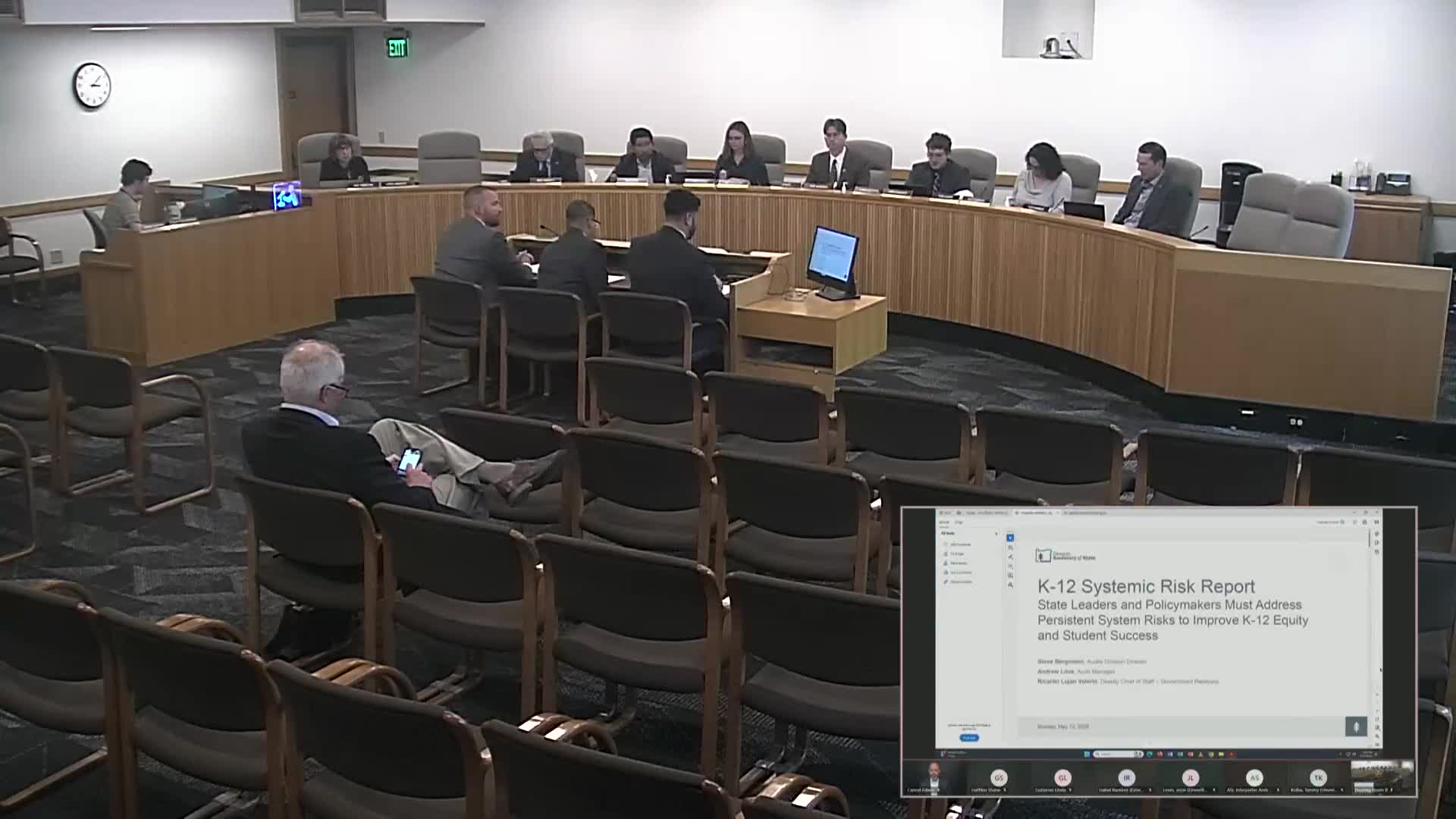
Auditors from the Oregon Secretary of State told the House Education Committee on May 12 that recurring systemic risks identified in prior audits could undermine K‑12 reform efforts and the implementation of the Student Success Act.
Steve Bergman, audits division director for the Secretary of State, joined audit manager Andrew Love and Deputy Chief of Staff for Government Relations Rico Lujan Valerio to present a 2022 advisory report that synthesizes findings from six audits and four follow‑up reports dating to 2016. The presentation identified five key risks, including gaps in monitoring and timely intervention by the Oregon Department of Education (ODE); limited transparency on results and challenges; insufficient analysis of school district spending; vagueness and enforceability concerns in Division 22 administrative rules; and governance instability caused by frequent program churn and staffing shortfalls.
The auditors said the Student Success Act — which the presentation described as adding $1,000,000,000 a year for early learning and K‑12 supports — increased the need for strong monitoring, reporting and staff capacity at ODE. The report’s suggested actions were addressed to state leaders broadly (the governor, State Board of Education and the legislature) rather than to ODE alone, Bergman said; the report is advisory and "did not result from new audit work." The auditors also said Secretary of State Shemia F. (Reed) sent a letter on April 25 requesting a detailed update from ODE on how it is addressing the risks identified in the report.
Committee members asked about who enforces recommendations. Andrew Love and Rico Lujan Valerio clarified that the audits division issues suggested actions but does not have authority to mandate agency changes; responsibility for implementing actions rests with the governor's office, agency leadership and the legislature through funding and statutory changes. Love said the audits division is developing a risk‑based methodology to guide future performance audit selections and expects it to inform the fiscal‑year 2026 audit plan.
The auditors recommended steps such as requiring and supporting improved ODE reporting on school improvement progress and challenges (including Title I and alternative programs), clarifying statutes to strengthen ODE responsibilities, adopting stronger standards for statewide and regional online charter schools, and providing ODE with funding and authority to collect student course and credit data. They also recommended that state leaders monitor ODE’s assurance and support efforts under Division 22 and provide resources if needed to build robust compliance and support functions.
During committee questions, representatives expressed frustration about past program reversals and pressures on ODE staffing. Auditors responded that the report aimed to elevate recurring, high‑level risks so state leaders would monitor implementation, allow time for meaningful results and avoid short‑lived reforms. The session included no formal committee action on the advisory report; the auditors said they will follow up with the committee after ODE responds to Secretary Reed’s April 25 request.