Get Full Government Meeting Transcripts, Videos, & Alerts Forever!
Get email alerts on the Criminal Appeals Felony Murder Sufficiency topic
No spam. Unsubscribe anytime.
Tennessee Court Hears Arguments on Sufficiency of Evidence in Ferris Felony‑Murder Conviction
Summary
At oral argument before the Tennessee Court of Criminal Appeals, defense counsel argued the record lacks evidence that Trameisha L. Ferris knew of or participated in a robbery that led to Edgar Utley’s death; the state pointed to text messages, witness testimony and surveillance video it says support the convictions. No decision was announced.
The Tennessee Court of Criminal Appeals heard oral argument in the appeal of Trameisha L. Ferris, who challenges the sufficiency of the evidence supporting her convictions for especially aggravated robbery and felony murder in the death of Edgar Utley.
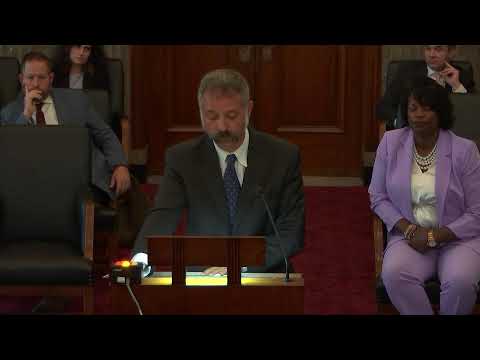
The argument focused on whether the record contains enough evidence for a rational jury to find that Ferris knew of or participated in a plan to rob Utley before he was shot. Defense counsel Ben Russell told the court the record is “devoid of evidence to prove that Miss Farris either participated in, was aware of, or criminally responsible for a robbery that then led to the death of Mr. Utley.” Prosecutor Darryl Ward said the state presented texts, witness testimony and Ring surveillance video that, taken in the light most favorable to the state, support the convictions and should be affirmed.
Why it matters: A reversal would vacate felony‑murder and aggravated‑robbery convictions and could affect how appellate courts apply the sufficiency standard in cases involving third‑party shootings that occur during alleged robberies.
Defense argument
Ben Russell, representing Ferris, told the three‑judge panel that the record lacks direct evidence tying Ferris to planning or knowing about a robbery. Russell summarized trial evidence as showing that Ferris was “merely a go between” between Wilton Alexander and Edgar Utley, and said other witnesses described Ferris as surprised and traumatized after the shooting. Russell noted there were text messages between Ferris and Utley that the state characterizes as arranging a meeting, but he argued those messages and the fact Ferris rode in a car with Alexander did not prove she intended to facilitate a robbery.
Russell emphasized testimonial accounts from two occupants of the car, identified in the trial as Miss Broyles and Antonio Anthony, who testified they did not hear Alexander and Ferris discuss any plan to take property. He also cited Alexander’s trial testimony that, in his account, Ferris had no knowledge of what would happen.
State’s argument
Darryl Ward, arguing for the state, told the court the evidence the jury heard supports an inference of Ferris’s knowledge and participation. Ward highlighted three categories of evidence: the text messages between Ferris and Utley the day before and the morning of the incident; testimony that Alexander directed Ferris’s actions when they arrived; and Ring camera footage of the moments immediately before and after the shot. Ward described the surveillance sequence to the panel, saying Ferris walked into the yard where she could see Alexander hiding in bushes, then intercepted Utley and walked him back toward the porch just before Alexander emerged from hiding and a shot was fired.
Ward summarized: the communications setting the meeting, contemporaneous directions by Alexander to Ferris, and Ferris’s conduct at the “critical moments” before the shooting, together satisfy the appellate standard when the evidence is viewed in the light most favorable to the state.
Points of contention highlighted by the court
The judges pressed both sides on typical sufficiency review principles — whether a rational juror could have inferred the elements beyond a bare possibility — and on specific facts from the video and testimony. Bench questions probed why Alexander was hiding, whether the parties arrived and left together, and whether the jury could accept or reject parts of Alexander’s testimony (including his claim that two firearms were involved). Defense counsel repeatedly argued that countervailing witness testimony — that Ferris appeared traumatized and did not discuss a robbery plan — undercuts any inference of her knowledge, while the state urged that the appellate standard requires discounting contrary evidence and affirming reasonable inferences drawn by the jury.
Record evidence summarized in argument
- Text messages: Counsel agreed the record contains messages the day before and the morning of the encounter that arranged a meeting and that established the victim’s location the morning of the incident; the parties dispute how strongly those messages support a planned robbery.
- Witness testimony: Occupants of the vehicle to the Utley residence testified they did not hear a plan discussed; Alexander’s testimony was mixed, with the state saying a jury could discredit the parts favorable to Alexander and accept the parts that support the state’s theory.
- Surveillance video: The state described video showing Alexander emerging from bushes and firing shortly after Ferris intercepted Utley on the lawn; the defense argued the video is not definitive about locations and sequence, and that notable gaps and witness accounts show Ferris was surprised.
No ruling announced
After argument and brief rebuttal from Russell, the panel thanked counsel and called the next case. The transcript contains no decision or indication of when the court will issue an opinion.