Get Full Government Meeting Transcripts, Videos, & Alerts Forever!
Get email alerts on the Judicial topic
No spam. Unsubscribe anytime.
Appeals court hears challenge to vandalism conviction tied to stolen jail keys and rekeying costs
Summary
Defense and prosecution argued before a three-judge panel over whether a vandalism conviction tied to a defendant’s removal of jail keys was supported by law and the evidence, and whether the prosecutor committed reversible misconduct in closing argument.
Defense and prosecution argued before a three-judge panel over whether a vandalism conviction tied to a defendant’s removal of jail keys was supported by law and the evidence, and whether the prosecutor—ommitted reversible misconduct in closing argument.
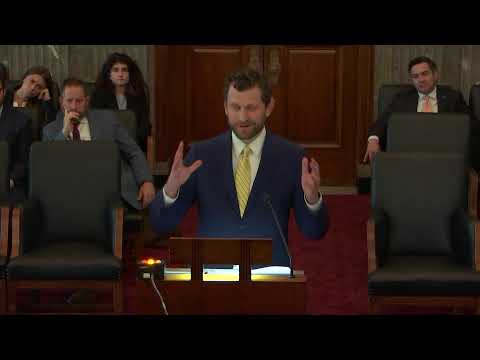
In the first hour of oral argument, defense counsel Evan Raven told the court the case against Mr. Friedman, the defendant, rested on a strained reading of the vandalism statute. "It is true that Mr. Friedman did commit some vandalism," Raven said, "and it is true that there was various financial harms that resulted from the totality of all of the actions that he did." He urged the court to treat the property at issue narrowly and to require proof of physical alteration or tampering under the statute.
Lacey Wilbur, arguing for the state, said she would "concentrate on sufficiency of the evidence," and pointed to testimony that the detention center—ould no longer be trusted without rekeying and that officials had incurred substantial costs to restore security. The state told the panel the rekeying alone cost $291,000 and that additional, larger costs were described at sentencing.
Why the appeal matters: the judges pressed competing statutory views. Defense counsel argued that "tampering" and "damage" in the vandalism statute require an alteration or physical change to property rather than the indirect effects of taking keys or the administrative response that followed. Raven emphasized the rule of lenity nd cited a Maryland high court restitution decision as the only close precedent he found addressing key-taking in a similar context.
The state countered that the indictment alleged vandalism of the downtown detention center as a whole and that video, physical holes drilled in walls, and the presence of tools and keys supported a jury finding that the defendant tampered with and damaged the facility nd caused pecuniary loss and substantial inconvenience to the owner. "We had to rekey it," the state told the court, and Chief Wilks and Sheriff Hall testified the rekeying was necessary to restore security for roughly 700 inmates and 300 staff, the state said.
Judges focused on two recurring issues: (1) whether the statutory definition of "damage" and "tampering" encompasses conduct that renders a security system functionally useless, and (2) the proper measure of pecuniary loss for punishment. One panel member asked, "Is it theft over $250,000?" while others queried whether a theft theory would be a better fit than vandalism given how the state calculated damages.
The panel also addressed ancillary legal claims raised in briefing. Defense counsel challenged a judicial subpoena used during the investigation and argued statutory prerequisites were not followed; the state noted a federal district court had ruled the subpoena valid for separate federal proceedings and that identity was not contested at trial.
Separately, defense counsel argued the prosecutor—xceeded permissible bounds in rebuttal by employing a rhetorical comparison that mentioned "molesting" the sheriff nd the sheriff s his "baby." Raven told the court that bringing a child-molestation analogy into a property-offense case was inflammatory and could have prejudiced the jury; the state said the comment was brief, isolated and not reversible error given the weight of the evidence.
No decision was announced at argument. The issues the panel heard include statutory interpretation of vandalism and tampering, the appropriate legal theory for value-based felonies, whether aspects of the state—ase could have been charged under different statutes, and whether the prosecutor—rror, if any, was harmless in light of the record.
What to watch next: the court will issue a written opinion addressing (1) whether the evidence presented at trial supported a jury finding of tampering or damaging property under the vandalism statute and (2) whether the closing remark at issue requires reversal or a new trial.