Get Full Government Meeting Transcripts, Videos, & Alerts Forever!
Get email alerts on the Disability Insurance Parity topic
No spam. Unsubscribe anytime.
Committee hears divided testimony on mental‑health parity for disability policies
Summary
Proponents asked the Joint Committee on Financial Services to bar time limits on behavioral‑health disability benefits where physical disabilities have no similar limits; industry representatives warned the requirement would raise premiums and reduce consumer choice.
Competing testimony on Senate Bill 780, which would require parity for behavioral‑health conditions in short‑ and long‑term disability policies, drew detailed exchanges before the Joint Committee on Financial Services.
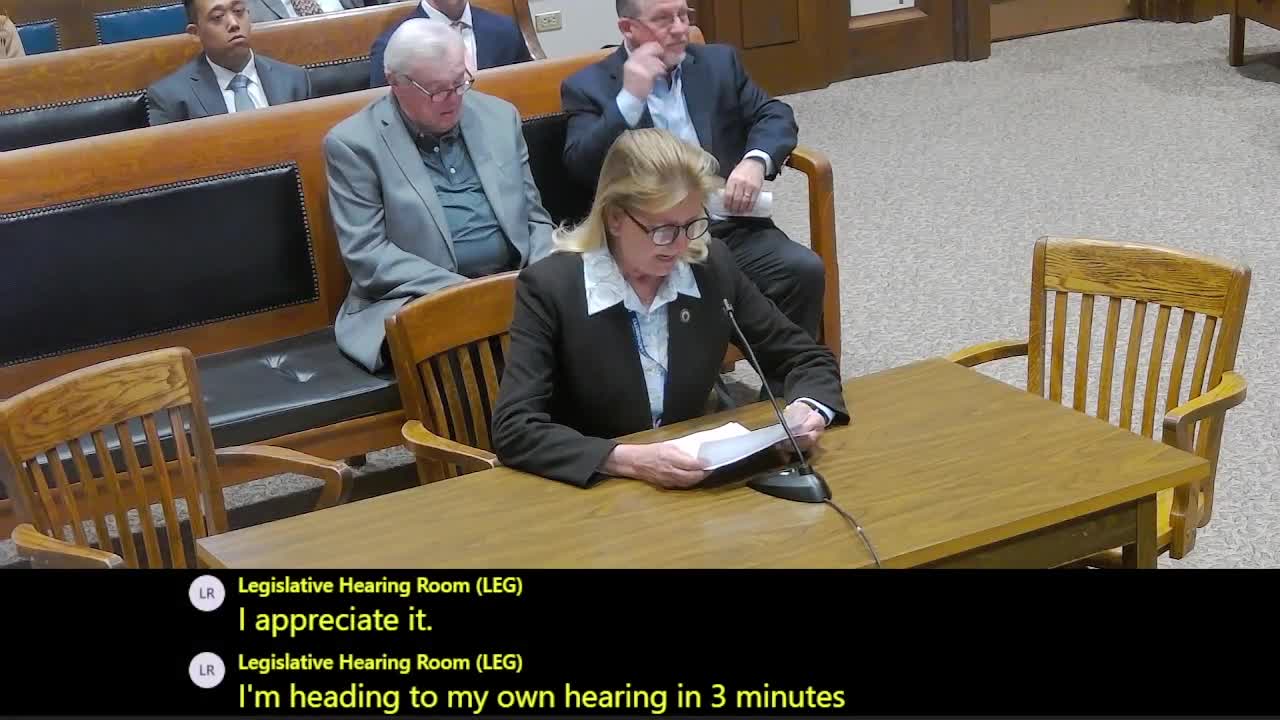
An unnamed testifier appearing early in the hearing described the proposal’s intent: to "prohibit insurance companies from imposing time limitations on short term and long term disability benefits paid out as a result of a behavioral health disorder where no similar time limitations exist on benefits paid as a result of a physical disorder." The witness said the bill is designed to prevent insurers from applying shorter benefit periods to behavioral health conditions than to physical conditions.
Opposition came from organized insurance advisors. Matthew Berard, a disability‑income specialist with the National Association of Insurance and Financial Advisors (NAIFA) Massachusetts, told the committee that mandatory parity would remove consumer choice and increase costs. "Mandating that an individual disability insurance policy cover mental and nervous limitations limits consumers' rights to choose the policy that best meets their needs," Berard said. He estimated that removing mental‑health limitations could increase premiums by roughly 12% to 20%, and argued that some consumers choose lower‑cost policies that limit mental‑health benefit periods.
Witnesses on both sides framed the issue as a tradeoff between access to longer behavioral‑health benefits and the cost of disability coverage. The committee did not vote on the bill during the session and no fiscal analysis was presented in testimony.