Get Full Government Meeting Transcripts, Videos, & Alerts Forever!
Get email alerts on the Student Data Privacy topic
No spam. Unsubscribe anytime.
Teachers and tech directors back stronger student‑data protections; some residents ask for tighter limits
Summary
The Joint Committee on Education heard competing views on proposals to regulate student and educator data practices. School technology directors praised clearer standards and vendor controls; some parents and privacy advocates asked for narrower scopes and explicit parental consent for sensitive data.
A section of the committee hearing focused on proposed legislation to set statewide standards for student and educator data privacy and vendor practices.
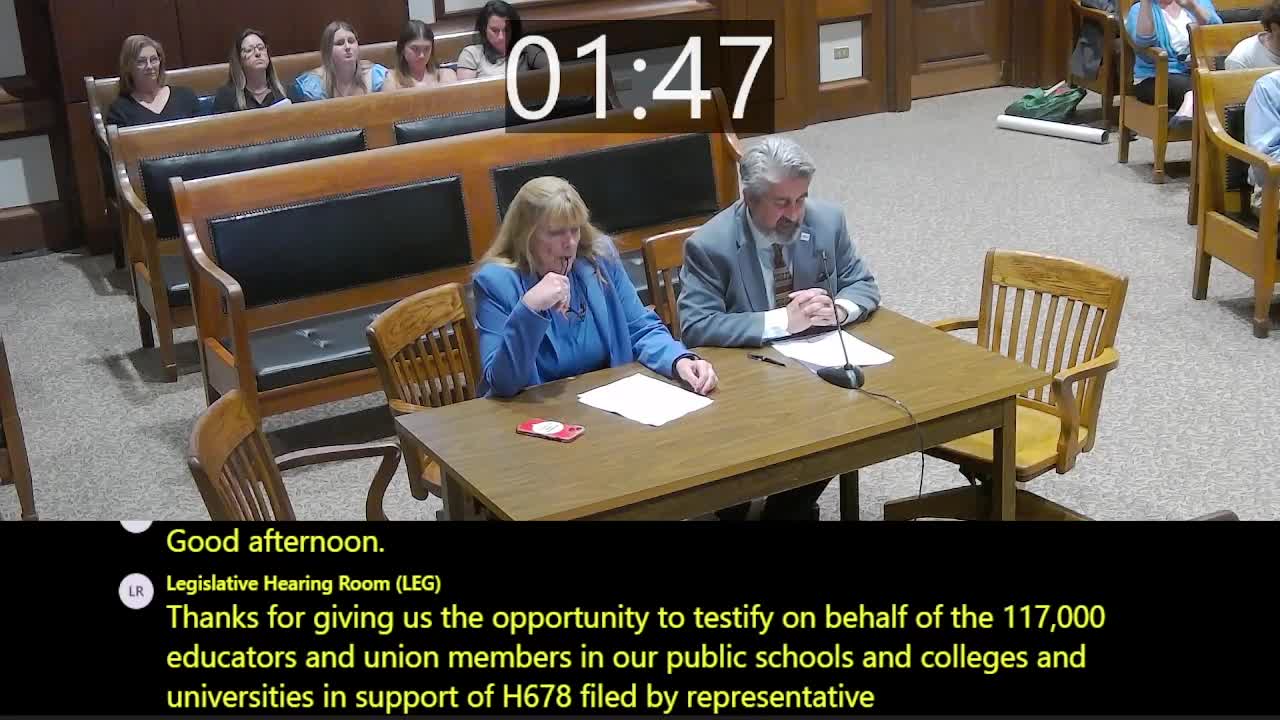
Supporters from school technology offices said Massachusetts needs a statutory framework so districts can negotiate consistent, enforceable protections with ed‑tech vendors. Jennifer Judkins, director of technology for Wayland Public Schools, told the committee that district technology teams are small and increasingly called on to secure enterprise systems. She said a state law would help with template vendor contracts and clearer expectations as artificial intelligence and third‑party tools proliferate.
At the same time, residents and a few commenters urged changes to the draft language. Jeffrey Miller, a resident who said he reviewed the bill text, asked lawmakers to narrow the range of permitted data collection and to require verified parental consent for particularly sensitive categories, including medical or behavioral records. “Parents should have the right to know what information is being collected about their children and how it is being used,” Miller said.
Why it matters: districts said consistent state standards reduce legal and operational risk, allow smaller IT teams to rely on common templates, and improve procurement. Privacy advocates warned broad definitions risk permitting uses that go beyond classroom purposes.
Discussion vs. action: the hearing featured discussion and testimony; sponsors asked the committee to consider amendments that would tighten definitions and add auditing or enforcement provisions. No vote was taken.
Background and next steps: witnesses recommended the committee and staff compare the draft with existing state models in other states and federal FERPA obligations, clarify the definition of “K‑12 educational purposes,” add breach‑notification and auditing processes, and consider parental notice or consent for sensitive data categories.
Ending note: the testimony showed agreement on the policy goal — protecting student and educator data — while indicating divergent views on the scope of data collection, consent and enforcement mechanisms. Committee staff will receive written comments and redline suggestions from several witnesses.