Get Full Government Meeting Transcripts, Videos, & Alerts Forever!
Get email alerts on the Constitutional Amendments topic
No spam. Unsubscribe anytime.
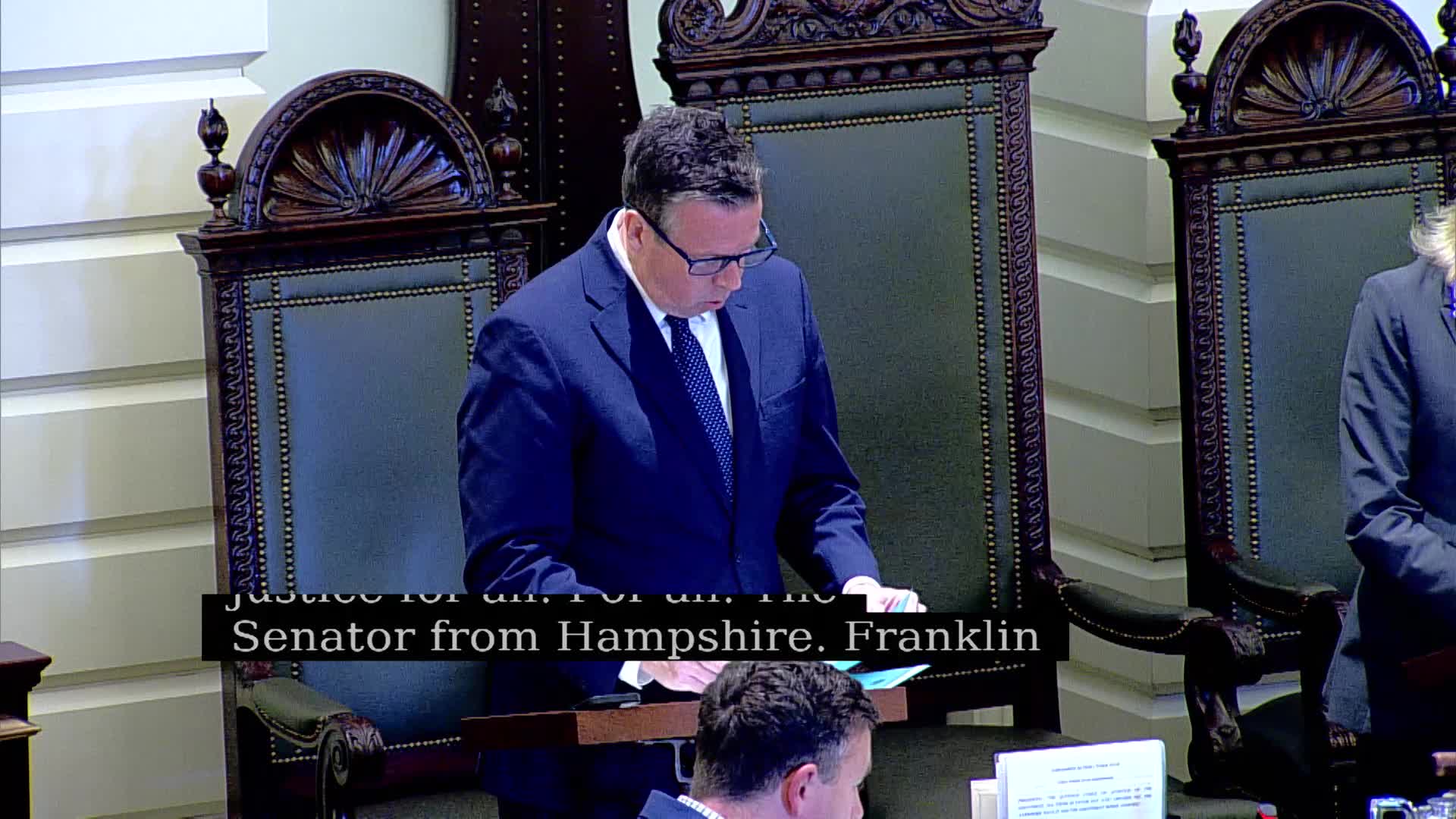
Senate adopts orders for joint sessions to consider three proposed constitutional amendments
Summary
The Senate adopted orders calling joint sessions of the two houses to consider three proposed constitutional amendments — on agricultural and horticultural land (Senate No. 11), on capping the state income tax (Senate No. 12), and on requiring a majority vote to use the rainy day fund (Senate No. 13) — and referred House petitions to committees after suspending Joint Rule 12.
The Senate adopted orders calling joint sessions of the two houses to consider three proposed amendments to the state constitution: Senate No. 11 on agricultural and horticultural land; Senate No. 12 to cap the state income tax; and Senate No. 13 to require a majority vote to use the state rainy day fund. The orders were presented by senators and adopted by voice vote without recorded objection.
The proposals were read into the record by the clerk under provisions cited from the amendments to the constitution. Miss Cammockford, the senator representing Hampshire, Franklin and Worcester, presented the order for Senate No. 11, which the clerk read as a “proposal for a legislative amendment to the constitution relevant to agriculture and horticultural land.” The committee on revenue reported on Senate No. 11 and recommended that the proposal “ought to pass.” The chair put the question on adoption of the order; the chair heard no objection and the order was adopted.
Senator Tarr, from Essex and Middlesex, presented the order for Senate No. 12, described in the record as a “proposal for a legislative amendment to the constitution to cap the state income tax.” The clerk read that the committee on revenue reported on Senate No. 12 “in accordance with Joint Rule 23” and recommended that the proposal “ought not to pass.” The order calling for a joint session on the proposal was likewise adopted following the clerk’s reading.
A third order, presented later and read under Article 48 of the amendments to the constitution, concerned Senate No. 13, a proposal to require a majority vote for use of the rainy day fund. The committee on revenue reported on Senate No. 13 in accordance with Joint Rule 23 and recommended that the proposal “ought not to pass.” That order was also adopted after the clerk read the proposal and the chair heard no objection.
Separately, the Senate voted to suspend Joint Rule 12 to refer several petitions from the House to their respective committees; the ayes prevailed and the rule was suspended, and the petitions were referred as announced on the floor. No roll-call vote counts or individual member votes were recorded in the transcript for these actions.
The session included brief procedural recesses and concluded with an adjournment to meet Thursday at 11:00 a.m. There was no floor debate on the substance of the three constitutional proposals recorded in the provided transcript blocks, and no quotes or amendments to the proposals were recorded in the transcript.