Get Full Government Meeting Transcripts, Videos, & Alerts Forever!
Get email alerts on the Medical Debt topic
No spam. Unsubscribe anytime.
Committee hears bill to standardize hospital financial-assistance policies to curb medical debt
Summary
Attorney General, advocates and patient groups urged the Joint Committee on Health Care Financing to pass H.1350/S.842 to create a uniform hospital financial-assistance floor, a single application and stronger notice rules so eligible patients can avoid or reduce medical debt.
BOSTON — The Joint Committee on Health Care Financing heard testimony supporting H.1350/S.842, a bill to standardize hospital financial-assistance policies across the Commonwealth, after the Attorney General's office and consumer advocates told lawmakers inconsistent hospital practices leave insured and uninsured patients facing surprise bills and collections.
Supporters said the measure would set a minimum eligibility floor and uniform application and notice requirements so patients can learn before care whether they are likely to qualify for charity discounts.
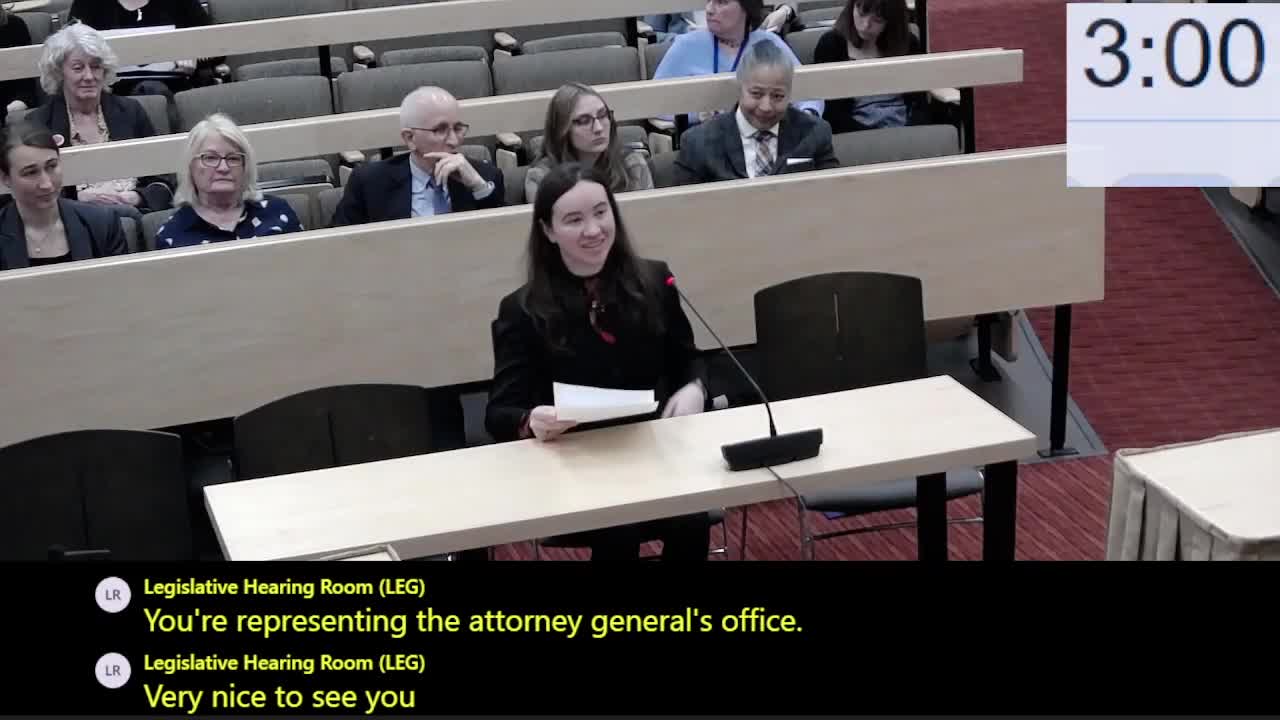
Attorney General Chloe Cable, assistant attorney general in the health care division, told the committee her office’s 2024 cost-trends work found that, despite near-universal coverage in Massachusetts, residents continue to incur burdensome medical bills. "Federal law requires nonprofit hospitals to have written financial-assistance policies, but the law lets hospitals set their own eligibility and discount standards," Cable said. She said the bill would standardize eligibility criteria, discounts and a uniform application so patients can make informed decisions before care and avoid unexpected bills.
Health-care advocates provided county-level and statewide examples of the current patchwork. Ashley Blackburn of Health Care for All said 1 in 8 Massachusetts residents — roughly 875,000 people — report medical debt, and that communities of color carry disproportionate burdens. She described wide variability among hospitals in the same neighborhood: different income limits for free or discounted care, applications from one to seven pages long and policies available only in English at many sites.
Legal and patient-advocacy groups described concrete harms. Jason Rees of Health Law Advocates said his group regularly represents insured patients who did not receive notice of available financial assistance and whose bills were sent to collections. A client, Tyler Varier, described receiving thousands of dollars in bills from UMass Memorial after foot surgery and follow-up care; with help from Health Law Advocates he learned the outstanding balance was closer to $5,000 and that he had not been told about the hospital’s assistance options. "I was never informed about UMass Memorial's financial assistance programs before speaking with Health Law Advocates," Varier testified.
Witnesses addressed common concerns from hospitals and insurers. Advocates acknowledged that some hospitals already provide more generous assistance than the bill would require; the measure is intended to bring minimum standards up, not to reduce existing generosity. Committee members asked repeatedly about fiscal impacts on hospitals, particularly safety-net and gateway-city systems. Witnesses said the Commonwealth’s Health Safety Net already reimburses hospitals for emergency and medically necessary care for patients under 300% of the federal poverty level; H.1350 would extend charity standards up to 400% of the FPL for certain nonemergency services and require a 25% discount for patients in the 351–400% band (as discussed on the record). Advocates said several other states, including New York and Washington, have set comparable floors without reported closures of hospitals.
Witnesses and lawmakers discussed implementation details. The Attorney General’s office and advocates said hospitals should be required to post clear, multilingual notices in accessible places and to provide a single, short uniform application. Supporters said uniformity would reduce administrative friction for patients, reduce collection activity, and help hospitals identify eligible patients earlier. Several lawmakers asked whether the proposal would shift costs among insurers, hospitals or the state; panelists said implementation would require discussion but stressed that the bill’s goal is clarity and equity for patients.
The committee did not take a vote on the legislation at the hearing; it closed the public testimony portion of the docket after several hours of testimony and moved to adjourn the hearing.