Get Full Government Meeting Transcripts, Videos, & Alerts Forever!
Get email alerts on the Assisted Living Waiver And Regulation topic
No spam. Unsubscribe anytime.
Providers urge frail‑elder waiver for assisted living and clarity on ALR classification to preserve affordable options
Summary
Assisted‑living operators told the Joint Committee on Aging and Independence that Massachusetts needs a MassHealth reimbursement pathway (frail‑elder waiver) for assisted living and statutory clarity that ALRs are regulated under chapter 19D, not treated like ordinary rental housing.
Representatives of assisted‑living providers, the Mass Assisted Living Association and several for‑profit and nonprofit operators told the committee that current Medicaid rules and reimbursement structures limit the Commonwealth’s ability to sustain and expand affordable assisted‑living options.
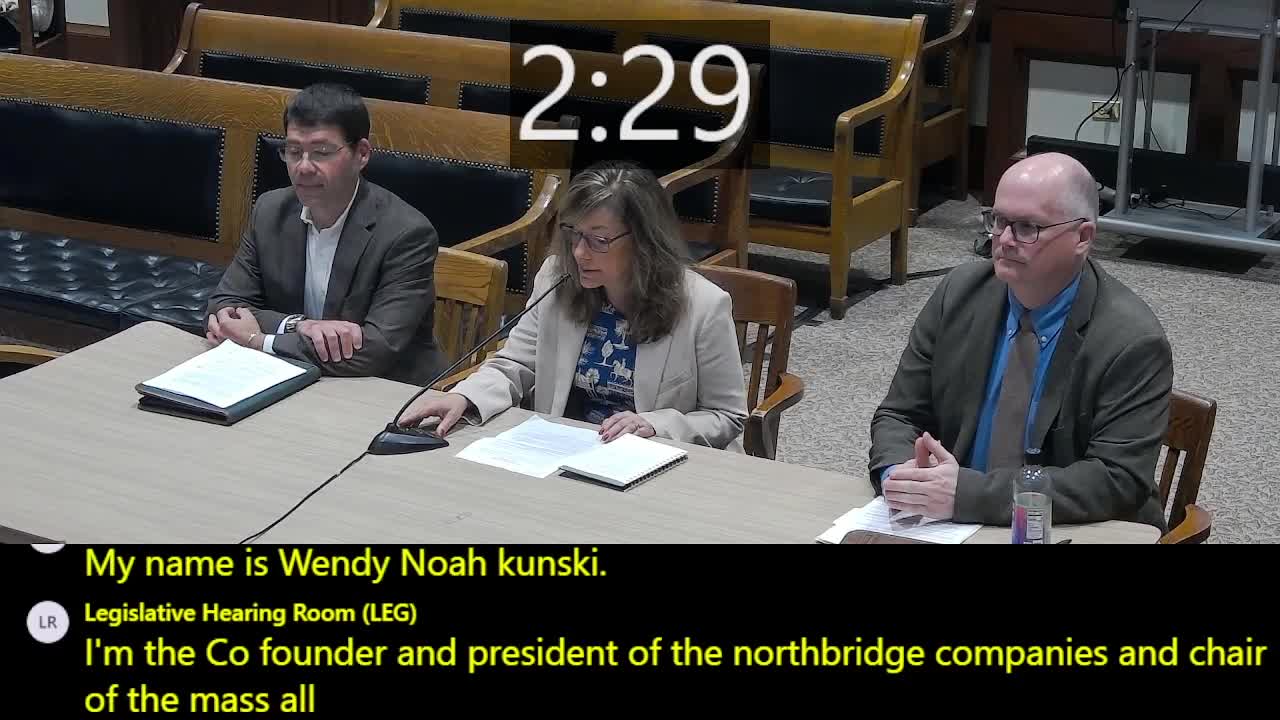
Witnesses described assisted living as a hybrid setting that provides 24‑hour on‑site care, nursing oversight and assistance with activities of daily living. They said existing programmatic subsidies and the Group Adult Foster Care (GAFC) reimbursement model were not designed for a full assisted‑living cost structure, leaving many providers unable to serve MassHealth‑eligible seniors. Walter Rohanian (Grantham Group) and Wendy Nowakunski (Northbridge Companies / Mass ALA) urged passage of bills to permit the frail‑elder waiver to support assisted living (S.474 / H.791) and to align reimbursement with assisted‑living costs.
Providers also urged passage of H.770, clarifying that assisted‑living residences (ALRs) are regulated under chapter 19D and that ordinary landlord‑tenant rules should not be applied across the board. Attorneys and providers said recent court interpretations had exposed operators to class litigation and inconsistent expectations; they asked the committee to confirm the legislature’s original intent to treat ALRs as distinct regulated residential care settings while maintaining eviction protections.
Policy consultants and operators cited scattered closures of affordable assisted‑living communities and lengthy placement timelines when buildings close, noting that many displaced residents were on MassHealth and required prolonged placement efforts. They argued that a MassHealth assisted‑living reimbursement pathway would preserve community‑based options and could be less costly than institutional care. The hearing did not produce a formal committee action; advocates requested favorable reports and said technical rulemaking and rate‑setting would follow statutory changes.