Get Full Government Meeting Transcripts, Videos, & Alerts Forever!
Get email alerts on the Broadband Regulation topic
No spam. Unsubscribe anytime.
House committee advances substitute for HB305 to expand broadband office authority and funding rules
Summary
The House Committee on Commerce reported a substitute for House Bill 305 that raises the administration cap for Gumbo 1 funds, adds reimbursement and grant provisions, and increases oversight and compliance authority for the Office of Broadband Development and Connectivity.
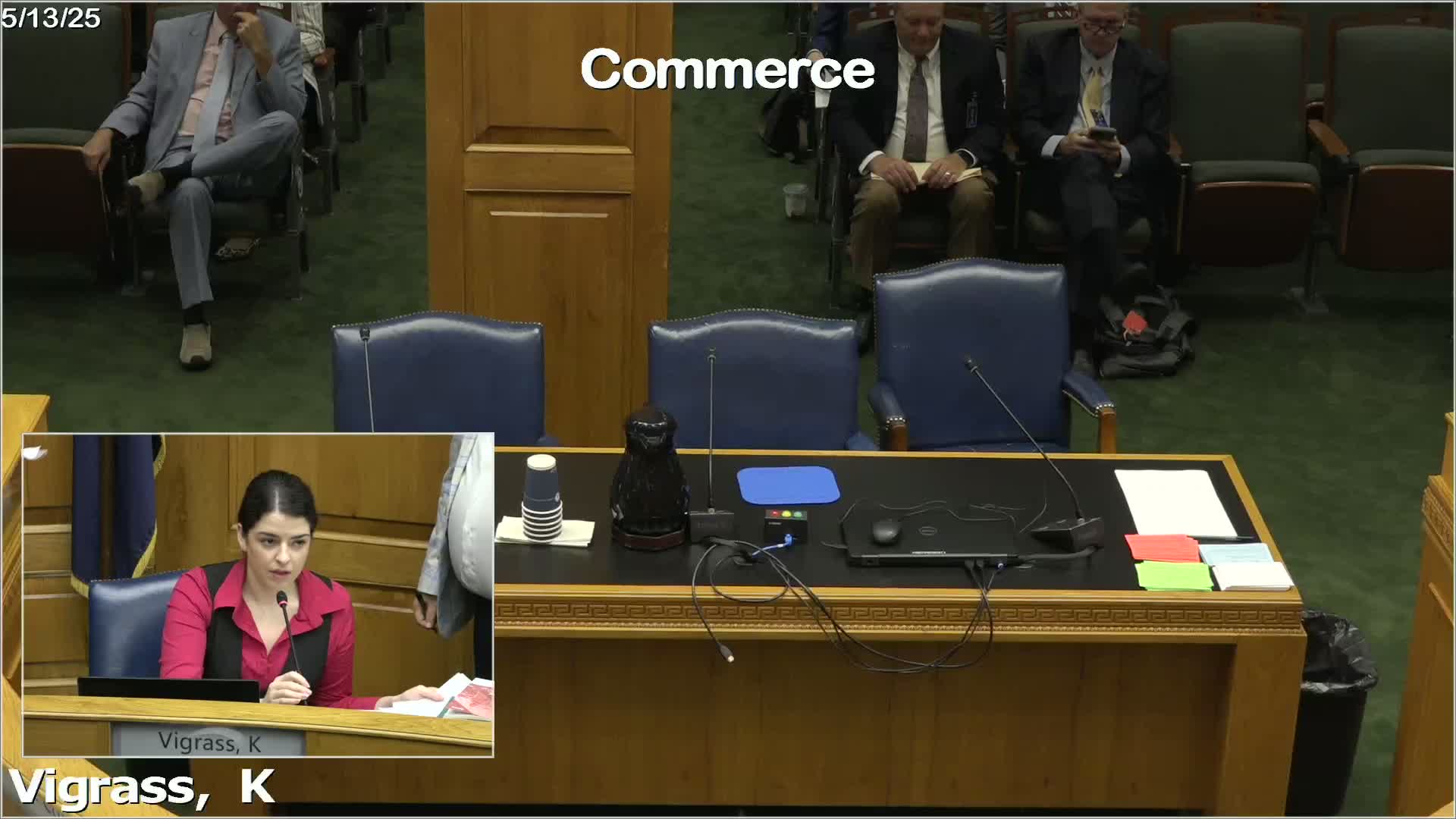
The House Committee on Commerce on May 13 reported a substitute for House Bill 305 that would give the Louisiana State Office of Broadband Development and Connectivity broader authority to oversee certain broadband programs, raise the administration cap for existing funds and change payment and compliance rules.
The substitute bill, offered as amendment set 2596, would raise the cap on administration fees for the Gumbo 1 funds from 1% to 2.5%, add provisions for reimbursements and grants, and expand the office’s authority to enforce compliance by providers and to adopt implementing rules. The chair moved to reconsider and then withdraw amendment set 2163 before a substitute was introduced and adopted for consideration.
Vineeth Iyengar, executive director of the Louisiana State Office of Broadband Development and Connectivity, told the committee the office has learned operational lessons over four years of administering funds and needs flexibility to pay providers faster. “Singularly, this is a critical important infrastructure issue for many of you and for many of your constituents, full stop,” Iyengar said, describing quicker payments to internet service providers as necessary to improve cash flow and speed deployment.
Representative Hebert moved the substitute for favorable passage; the committee had no objections and the bill was reported. Representative Cox said the substitute removes concerns about overlapping regulatory authority: “no other state agency has the authority to regulate broadband program compliance,” she said, summarizing committee discussion that the bill preserves regulatory authority with the broadband office rather than shifting it to the Public Service Commission.
Members discussed a late, provider-submitted technical amendment the sponsor said they would review for unintended consequences. Commenters at the committee emphasized operational issues the substitute seeks to address: timely payments to providers, clearer distribution rules, and added compliance language enabling the office to ensure providers meet program requirements. Iyengar and members also cited ongoing inter-state interest in Louisiana’s approach; Iyengar said officials in Mississippi had sought guidance on Louisiana processes.
The committee’s actions included motions to reconsider and withdraw the previously adopted amendment set 2163, introduction and adoption of the substitute (amendment set 2596), and the successful motion by Representative Hebert to report the bill favorably. No roll-call vote on final passage was taken in committee; the transcript records the committee reporting the bill to the House.
Supporters said the substitute is intended to make program administration more efficient and to preserve state-level program compliance authority; members signaled general bipartisan support during committee discussion. The committee did not adopt any substantive amendments on the floor during the recorded portion beyond withdrawing the earlier amendment set and introducing the substitute, and members asked staff to review a provider-proposed technical clean-up before next steps.