Get Full Government Meeting Transcripts, Videos, & Alerts Forever!
Get email alerts on the Cpr Education topic
No spam. Unsubscribe anytime.
Senate committee hears bill to add hands-only CPR to K–12 health curriculum
Summary
Senate Finance heard sponsor and emergency responders support for Senate Bill 20, which would add a standardized, hands-only CPR curriculum to Alaska schools. Witnesses said bystander CPR greatly increases survival; the measure was set aside for further review and carries a zero fiscal note from the Department of Education.
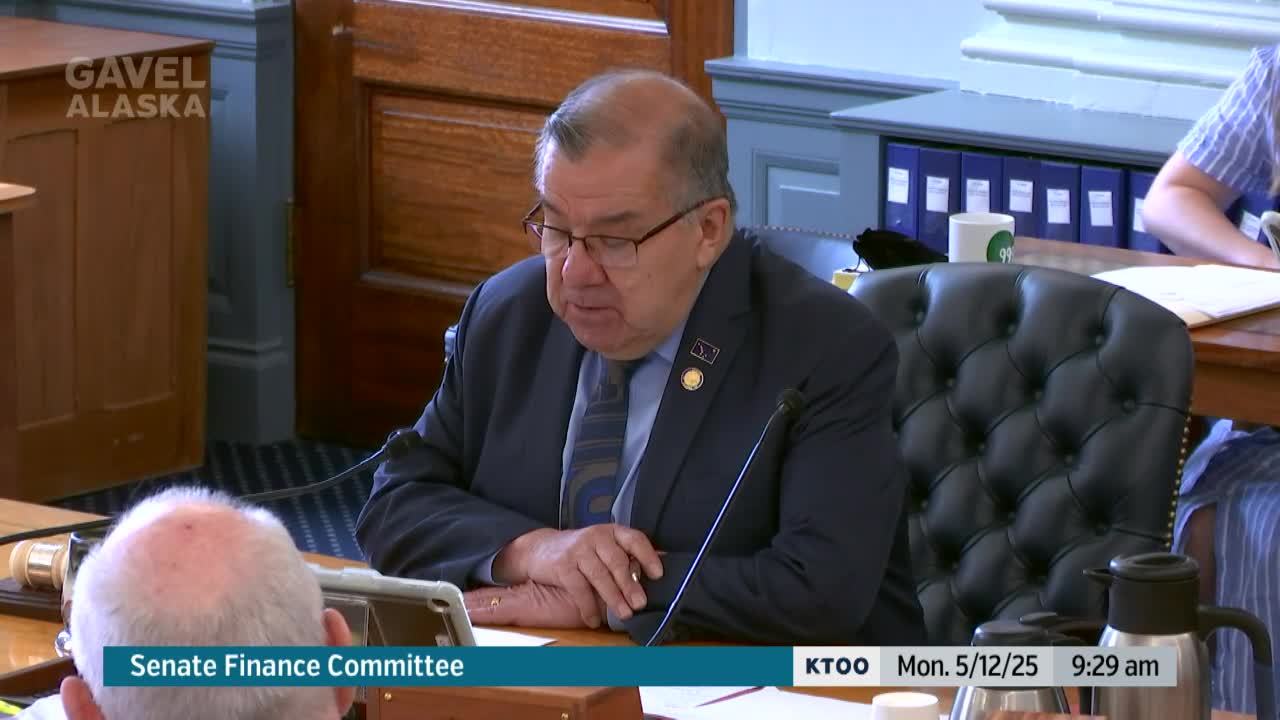
Senator L.B. Gray Jackson, sponsor of Senate Bill 20, told the Senate Finance Committee in May that the bill would add standardized CPR training to Alaska K–12 health instruction to give students life-saving skills and to align Alaska with other states.
The bill matters because sudden cardiac arrest is a leading cause of out-of-hospital death and immediate bystander CPR substantially increases a victim’s chance of survival, witnesses told the committee.
Jackson, staff member Clark Bickford, and invited witnesses including Anchorage Fire Chief Doug Schrage, Anchorage firefighter and CPR instructor Jason Dolph, and paramedic–educator Brian Webb gave technical testimony supporting the bill. "Early CPR and AED use are the single most important factors improving the survival rate from sudden cardiac arrest," said Doug Schrage, Anchorage Fire Chief. "Hands-only CPR is not only addresses the impediment of, deterring people from providing CPR, but in areas where there are reasonable response times, hands only CPR is actually more effective at providing blood flow to the brain and on vital organs," he added.
Jason Dolph, who identified himself as a 26-year veteran of emergency services and a certified EMT and CPR instructor, told the committee that timely CPR can double or triple survival rates and that schools are a practical place to normalize the training. "Children as young as 9 years old can acquire the knowledge and skills to perform CPR," Dolph said. Brian Webb, an Anchorage paramedic and educator, told senators he submitted peer-reviewed studies showing hands-only CPR is evidence-based and endorsed by major resuscitation organizations.
A public witness, identified in the transcript as Mike (Wasilla), testified in support but urged the committee to allow instruction in both hands-only CPR and full CPR (compressions plus rescue breathing) as an option. The American Heart Association, represented by Jamie Morgan, testified in support of incorporating hands-only CPR into the school health curriculum and said standardized instruction can be taught within a single class period.
Senator Kiel read the fiscal note from the Department of Education and Early Development (OMB component 2,796), which the department listed as a zero fiscal note. After invited and public testimony the committee "set this bill aside for further review," the chairman said.
Discussion in the hearing focused on the evidence supporting hands-only training, practical classroom implementation, and a public comment urging inclusion of rescue breathing as an option. No committee vote on final passage was recorded at the hearing.
If advanced, the bill would require implementing guidance from the Department of Education; witnesses said implementing materials and instructors are available and that the approach is intended to be low-cost and scalable.