Get Full Government Meeting Transcripts, Videos, & Alerts Forever!
Get email alerts on the Water Treatment topic
No spam. Unsubscribe anytime.
Select board and finance committee split on Blackstone water treatment borrowing; PFAS settlement funds reduce borrowing need
Summary
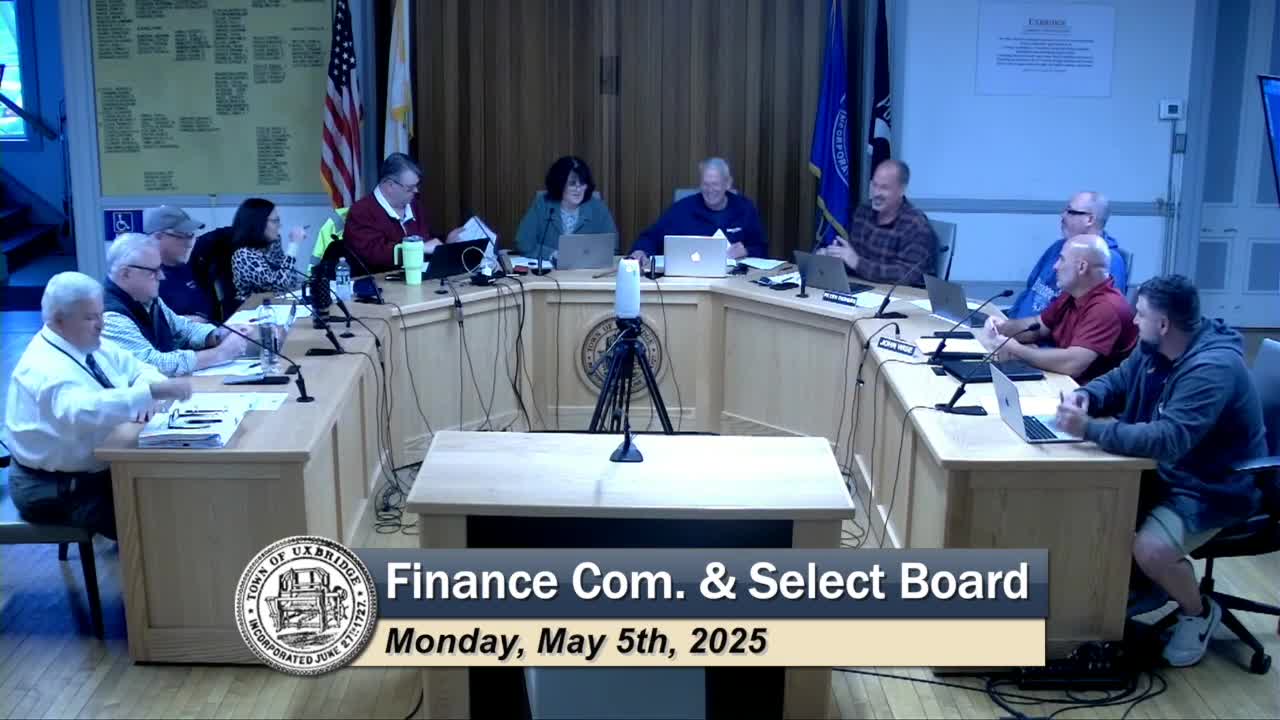
The finance committee voted to recommend favorable action on the base Blackstone water treatment plant project but opposed two alternates that would add office and garage space, citing large projected rate impacts.
Town officials debated Article 13, a borrowing authorization for the Blackstone water treatment plant, and the finance committee recommended favorable action on the base project but opposed two alternates that would add office and garage space because members said the added cost would unduly raise water and sewer rates.
Department of Public Works (DPW) representatives told the committee that recent PFAS litigation settlements will provide one‑time revenue for the project: the town expected an initial payment of $256,000 from 3M and further payments later in the year from other defendants, and the DPW reported roughly $200,000 in available ARPA funds that could also be applied. DPW representative Ben Sherman said the settlements “are happening now” and that “there’s about half a million dollars right away that we were able to put towards it.” He and other DPW staff noted that settlement funds must be used for PFAS remediation and that the incoming funds can reduce the amount the town will have to borrow.
The borrowing article was presented in three motions: motion 1 to approve the base bid, motion 2 to add Alternate 1 (office/administrative space), and motion 3 to add Alternate 2 (garage/expansion). The finance committee voted to recommend favorable action on motion 1 (base project) because engineering design and prior work justify completing the treatment plant, but the committee voted unfavorable on motion 2 and motion 3, citing the projected long‑term impact on ratepayers. Several committee members said the alternates appeared to add substantial cost for office and meeting space that could be addressed later or with a lower‑cost remodel of the existing building.
Why it matters: The treatment plant is intended to address PFAS contamination in the town’s water supply. The size and scope of the approved project affect the amount the town borrows and, therefore, the water and sewer rates paid by residents, businesses and municipal users.
Details and debate: Committee members requested updated, itemized bids or a refurbishment estimate for the current building if the alternates fail at town meeting. DPW staff argued that planning for a longer life and possible future needs justified building for expansions now, and that financing opportunities (including SRF and principal forgiveness on eligible projects) change the economics; the DPW representative said some financing programs may not be available for later rounds. Members of the committee and the board repeatedly emphasized concerns about the magnitude of projected rate increases and urged that the town present clear rate‑impact numbers at the public rate hearing.
Action: The finance committee recommended favorable action on motion 1 (base bid) and unfavorable action on motions 2 and 3 (the alternates). The committee recorded voice votes at the meeting; unfavorable votes on the alternates were justified by the committee as protecting ratepayers from a large near‑term increase.
Next steps: Town officials will finalize the motion language for town meeting and continue rate modeling and public outreach. DPW agreed to produce an updated estimate for refurbishing the existing building if alternates are not approved, and to incorporate settlement receipts and ARPA funds into the project financing plan so the borrowing ask presented at town meeting reflects those offsets.