Get Full Government Meeting Transcripts, Videos, & Alerts Forever!
Get email alerts on the Police Facilities topic
No spam. Unsubscribe anytime.
Consultants recommend new police facility after space, condition review; rough $36M–$44M cost estimate
Summary
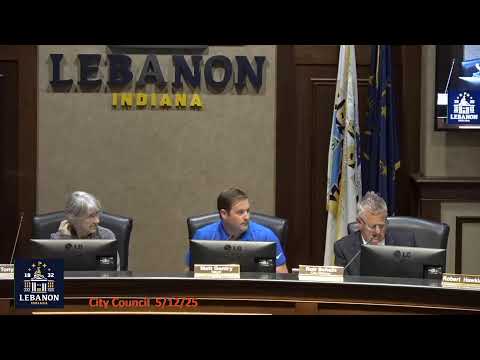
Consultants from DLZ told the Lebanon City Council on May 12 that the city’s police facility is beyond its useful life and does not meet programmatic needs. DLZ provided space, site and cost guidance and urged the city to begin site selection and public engagement if it wants a new building.
Consultants from DLZ told the Lebanon City Council on May 12 that Lebanon’s police station, converted from a 1962 fire station, has reached the end of its useful life and will not meet current or projected operational needs.
The consultant presentation, led by Steven Krumptausk, vice president at DLZ, summarized a facilities study that examined physical condition, programmatic space needs and short- and long-term options. The report recommends planning for a new facility rather than further piecemeal renovation.
DLZ said the existing building was originally constructed in 1962 and converted to house police functions in 2004. The firm found widespread aging mechanical, electrical and structural elements, low energy efficiency and poor space adjacencies because the building was designed for fire operations rather than policing. “Most of the equipment is outdated. It’s beyond its life expectancy in many of the conditions,” Krumptausk said.
The consultant warned that the current layout negatively affects recruitment and retention and limits community-facing functions. DLZ provided program-based size estimates: about 17,000 square feet now, roughly 38,000 gross square feet to support about 50 officers and about 51,000 gross square feet for a 100-officer buildout. Krumptausk said a single-story suburban site to meet the program would likely need about 7.5 acres (including secured parking and circulation); a two-story design could reduce the land need to about five acres.
DLZ gave a broad order-of-magnitude cost range tied to square-foot metrics and industry precedents: hard construction for the largest scenario (roughly 51,000 square feet) was placed near $30 million to $38.5 million, and total project costs including soft costs (design, land, furniture, technology, bond counsel, contingency and escalation) could push the program into a $36 million–$44 million range. Krumptausk cautioned the figures are preliminary and sensitive to market volatility and scope choices.
Council members and staff discussed scale and siting. DLZ offered options for suburban “greenfield” parcels, infill urban sites (which may require earth retention or structured parking) and phased approaches that allow initial construction for current needs with capacity to expand later. The consultant said some peer projects used strategies such as “hoteling” workstations to reduce dedicated office space and save square footage while maintaining operational capability.
City staff told the council that site selection, public engagement and detailed design would follow if the council decides to pursue a new facility. Staff and the chief said they have toured recently completed police facilities in the region and plan to convene a site-selection group including planning and public safety staff; they also suggested public meetings to present the study to residents.
No formal action was taken at the meeting; the presentation was informational and intended to start council discussion and planning. Staff said design and site selection could take many months and that construction procurement and occupancy would follow a multi-year schedule.
DLZ provided a hard-copy report and photographs to the city and offered to return for more detailed briefings on mechanical, electrical and plumbing systems if councilors requested them.