Get Full Government Meeting Transcripts, Videos, & Alerts Forever!
Get email alerts on the Drainage Master Plan topic
No spam. Unsubscribe anytime.
Officials outline drainage master plan, say updated models and BLE data could cut flood insurance costs
Summary
Consultants and flood experts briefed the Master Plan Committee on Ble (base level engineering), Louisiana Watershed Initiative models, and a three-year drainage master plan intended to reduce flood risk, make projects shovel-ready and improve the parish's Community Rating System.
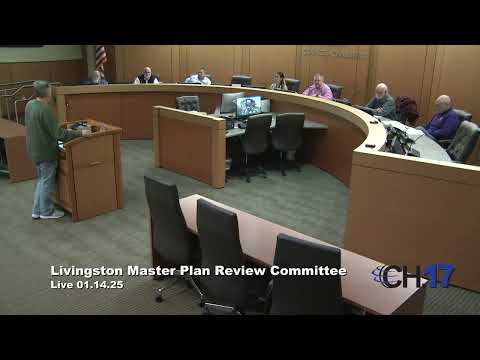
Consultants and flood experts told Livingston Parish's Master Plan Committee on Jan. 16 that newly available flood-data products and an upcoming drainage master plan could both improve local flood mapping and reduce homeowners'flood-insurance costs.
Gary O'Neil, who described the availability of Base Level Engineering (BLE) and Louisiana Watershed Initiative (LWI) datasets, said BLE provides high-resolution lidar-derived data and that Region 6 was developed as a pilot and is publicly available. "BLE data is designed to cover gaps where they don't have mapped areas or they don't have a flood study," he said, and added that BLE can offer closer approximations of base flood elevations in unmapped areas.
Jack Young, deputy practice leader for HAF (water resources), described a three-year, $4.6 million drainage master plan the parish has funded through state and federal grants. HAF and partners (GEC, Finstermaker and Southern Shores Engineering) will assess flood risk, recommend mitigation projects, and produce engineering sufficient to pursue construction funding. "What we do not want to happen is a beautiful master plan that sits on a shelf and nothing ever happens," Young said, explaining the team will prioritize projects to be shovel-ready.
Speakers said the parish already has some highly detailed data from the Louisiana Watershed Initiative and from local gravity-drain districts that can be incorporated into the study. Young and O'Neil said combining parish-level LWI models and BLE data can produce regulatory-quality products to submit to FEMA for map updates and to improve the Community Rating System (CRS) score, which can reduce flood-insurance premiums. O'Neil noted that moving from one CRS class to another can yield significant premium discounts and that parish-level improvements could put money back in homeowners' pockets.
The consultants committed to stakeholder outreach and public-facing GIS tools. Young said a branded website and story maps will be published to share data, meeting dates and project status; he also described coordination with planning consultants (WSP) so zoning and drainage planning inform one another. O'Neil said the Drainage Master Plan will create a dataset parish staff can use for permitting, ordinance drafting and grant applications.
Committee members pressed how the plan will translate to constructed projects. Young said the team will build grant-ready scopes and phased project lists intended to compete for federal and state funding. O'Neil and Young also discussed how groundwater extraction, subsidence and added base flow from new development could affect drainage and how the plan will incorporate watershed-scale impacts rather than only localized 100-foot permit buffers.
Several technical and policy-level topics came up in discussion: coordination with the Amite River Basin Commission (ARBC) and the U.S. Army Corps of Engineers on larger basin-scale projects; the role of dredging versus other measures; the potential to incorporate large-scale diversion or reservoir projects in longer-term strategies; and how to capture local drainage district plans already completed. The consultants said they will document existing district reports and include them where useful to avoid duplicative work.
Ending: Consultants said public outreach will start immediately, a parish website and interactive map will be published, and draft deliverables will be staged over the three-year grant so some projects can be moved to funding applications as they are completed. Committee members asked consultants to return to future meetings as deliverables are ready.