Get Full Government Meeting Transcripts, Videos, & Alerts Forever!
Get email alerts on the Property Assessment Zoning topic
No spam. Unsubscribe anytime.
Livingston Parish assessor explains how zoning affects property assessments, urges transparency
Summary
Livingston Parish Tax Assessor Jeff Taylor told the Master Plan Committee that zoning alone does not change assessed value until sales occur; he outlined the four-year reassessment cycle, exemptions that affect tax bills, and the assessor's outreach efforts.
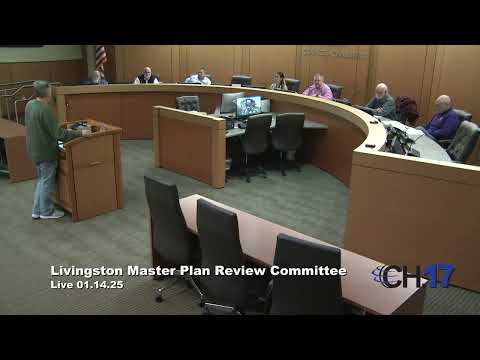
Jeff Taylor, Livingston Parish tax assessor, told the Master Plan Committee on Jan. 16 that changing a parcel's zoning does not by itself change its assessed value; reassessments depend on market sales and are updated on a four-year cycle.
Taylor said parish land is assessed at 10 percent of market value while commercial buildings are assessed at 15 percent and residential buildings at 10 percent. "Everything that we do is based off of a sale price," Taylor said. "Zoning has no effect on it until you actually have a sale." He added that assessors use mass-appraisal methods and multiple sales across an area to set values rather than single transactions.
The assessor outlined timing rules that affect taxpayers: reassessments reflect property status as of Jan. 1 in the reassessment year, and values set in a reassessment year are carried for four years. He said a property finished and occupied in December will be placed on the roll for the following year; final occupancy in January delays the tax effect until the subsequent reassessment. "Everything is January," Taylor said.
Taylor noted there is no statutory cap on how much an assessment can increase on reassessment. He described adjustments his office made after recent events (flooding and COVID-19) and said those temporary reductions were later removed in the '24 reassessment, which contributed to larger-percentage changes reported by some taxpayers. "No. The law does not say that at all," he said when asked whether reassessments are legally limited in percentage.
Taylor stressed the difference between assessment and taxation: the assessor sets values but millage rates are set by taxing districts and determine tax bills. He urged taxpayers to examine line items on the tax notice and to attend district budget/millage meetings. "It's not my job to tell the other districts what to do with their money," he said, adding that his office will host millage meetings to encourage transparency.
On outreach and appeals, Taylor said his office uses appraisers and real estate agents to validate mass-appraisal results, and invites residents to bring documentation when they believe values are incorrect. He described door-to-door and media outreach during the recent reassessment cycle, including billboards, radio and TV interviews, and district meetings. "If anyone's still having damage or issues from floods, come see us," he said, describing how interior unrepaired flood damage can materially reduce marketability and market price but will not be reflected until sales or until staff can document condition.
A committee member who identified himself as a member of the panel praised Taylor's outreach and candor, saying his taxes had risen sharply but that Taylor had been open in explaining the process. Taylor said his office would continue public engagement and invited elected officials to annual briefings.
Taylor also encouraged residents who face difficulty paying tax bills to bring their situations to the assessor's office and described the human impacts of recent floods and insurance issues that can affect household ability to pay.
The presentation concluded with committee members thanking Taylor and asking him to return for further discussion on how zoning changes might play into future planning.
Ending: The committee did not take any formal action on zoning or assessments during Taylor's presentation; he offered to return for future meetings and to provide parcel-level examples if requested.