Get Full Government Meeting Transcripts, Videos, & Alerts Forever!
Get email alerts on the Volunteer Fire Funding topic
No spam. Unsubscribe anytime.
Committee weighs more equitable funding, recruitment for volunteer fire stations
Summary
Committee members discussed disparities in support for volunteer fire departments, possible formulas combining a base payment with call‑volume percentages, and creation of a recruiting officer and school outreach to address volunteer decline.
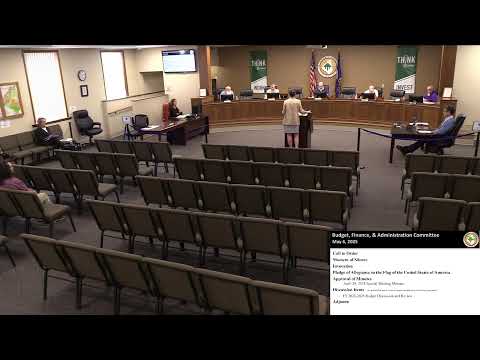
Oconee County committee members discussed funding and recruitment challenges for volunteer fire departments on May 6, focusing on equitable allocations and the long‑term decline in volunteers.
Miss Brock (staff member) outlined current funding practices and noted one station’s support showing $15,000 compared with other stations showing $60,000 in the draft budget. Committee members and staff discussed a proposal to provide a base payment to each station with additional funds distributed by percentage based on call volume or activity.
Why it matters: Fire and rescue coverage across the county depends heavily on volunteers; funding formulas and recruitment initiatives affect response capability and equipment parity among stations.
Key takeaways from the discussion: - Funding formula options: Staff suggested a base amount (example cited of $10,000) plus a percentage allocation above that based on call activity, mirroring approaches used in other counties. Brock said some counties “convert” stations to county‑owned or use base+percentage distributions to improve equity. - Disparities and reasons: Committee members highlighted that geography and call type produce varying costs — for example, some stations do more special rescues while others see more high‑speed highway incidents requiring heavy equipment. Brock noted the county’s large area (she said 628 square miles) and differing station workloads. - Volunteer recruitment and training: Members discussed adding a recruiting officer and returning training programs to local high schools or career centers as one way to attract younger volunteers. Brock and others noted statewide volunteer declines driven by training requirements and demographic changes; several called for active recruitment rather than passive acknowledgement of the problem. - Facilities and signage: Committee members said some satellite stations lack signage or clear mapping, which complicates response and public orientation; Brock took note to follow up.
No formal funding formula or ordinance was adopted at the meeting; the committee asked staff to continue studying equitable distributions and recruitment strategies, and to present options for future meetings.