Get Full Government Meeting Transcripts, Videos, & Alerts Forever!
Get email alerts on the Private Roads topic
No spam. Unsubscribe anytime.
Oconee Planning Commission delays private-road ordinance changes pending subdivision rewrite
Summary
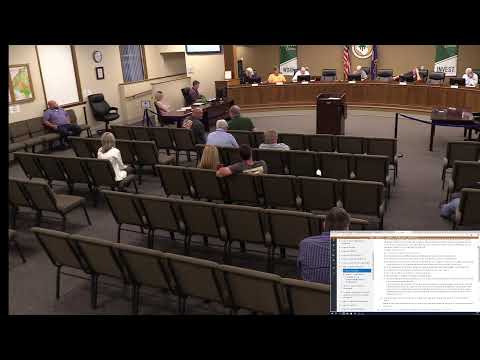
After hours of public comment and expert testimony, the Oconee County Planning Commission voted unanimously to hold proposed amendments to Chapter 26-2 (private roads/right-of-way) until related changes to the subdivision rules in Chapter 32 are drafted and reviewed together.
At its May meeting, the Oconee County Planning Commission voted unanimously to delay sending proposed changes to Chapter 26-2 of the county code — the section that governs private roads and rights-of-way — to County Council until proposed changes to the subdivision ordinance in Chapter 32 are prepared and aligned.
The move followed more than two hours of public comment from homeowners, multiple petition reports, and a presentation from the South Carolina Department of Transportation. Proponents of pausing action argued the proposed changes could affect thousands of property owners countywide, raise constitutional takings questions and change who bears road and utility responsibilities.
Public commenters urged the commission to slow the process and seek wider input. Lucretia Morgan, a resident who said she reviewed several lake-area subdivisions, told the commission that many private drives on peninsulas have 30–40 foot rights-of-way and serve 10 homes or fewer; she said no data was presented to justify the changes and asked, “Where is the actual evidence that there's a problem that needs solving?”
Other residents described local examples of developers failing to secure utility access before selling lots. Serena Brown Richardson cited multiple petitions and emails opposing the change and urged the commission to “listen to the citizens of Oconee.” Michael Grant called for a countywide referendum on any reduction to the 50-foot right-of-way standard.
Commissioners also heard technical remarks from Joel Smith, district maintenance engineer for the South Carolina Department of Transportation, District 3. Smith explained the statutory distinction between public and private roads and said state design manuals do not prescribe a single minimum right-of-way for every road type. He told the commission: "Private ownership for vehicular traffic is for the owner and those having expressed or implied permission from the owner." He added that for access onto a state road the minimum paved opening is 16 feet edge-to-edge, with additional width needed for radii, ditches and drainage as trips increase.
Several speakers raised legal and emergency-planning concerns. A member of the public reminded the commission of the state constitution’s just-compensation principle and cited a state code provision that lets private road owners opt into certain Title 56 highway safety provisions only by recorded written consent. Another commenter raised potential implications for evacuation planning around the Duke Energy Oconee nuclear station, urging coordination with license and emergency planners.
On motions and next steps, a commission member moved that “any changes in Chapter 26 be held until we go into the subdivision ordinance in Chapter 32 and then be submitted to council as a combined package.” The motion was seconded and passed by unanimous voice vote. During debate commissioners discussed surveying private-road property owners, but a proposed amendment to mail letters to all private-road homeowners was withdrawn so the staff could first compile an accurate owner list and so the commission could finalize the specific questions to be asked.
Commissioners directed staff and legal counsel to work on a consolidated redline that: (1) pulls subdivision-specific provisions out of the private-road section; (2) proposes clearer maintenance-agreement language for recording and notice; and (3) sets an explicit minimal driving surface standard (discussed values ranged from a 20-foot hard-packed travel surface to a 32-foot right-of-way used for local roads). The commission asked that the proposed edits be prepared for review in a subsequent meeting and that a committee be formed to review Chapter 32 (the subdivision ordinance) before any Chapter 26 changes are forwarded to County Council.
The commission emphasized it would not forward any changes to County Council until Chapter 26 and Chapter 32 are realigned and redlined language is available for public review. Commissioners repeatedly said they wanted clearer, redlined text and better public notice before a final vote.
What happened next: staff (planning and legal) will draft a redlined version of the proposed Chapter 26 changes that reflect the commission’s instructions and identify which items should be relocated to Chapter 32. The commission also discussed forming a working group to draft Chapter 32 changes and to prepare public notice materials for affected private-road property owners.
Why this matters: the proposed changes would alter the county’s standard for private-road rights-of-way and could shift maintenance and utility responsibilities; residents and some commissioners raised constitutional, insurance, emergency-response, and long-term land-use concerns that commission members said merit more time and clearer public outreach before any ordinance change is sent to Council.