Get Full Government Meeting Transcripts, Videos, & Alerts Forever!
Get email alerts on the County Budget topic
No spam. Unsubscribe anytime.
Oconee County budget draft proposes insurance review, stronger oversight of partner agencies and fee increases
Summary
County staff presented a draft budget that proposes reviewing the self‑insured health plan and pursuing PEBA conversion, tighter documentation and tracking for nonprofit pass‑through funds after two employee misuse cases, increases to several fees (solid waste tipping, permit and quarry rates), and runway/airport grant match planning.
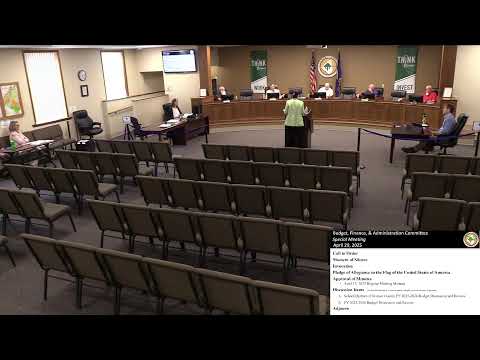
Oconee County staff presented a draft budget to the Budget, Finance and Administration Committee on April 29 that keeps the general‑fund millage stable but includes proposals to review the county’s self‑insured health plan, strengthen oversight of third‑party pass‑through funds, and adjust multiple fees and service charges to better cover operating costs.
Amanda Brock, the county budget presenter, told the committee claims under the county’s self‑insured health plan exceeded budgeted projections by about $7,000,000 over the past five years and that maintaining the current plan would require employee premium contributions “more than 104 times what the current employee pays,” an outcome staff said would be untenable. Brock said the county has convened a benefits‑review committee, will benchmark against the Public Employee Benefit Authority (PEBA), and will seek proposals from brokers to identify options that maintain retiree benefits for long‑service public safety employees while limiting employee premium increases.
Brock also proposed steps to tighten controls after recent arrests of county employees on allegations of breach of trust and illegal use of public funds. The draft calls for requiring nonprofit and rescue‑squad recipients of county funds to provide nonprofit status documentation (Secretary of State registration and IRS Form 990), banking statements or audits for larger awards, and a signed certification of use of county funds. Staff proposed transferring an existing county employee into the fund that pays most third‑party grants to provide centralized procurement and auditing oversight.
The draft includes multiple user‑fee adjustments intended to align charges with service costs rather than raise general revenues. Major fee proposals in the draft presented to the committee included increasing municipal solid waste (MSW) tipping fees to $95 per ton (staff said the county handles about 45,000 tons per year), raising certain building permit fees (for smaller projects to $75), increasing call‑in recycling pickup to $35, and modestly adjusting quarry product pricing (staff cited a cost‑based riprap price of $23.74 per ton). Brock told the committee that if federal airport improvement grants the county has applied for arrive, a local match of roughly $170,000 (2.5% on a $6,000,000 project) is included in the capital plan; she noted grants are not guaranteed and unspent grant match funds would revert to fund balance.
Airport issues also drew discussion about hangar assignments and parking: staff said Federal Aviation Administration rules govern hangars built with federal funds and suggested prioritizing hangar waiting lists for aircraft registered and taxed in Oconee County. Committee members raised parking shortages during busy periods and asked staff to consider tourism and community uses for airport property.
On volunteer fire/rescue funding, staff proposed creating a closer accounting and distribution process to avoid uneven accumulation of funds at some stations. Options discussed included an upfront allotment for supplies and fuel plus a performance or call‑volume component to allocate remaining discretionary support — though staff said they had not finalized a formula and will consult local stations.
Brock told the committee the county is exploring administrative changes to municipal tax collection services, including a potential handling fee to charge municipalities for administering municipal taxes, because county staff already perform detailed address coding and apportionment work for multiple municipalities and special districts.
Other items in the draft included funding a law‑enforcement position from specific tax balance dollars (described as not requiring additional county tax dollars), modest IT increases, and continued attention to solid‑waste equipment planning and quarry operations. County staff said they will continue to refine numbers and return with backup materials ahead of next week’s budget meeting.
No formal committee votes were taken on the budget draft at the April 29 session; committee members directed staff to bring clarifications and additional backup at the next meeting.