Get Full Government Meeting Transcripts, Videos, & Alerts Forever!
Get email alerts on the Radio Communications topic
No spam. Unsubscribe anytime.
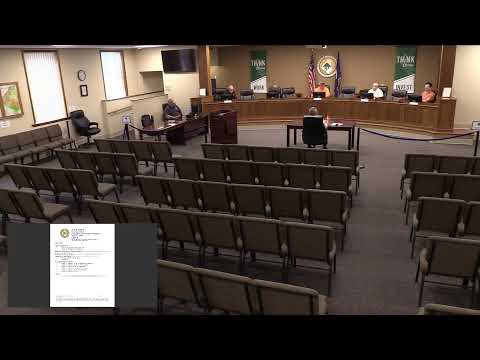
Oconee County advisory commission presses county staff on spotty radio coverage, digital-channel use
Summary
Members of the Oconee County Fire Service Advisory Commission reported persistent dead spots on county radio channels, urged mapping of problem areas for technicians, and discussed use of Digital 1 for search-and-rescue operations.
Members of the Oconee County Fire Service Advisory Commission pressed county staff Thursday to identify and fix persistent radio dead spots across the county that are hampering interagency communications.
Commission members said they are hearing intermittent reception problems from handheld radios in specific areas and asked staff to compile a list of problem locations so technicians can prioritize fixes. “If any of your stations have areas that you’ve identified that you can’t talk, we need to know that so that Aaron and them can focus on that to see what’s causing that,” a commission member said.
The commission also discussed the growing use of digital channels for search-and-rescue operations. Members noted that Digital 1 has been used successfully to relay communications from ridge-top relay operators to crews in hollers and that the channel performed well during a recent woods fire and a mountain rescue. “The hope was eventually that we have several other digital channels and you’re dispatched on fire and assigned one of those channels, and that’s where you go and stay,” a commission member said, citing Bannerlands’ year-long use of a similar system.
Commissioners described ad hoc workarounds staff are using when coverage fails, including placing relay personnel at high points to pass messages back to command. They urged staff to use objective monitoring and field checks so technicians can reproduce reception problems and address antenna or site-specific issues. A member said seasonal conditions — for example, hay season versus winter — can make previously usable sites unreliable.
The commission asked staff to take a systematic approach: compile a whiteboard-style list of problem sites, run signal-strength checks, then visit sites with departments so crews and dispatch can test reception together. The members agreed the priority is preventing a safety incident caused by communications failures.
Commission discussion about radio coverage ran through multiple agenda items and included both operational examples (relay personnel on ridges during search-and-rescue) and requests for targeted field testing to help county radio technicians locate and remedy gaps.