Get Full Government Meeting Transcripts, Videos, & Alerts Forever!
Get email alerts on the Procedural Rules topic
No spam. Unsubscribe anytime.
Portland Historic Preservation Board delays formal adoption of procedural rules after extended review
Summary
The board discussed a proposed set of procedural rules — modeled on planning board practice and a simplified version of Robert’s Rules — but voted to table action so staff can draft final language and return with clarifications.
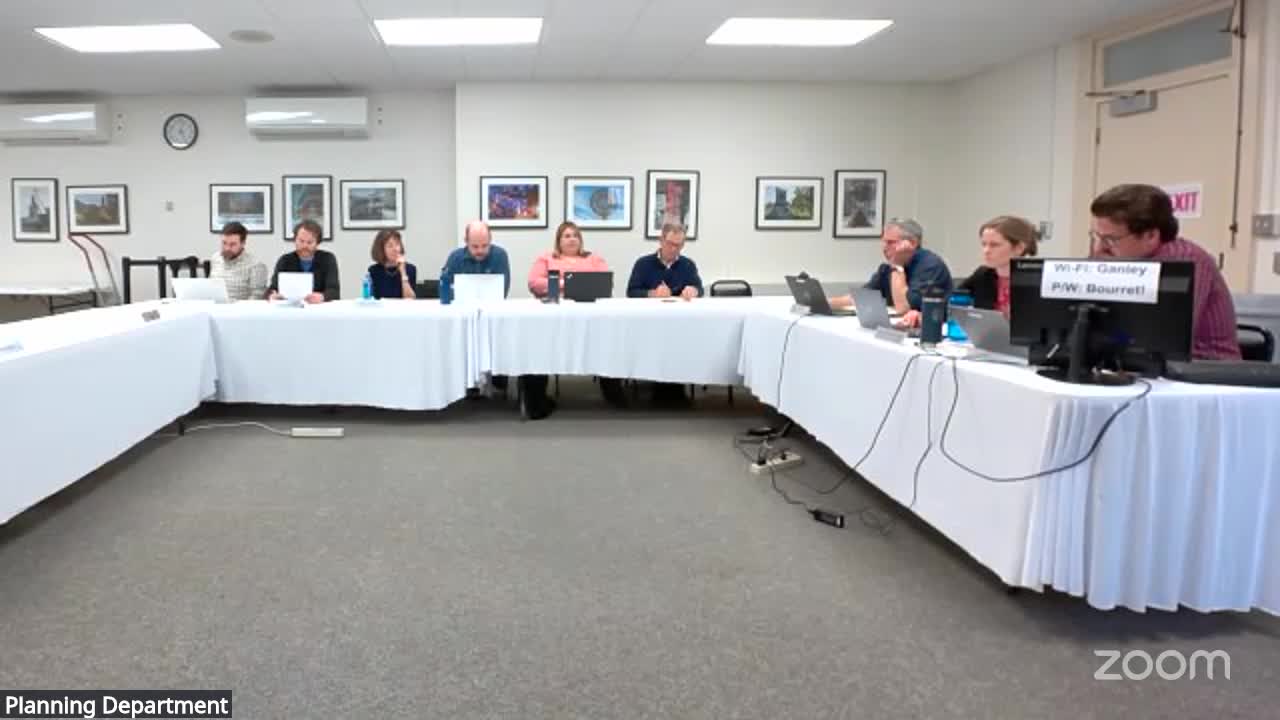
The Portland Historic Preservation Board on May 7 debated adopting a written set of procedural rules that would formalize how meetings run, but members voted to table the item so staff can work the board’s suggested edits into a revised draft.
Board members and staff spent more than an hour discussing a proposed rulebook drafted to mirror the planning board’s approach and to provide a “Robert’s Rules light” reference for public meetings. The draft, presented by a city staff member identified in the meeting as Mister Sheckler, calls out agenda order, procedures for chair elections, public-comment limits and disclosure expectations for ex parte contacts and conflicts of interest. “Subsection 2.2.7c . . . indicates that the board may adopt procedural rules for the conduct of its business,” Sheckler told the board during the presentation.
The board’s nut graf — why this matters — centered on clarifying routine practices that have been handled informally. Members said written rules would reduce confusion about when disclosures should be announced, how the chair and staff set agendas, whether subcommittees can be formed, and how public-comment limits are handled during crowded hearings.
Board members raised detailed concerns and requested edits. Several members urged that the agenda-setting language reflect current practice — staff assembling agendas with chair consultation — rather than a formulation that could be read as giving the chair unilateral authority to exclude applications. Members also pressed for clearer language on when and how to call for disclosures of ex parte contacts and conflicts of interest, and whether a recusal should trigger a formal vote to appoint a pro tem or could be handled by a simple nomination by the chair.
Mister Sheckler said the draft drew on the planning board’s rules and that Amy McNally, associate corporation counsel, had reviewed and helped draft the language. He explained the goal was not to create a rigid new code but to give the public and board members a clear, accessible reference for how meetings will be run going forward.
Concerns about public comment surfaced after members described past instances of disruptive remote testimony. The staff presentation noted the tension between managing disruptive speech and First Amendment protections and recommended retaining objective tests used elsewhere — such as excluding irrelevant or unduly repetitious remarks — while empowering the chair to remind speakers of rules at the start of hearings.
After extended discussion and several suggested changes, a motion was made to table the proposal so staff could incorporate the board’s requested clarifications. The motion to table carried on a roll-call vote with the members present voting yes (Hillary Bassett; Robert O’Brien; Brian Sosby; Rob Whitton; Valerie Paquin Gould; Brad Miller). The board asked staff to return with revised text that clarifies (1) agenda-setting practices, (2) where and how disclosures are announced, (3) whether the chair may nominate a pro tem or whether a formal vote is required, and (4) public-comment and applicant-rebuttal language to distinguish routine applications from appellate hearings.
Board members said they preferred keeping procedural rules flexible enough to fit the board’s practice while ensuring transparency on conflicts and disclosures.