Get Full Government Meeting Transcripts, Videos, & Alerts Forever!
Get email alerts on the Health And Human Services topic
No spam. Unsubscribe anytime.
HHS budget review spotlights shelters, naloxone distribution and Behrend Center capacity plan
Summary
The finance committee reviewed the Health and Human Services department budget. HHS leaders described shelter operations, outreach and housing outcomes, harm reduction work including naloxone distribution, reductions in some client expenses as hotel use ended, and plans to increase census at the Behrend Center skilled‑nursing facility.
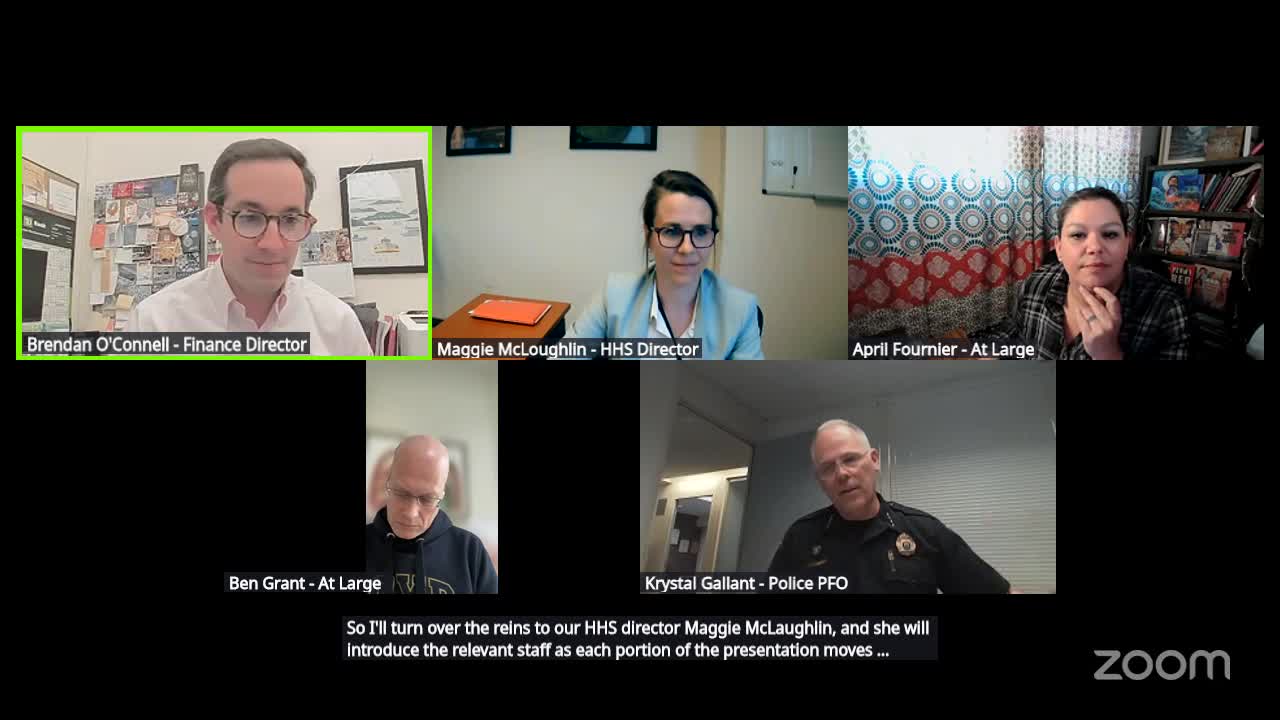
Health and Human Services Director Maggie McLaughlin told the finance committee that HHS’s FY26 budget focuses on sustaining core services amid constrained outside funding and that the department proposed no general new FTEs except revenue-generating roles.
McLaughlin described services across public health, social services (including the city‑run shelters), the Office of Elder Affairs and the Behrend Center skilled‑nursing facility. "We are the only municipality in the state that operates shelters," McLaughlin said, noting the scale of the city’s work to shelter and house people.
Public health staff highlighted prevention and harm-reduction work: the city’s free clinic served about 156 patients last year, the public health division provided more than 3,000 vaccinations, and staff distributed more than 19,000 doses of naloxone, the director said. McLaughlin said the department chairs a broad health-equity alignment group and operates a large harm-reduction and syringe-exchange effort.
On homelessness and shelters: the social services division operates the Homeless Services Center (HSC), a family shelter and the 166 shelter (used recently for single asylum seekers). McLaughlin said the shelters and outreach teams sheltered more than 2,000 individuals in the past year and permanently housed more than 500; more than 90 percent of people placed remained housed after a year. The department said client expenses related to hotels will drop by roughly $3 million in FY26 because the city is no longer using hotels for sheltering, producing a $4 million reduction in client-expense line items overall.
Public commenters at the meeting urged the council not to reduce shelter capacity. Terrence Miller, advocacy director at Preble Street, said the city should reject any plan that would close shelter beds and urged the council to use fund balance to avoid cuts to municipal services. "The shelter's budget should not be balanced on the backs of homeless families and individuals," Miller said.
Behrend Center: Marybeth Daigneault, Behrend Center administrator, said the facility is licensed for 219 beds but currently operates at about 109 census and plans to increase residents gradually toward 165 over the year; staffing and supply costs scale with census. Daigneault described vacancy-improvement efforts: turnover and vacancies have decreased since August, and the facility expects to add nursing and CNA staffing as census grows.
Why it matters: HHS operations comprise a large portion of municipal services tied to public health and homelessness; shelter capacity, funding assumptions and state/federal reimbursements will affect FY26 outcomes and the council’s budget decisions.
Next steps: Finance and HHS staff will continue to track grant availability and state reimbursement assumptions (including General Assistance rules set by state statute) and report further details during upcoming committee meetings; staff noted a prior FEMA grant intended for shelters was not available in this budget year.