Get Full Government Meeting Transcripts, Videos, & Alerts Forever!
Get email alerts on the Budget Taxes topic
No spam. Unsubscribe anytime.
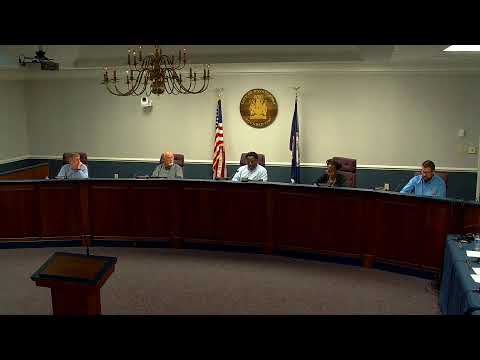
Waynesboro council advances 82¢ tax‑rate motion for final vote and introduces 0.5% meals tax increase
Summary
Council members agreed to advance a motion to set the city's real‑property tax rate at 82 cents per $100 for final consideration on May 27 and introduced an ordinance to raise the meals tax from 7% to 7.5%, a change staff estimates would yield roughly $500,000.
Waynesboro City Council advanced a motion to set the real‑property tax rate at 82 cents per $100 of assessed value for final consideration at its May 27 meeting and introduced an ordinance to increase the city's meals tax from 7% to 7.5%. The council's actions on the tax and budget items were part of a broader discussion of the proposed fiscal 2026 budget.
The change in the meals tax was presented by city staff as one element of a multi‑pronged plan to diversify revenue and reduce reliance on real‑estate taxes. Mister McCormick, City staff, told the council that a half‑percentage point increase in the meals tax would produce about $500,000 in revenue and would translate to roughly a 2‑cent reduction on the property‑tax levy if council elects to apply it that way.
Mayor Kenny Lee said council and staff had pursued an unusually detailed budget process that examined organizational needs, public safety and public works staffing, and options to spread costs over time. Council members discussed multiple tax‑rate scenarios during the meeting, including earlier proposals at 89 cents and as high as $1.06 per $100 of assessed value; the assembly ultimately agreed to advance the 82‑cent motion for a final vote.
Members emphasized tradeoffs between staffing, capital needs and affordability. Under the 82‑cent motion staff noted the package would still fund multiple public‑safety positions and compensation adjustments that council described as necessary, while avoiding the larger property‑tax increases some members had supported.
The meals tax ordinance was introduced and will go to public hearing on May 27, along with the motion on the tax rate and the fiscal 2026 budget. No final votes on either the tax rate or the meals tax were taken at the May 20 meeting; council activity on both items will resume at the May 27 regular business meeting.
Council also agreed to move forward with related budget ordinances and a capital improvement program presentation tied to the operating budget process; staff said certain one‑time items and equipment purchases will be appropriated later in the fiscal cycle.