Get Full Government Meeting Transcripts, Videos, & Alerts Forever!
Get email alerts on the Medical Malpractice Agency topic
No spam. Unsubscribe anytime.
Appeals court revisits agency and charitable‑cap issues in medical malpractice verdict
Summary
Argument focused on whether the trial court correctly set aside a jury verdict by applying charitable‑immunity or directed‑verdict rules and whether sufficient evidence supported a hospital agency theory for the treating physician.
The appeals panel heard argument in a medical malpractice appeal in which counsel for the plaintiff urged reinstatement of a jury verdict and challenged the trial court’s directed‑verdict and post‑trial rulings, including application of a statutory cap tied to nonprofit charitable status.
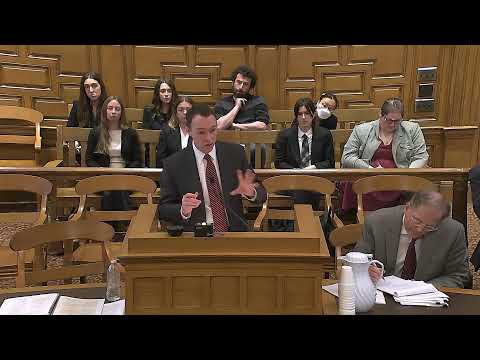
Plaintiff counsel Chris Sobchak described a 2022 jury verdict finding negligence by physician Dr. Azoni and argued the trial judge erred by later applying a charitable cap and entering judgment notwithstanding the verdict on agency grounds. Sobchak said the evidence — including an informed‑consent form bearing hospital letterhead and hospital policies requiring use of a specified consent form — permitted a jury to conclude that the hospital or affiliated entity held apparent authority or agency over the physician.
Defense counsel Amy Galaitis, representing Heywood entities, countered that Dr. Azoni was an independent contractor during the course of the treatment and that the evidence did not show the hospital exercised control over clinical conduct or that the patient reasonably relied on hospital adoption of the physician’s authority. Galaitis also said evidence relevant to nonprofit charitable status and the statutory cap was submitted as a post‑trial matter and that the trial judge properly considered the issue after trial.
Justices explored whether the hospital’s policy and form — admitted in evidence — were sufficient for a reasonable jury to find apparent agency or ratification, whether the jury reached inconsistent verdicts on associated entities, and whether the charitable‑status record was developed sufficiently for a cap to apply. The court took the matter under advisement.