Get Full Government Meeting Transcripts, Videos, & Alerts Forever!
Get email alerts on the Constructive Trust Eviction topic
No spam. Unsubscribe anytime.
Appeals court considers constructive trust and use-and-occupancy dispute in landlord‑tenant appeal
Summary
Panel heard competing claims over whether a lower court properly imposed a constructive trust and denied use‑and‑occupancy payments after a protracted landlord‑tenant dispute over title, occupancy and equitable claims.
Counsel argued whether the housing court erred in imposing a constructive trust on property held in sole legal title by appellant Tyrone Walker and in denying him possession and a determination of use‑and‑occupancy payments.
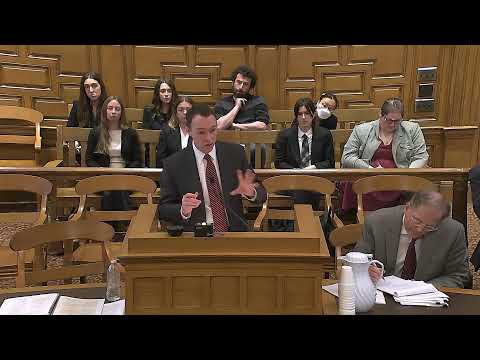
Appellant counsel Dana Shunivert said the record from a prior summary process trial showed no intent to create joint ownership when the property was purchased in December 2008 and that the appellee, Julien Pierre, had not asserted ownership, contributed to the purchase price, or paid mortgage payments. Shunivert argued the equities did not support a finding of a fiduciary relationship or unjust enrichment — both elements she said were required under Sullivan v. Rooney and related authorities — and asked the court to vacate the constructive trust and reinstate Walker’s possession.
Appellee counsel Colin Greer said the housing court relied on testimony, credited miss Pierre’s account of repeated representations by Walker that the property was “for us and the kids,” and that she had taken care of the property and tenants during periods of Walker’s absence. Greer argued the record supported inference of a constructive trust and that the court’s factual findings should be sustained.
Justices questioned whether the lower court had made the necessary specific findings on unjust enrichment and fiduciary relationship and whether the trial judge had properly reopened the record on remand. The court also addressed procedural choices by trial counsel, the limited scope of evidence admitted at summary process trial, and claims about counsel’s briefing conduct. The panel took the matter under advisement.