Get Full Government Meeting Transcripts, Videos, & Alerts Forever!
Get email alerts on the Firearms License Suspension topic
No spam. Unsubscribe anytime.
Appeals court reviews police report evidence used to suspend firearms license
Summary
A panel considered whether a police report relying on a complainant’s statement — later partially recanted — provided a reliable basis for a licensing authority’s suspension and denial of Nancy Dennis’s license to carry.
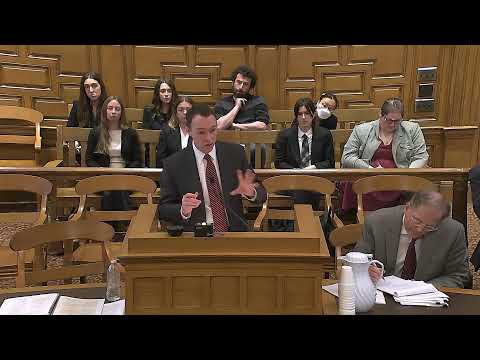
In oral argument on an appeal from the denial and suspension of a firearms license, counsel disputed whether the police report relied on by the licensing authority was sufficiently reliable and whether the licensing decision reasonably found the applicant unsuited to hold a license.
Attorney James McMahon, representing appellant Nancy Dennis, told the panel the police report for an incident on Nov. 12, 2022, consisted principally of the complainant Richard Goucher’s statements to the responding officer and that the officer recorded no first‑hand observations corroborating the report. McMahon said Goucher gave a materially different statement to prosecutors four days later and that the licensing decision relied on the uncorroborated report. He argued that under the governing standard the licensing authority must articulate reliable, credible evidence that the applicant poses a risk to public safety, and he said no pattern of behavior or corroborative evidence existed for Dennis, who is 71 and has no prior criminal record per the record cited by counsel.
Wareham town counsel Richard Bowen, representing Chief Walter Correa, told the court that licensing authorities may rely on hearsay police reports if they are reliable and that the responding officer recorded an account from a victim on scene. Bowen said the underlying statement was made at the time of the incident and that later decisions by prosecutors not to pursue charges do not automatically render the police report unreliable. He argued the applicant carried the burden to prove suitability and that the record contained statements and investigatory facts on which the licensing authority could reasonably rely.
Justices questioned whether the licensing official was aware of the later recantation to the district attorney’s office and whether that fact would affect the reliability or require reconsideration. Counsel agreed the record did show a recantation on the oil‑rag allegation and differed on whether the licensing official knew of the later statements. The panel took the case under advisement.