Get Full Government Meeting Transcripts, Videos, & Alerts Forever!
Get email alerts on the Guardianship Due Process topic
No spam. Unsubscribe anytime.
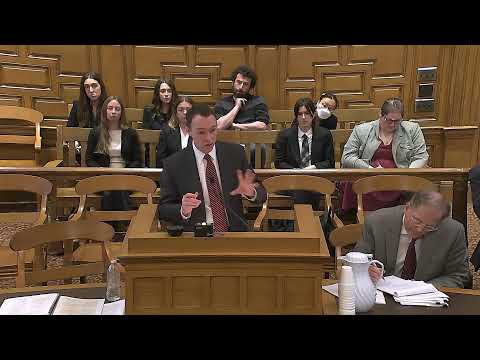
Appeals court hears challenge to guardianship of veteran James Lavers
Summary
Attorneys argued whether a trial court’s handling of testimony — including exclusion of a witness list and limits on cross-examination — violated due process in a guardianship imposed for a U.S. veteran.
An appeals court panel heard argument over whether the trial court denied due process to James Lavers when it limited conventional testimony and excluded the respondent’s witness list in a guardianship proceeding.
Attorney Deborah Dow, representing Lavers, told the court that Lavers, a U.S. veteran who served from 1969 to 1972, lived independently until his October 2022 admission to a VA hospital and “was fully making his own decisions” prior to that admission. Dow argued the trial judge’s exclusion of a conventional witness presentation and the absence of an opportunity for counsel to cross‑examine the respondent’s testimony amounted to a “substantial deprivation of the respondent’s liberty interest” and a due‑process violation. She noted the petitioner’s witness list did include the respondent as a party but trial counsel for the respondent failed to file a witness list. Dow told the court an analysis under the cited authority “5 3 0 6” (as referenced in the argument) required fuller findings and that lesser sanctions were available instead of exclusion.
Counsel for the appellee, Matthew Bolleo of the VA Boston Healthcare System, told the panel he had tried the case and was “shocked” that the trial judge sustained his objection to allowing the respondent to testify in a conventional way. Bolleo said he had proposed that the respondent be allowed to make a statement and that the judge’s decision to permit a narrative statement and ask questions — rather than to allow full testimony subject to cross‑examination — was consistent with ordinary practice in guardianship dockets that often involve vulnerable witnesses. Bolleo disputed that Lavers suffered prejudice from the procedure and emphasized that the respondent retained avenues to seek modification or termination of the guardianship.
Justices on the panel questioned both sides on whether the record shows prejudice, whether an offer of proof would have been required, and whether the pretrial scheduling order required exclusion without an analysis of good cause. Both advocates pointed to case law and to trial‑level record entries in support of their positions. The court took the argument under advisement.