
Keller ISD nutrition staff outlines federal meal rules, Sodexo contract and limits on donating leftovers
Get AI-powered insights, summaries, and transcripts
Sign Up Free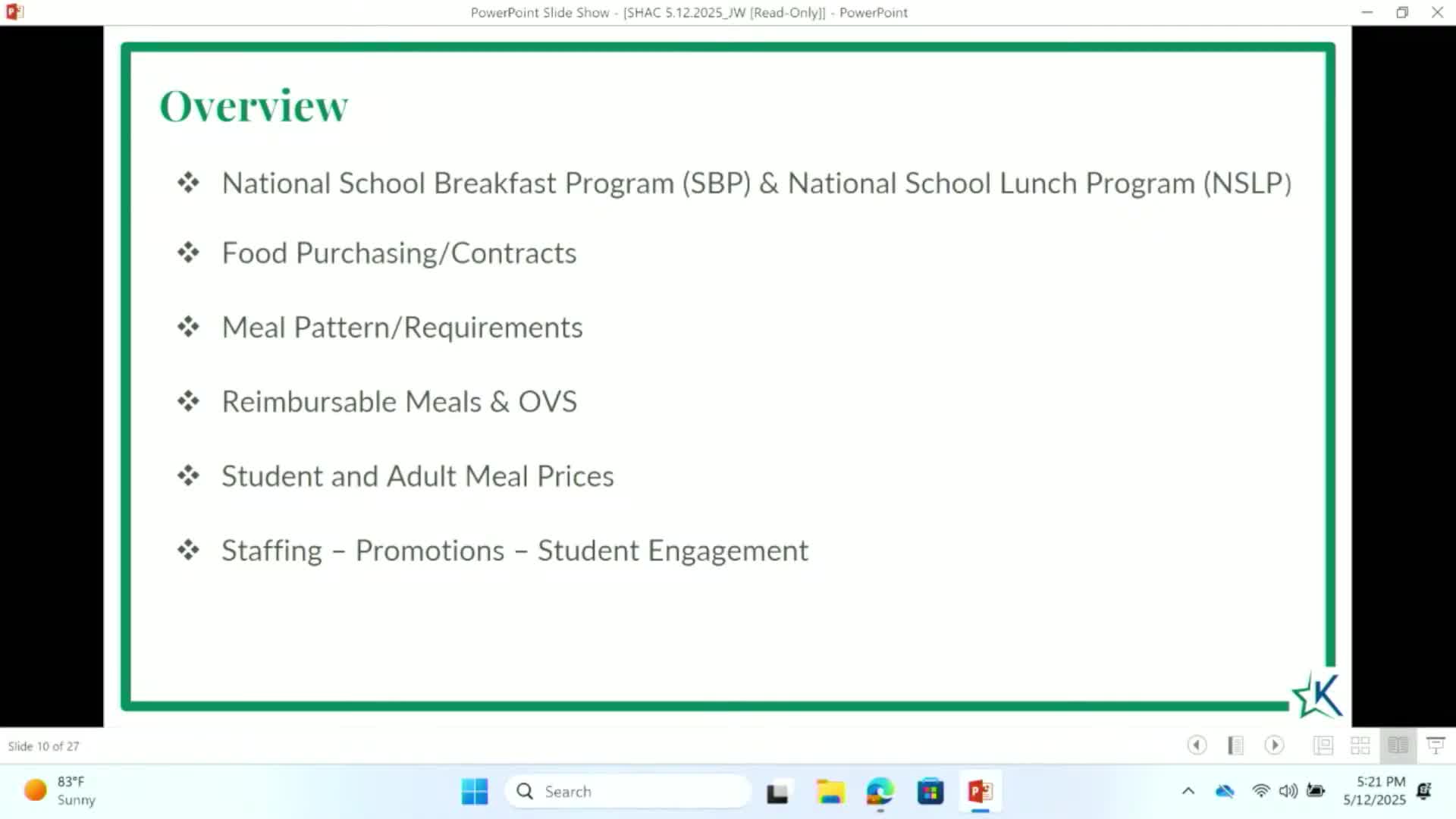
Summary
At the May 12 Keller ISD SHAC meeting, child nutrition staff reviewed USDA/TDA meal requirements, school meal pricing and the district's contract with Sodexo, and explained why leftover prepared meals generally cannot be donated under federal rules. Members discussed waste, composting pilots and product reformulations tied to state bills.
Keller ISD child nutrition staff described federal meal requirements, current meal prices and how the district's Sodexo contract shapes daily menus at the May 12 School Health Advisory Council meeting.
"This program basically provides low cost, no cost meals to students that qualify," Stephanie Grieving, child nutrition coordinator for Keller ISD, said as she outlined the district's participation in the National School Breakfast and National School Lunch programs administered by the U.S. Department of Agriculture and the Texas Department of Agriculture. Grieving said menus and portion requirements are governed by USDA/TDA meal patterns and that schools must meet calorie, sodium and saturated-fat limits and cannot deep-fry items.
Why it matters: Federal meal-pattern rules determine which meals qualify for reimbursement and therefore affect what district cafeterias can serve, how menus are written and what foods vendors such as Sodexo supply. Changes in state law or supplier formulations can require operational shifts and potential cost adjustments for the district.
Grieving reviewed key operational points: for breakfast, students must select a minimum of three food items including at least a half cup of fruit or vegetable; for lunch, five food components must be offered and a reimbursable meal requires students to take at least three components, one of which must be a half cup of fruit or vegetable. She also described "offer versus serve" (OVS) rules used in K-5 to reduce waste by letting students decline some items.
Grieving said parents can view menus and ingredient information through the district's SchoolCafe9 portal and Nutrislice menus linked from the Keller ISD website. She noted that many packaged products sold to schools are special K-12 formulations (for example reduced-fat or whole-grain versions) and that such items must meet smart-snack standards by grade level.
On pricing and contract status: Grieving said paid student breakfast is $1.20, elementary lunch is $2.95 and secondary lunch is $3.05; reduced-price lunch is 40 cents and eligible students receive free meals. She also confirmed the district's food-service management contract is with Sodexo. When asked about contract duration, district staff indicated the contract is in its fourth renewal and that one year remains on the current term.
On leftover food and donation: A parent asked whether prepared leftovers are donated. "We cannot donate it," Grieving said. "There's a lot of red tape there because it is, you know, essentially, it's federal money, so, not at the moment. We have to throw it away or return it to stock if it meets our food safety standards." Meeting participants and staff discussed that some unopened or shelf-stable items with valid expiration dates can be returned to stock, but prepared hot items often must be discarded under federal/state requirements and local food-safety rules.
Composting and dehydration pilots: Members asked about reusing food waste through dehydrators or composting and cited past campus pilots. District staff and other attendees raised concerns about chain-of-custody and liability if food that left the reimbursable program re-enters a food system. Staff agreed to follow up with further research on regulatory limits and possibilities for non-food repurposing (for example agriscience projects), and SHAC members suggested a subcommittee to study composting and reuse opportunities.
Product reformulation and dyes: In response to questions about dyes and additives, Grieving said suppliers and the district will move toward compliant formulations as laws and product availability change and that cafeterias spot-check compliance. She noted that certain bills under consideration at the state level could require reformulations and that districts will need time to source alternatives.
Student accommodations and engagement: Grieving said the district's dietitian and campus nurses work together on 504 plans for students with allergies and that accommodations are made when a campus has required documentation. She also listed student engagement events (Future Chef, fine dining, cookouts/food truck days) and encouraged recruitment for cafeteria positions.
Discussion vs. decision: The presentation was informational; SHAC did not take a formal vote. Staff agreed to follow up with written guidance on donation/composting rules and to provide details about product sourcing and contract timing to SHAC members.
Ending: Grieving asked members with follow-up questions to contact her campus by campus for menu discrepancies and said the food-services team will return to SHAC with regulatory clarifications.