Get Full Government Meeting Transcripts, Videos, & Alerts Forever!
Get email alerts on the Public Safety Communications topic
No spam. Unsubscribe anytime.
South Pasadena seeks funds to replace aging police radio system after communication gaps during Eaton fire
Summary
Police and city leaders told the Public Safety Commission they need a new antenna and updated radio equipment—estimated at about $1.4 million overall—to address dead zones, meet encryption requirements and improve mutual aid after recent multi‑agency incidents.
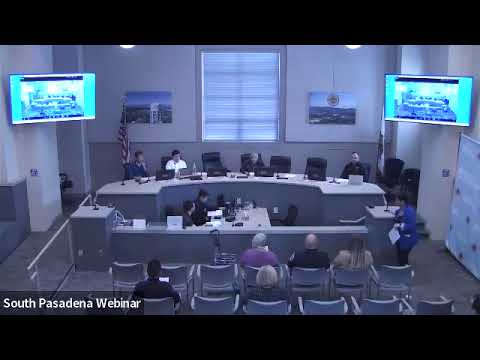
South Pasadena officials told the Public Safety Commission on May 12 that the city needs new radio infrastructure for the police department after years of aging equipment and recent communication problems during the Eaton fire.
The issue matters because the department’s analog radio system is more than 15 years old, lacks full encryption required for protected criminal-justice information, creates dead zones around the city’s geography and limits interoperable communication with neighboring agencies during multi‑jurisdiction incidents.
Lieutenant Shannon Robledo of the South Pasadena Police Department briefed commissioners on the department’s assessment and funding search. Robledo said the department’s “dispatch consoles, radio antennas, tower equipment, and vehicle radios have surpassed their expected life span and are no longer supported by the manufacturers.” She said the department is exploring congressional funding, homeland‑security grants and local support letters to cover the cost.
Robledo and department staff provided a preliminary cost picture: a full project estimate the department discussed with the commission was about $1,400,000; in more detailed breakdowns staff said antenna and site work are roughly $1,000,000 and the remaining radios and consoles about $400,000. The department also described a lower‑cost alternative — a microwave antenna — at an estimated $500,000–$600,000 if the full tower project is not fully funded.
Robledo described operational consequences during the Eaton fire that revealed gaps in cross‑agency communications. She said the department currently operates on analog frequencies while many neighboring agencies are on digital systems, and that “most of the cities within the San Gabriel Valley do have” encryption. The commission was told South Pasadena is able to continue operating on its current system while a documented plan is in place, but that the department must eventually meet Criminal Justice Information Services (CJIS) encryption requirements for broadcasting protected information.
Chief of Police (staff presentation) and Lieutenant Robledo said the mayor and city staff have sought letters of support from federal and state elected officials, including an outreach to Congresswoman Judy Chu, to pursue congressional funding. Staff identified other funding sources being pursued, including UASI (urban area security initiative) homeland‑security grants and state Office of Emergency Services allocations tied to 911 communications.
Commissioners asked for clarification on costs and timing. Staff said the full project, if funded and proceeding without delays, would likely take about two years to complete and that they are also continuing radio testing across the city to determine whether the microwave option would provide adequate coverage.
Staff noted prior investments the commission helped approve: the department has already purchased 50 digital handheld radios, and those devices are in service while broader infrastructure work continues.
Discussion and next steps: staff asked the commission to remain available to provide letters of support and to participate in budget hearings. No formal vote was taken; staff will return with more detailed scope, vendor testing results and recommended funding requests during budget season.
Commissioners and staff also discussed longer‑term regional options, including participation in a regional dispatch model (Verdugo/Glendale model) and cost‑sharing among adjacent cities. Staff said a regional approach would be a large undertaking likely requiring a multi‑year feasibility process, and that even with a regional dispatch the city would still need local transmitter/antenna infrastructure to address topographic dead zones in South Pasadena.
The presentation closed with staff inviting commissioners to attend upcoming budget meetings and to provide letters of support as staff refines grant and congressional requests.