Get Full Government Meeting Transcripts, Videos, & Alerts Forever!
Get email alerts on the Land Use Subdivision Moratorium topic
No spam. Unsubscribe anytime.
Planning commission requests formal workshop with commissioners and advances draft moratorium language on flag lots
Summary
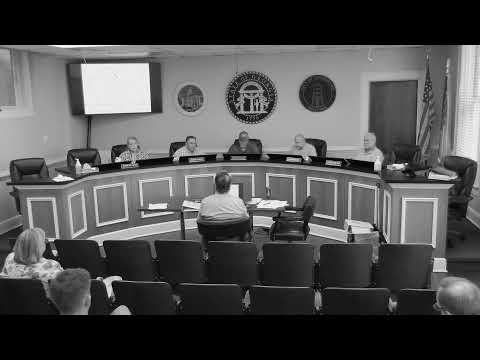
Upson County planning commissioners voted to request a formal workshop with the Board of Commissioners to resolve outstanding comprehensive‑plan and zoning questions and to advance draft subdivision changes addressing flag lots, internal access, and serial subdivision; staff will prepare a draft ordinance for review in June.
The Upson County Planning Commission voted to request a formal workshop with the Board of Commissioners and directed staff to draft ordinance language addressing flag lots, internal access (requiring internal roads rather than multiple driveways), and serial subdivisions.
Commission members said the changes are intended to protect rural character, reduce safety risks from numerous driveways onto county roads and close current subdivision loopholes that allow repeated splits without full subdivision review. The Commission asked staff to return with a draft ordinance and set public hearings after additional town‑hall outreach on definitions such as AR (Agricultural/Residential) and density.
During an extended discussion, members described several problem patterns in current practice: long, narrow “bowling‑alley” lots that provide only single‑lot river access; multiple separate driveways serving many lots along a county road; and serial splitting of property that avoids subdivision review. Staff presented examples of existing parcels in Upson County to illustrate the issues and said prior draft language had proposed separating flag‑lot “sticks” by 400 feet (rather than the previous standard of a single lot width) and adding a 12‑month restriction so a parcel split cannot be further subdivided without triggering subdivision review.
A planning commissioner emphasized the need to move the work forward: “We can’t just let it sit here any longer,” the commissioner said, urging a workshop with the Board of Commissioners and public outreach in rural communities such as Thurston and Yatesville. Commissioners also recommended bite‑sized work — taking zones or issues in sections — but agreed the flag‑lot and internal‑access items should be prioritized for the next packet.
Staff explained the draft moratorium language under consideration would temporarily restrict new flag lots, internal access patterns and serial subdivision while revisions are finalized. The planning department also noted that most of the proposed internal roads created by new subdivisions would be private unless the Board of Commissioners agrees to accept additional county roads; staff said that expectation typically leads developers to seek variances when paving is required.
Action taken at the meeting included a formal motion to request a workshop with the Board of Commissioners, which passed with an affirmative vote, and a unanimous vote to continue an advertised public hearing on subdivision amendments so staff can incorporate the planning commission’s input. Staff said a draft ordinance addressing the prioritized subdivision issues could be ready for the commission’s June packet and that public hearings would be scheduled thereafter.
Commissioners and staff recommended outreach to rural neighborhoods to collect community preferences on lot sizes, allowable rural uses (for example, livestock questions raised by residents), and how the county should define density and rural estate zoning. Several commissioners noted the comprehensive plan had been adopted previously but said community buy‑in on specific ordinance language needed reinforcement through direct engagement.
Next steps: staff to draft moratorium and subdivision amendment language for the June packet, schedule a formal workshop with the Board of Commissioners to align policy and definitions, and hold town halls in affected rural communities before final ordinance votes.