Get Full Government Meeting Transcripts, Videos, & Alerts Forever!
Get email alerts on the Special Education Services topic
No spam. Unsubscribe anytime.
Special services report: Deer Creek rolls out handbook, behavior analytics and expanded placements
Summary
The district described a new Special Services handbook, the addition of a board-certified behavior analyst, expansion of placement categories, and details about the Deer Creek Transition Center and extracurricular participation.
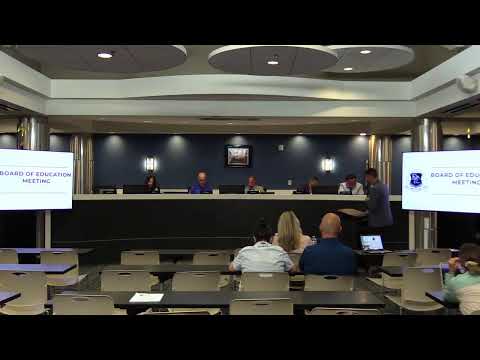
Dr. Tracy Blankenship, director of special services, presented the department's annual report to the board, outlining compliance work, new guidance materials and services to students with disabilities.
Blankenship said the district rolled out a Deer Creek Special Services Handbook to align internal practices with state and federal guidance and to provide a consistent resource for teams creating individualized education programs.
She described ongoing professional development on child-find, post-secondary transition and early childhood transition work; routine compliance items such as extended-school-year reviews; and a monthly special services newsletter intended to keep buildings aligned on deadlines and highlights.
A significant operational change this year was hiring a board-certified behavior analyst (BCBA) to support both special-education and general-education staff. Blankenship said the BCBA conducts weekly check-ins, assists with behavior-intervention plans grounded in functional behavioral assessment and created a data-tracking system to monitor interventions. She said several paraprofessionals completed Registered Behavior Technician certification with BCBA support.
Blankenship also said the district expanded its continuum of placements to add moderate cognitive and moderate behavior supports in addition to the existing mild and severe/profound categories, and that guidance tools were provided to help teams determine appropriate placements.
She described the Deer Creek Transition Center's work: the center served 31 students in grades 9-12 and five students ages 18-22 this year and received state-level 06/18 funding for a four-year program focusing on life skills and work-based learning.
Extra-curricular and enrichment engagement was also highlighted: about 80 students participated across elementary to high school in adapted sports and 21 partner athletes participated at the secondary level. Blankenship noted a sensory-friendly concert created in partnership with the middle- and high-school orchestra for students in moderate-cognitive and severe-profound classrooms.
The board did not take separate action on the report; the presentation was informational.