Get Full Government Meeting Transcripts, Videos, & Alerts Forever!
Get email alerts on the Juvenile Services Becca Funding topic
No spam. Unsubscribe anytime.
Spokane County warns 70% BECCA funding cut will shrink truancy casework and force hard budget choices
Summary
County staff and commissioners discussed a state decision to cut BECCA funding by roughly 70%, the impact on Spokane County’s truancy and at‑risk youth case management, and options including legal review, intercounty coordination and reprioritizing county resources.
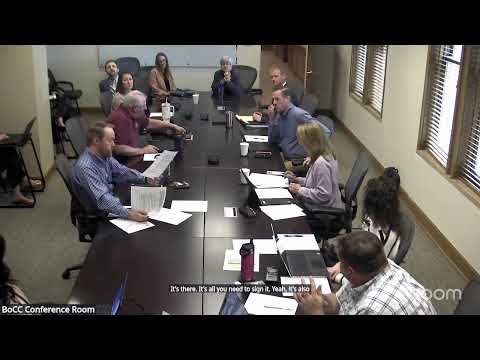
Spokane County officials told the Board of County Commissioners on May 12 that a roughly 70% cut in state BECCA funding will sharply reduce money the county uses for truancy case management and related juvenile services and will force difficult budget tradeoffs.
The discussion, at a special budget workshop, focused on what the loss of the state BECCA allocation will mean for the county’s juvenile court, school‑based interventions and community case managers. Tory (staff member) described the program’s work as “case management work other than the administrative stuff. It’s removing barriers. It’s do they need housing? Okay. Case manager,” and said the program helps families obtain counseling, parenting skills training and other supports to get students back into school.
County staff and commissioners said the program has been costly but preventive: staff estimated Spokane County’s BECCA award has averaged about $1.3 million a year; the county projects a roughly $460,000 shortfall for the current year if the state funding is reduced as proposed. County staff also gave a five‑year cumulative estimate of approximately $6.6 million less in state BECCA support under the current projections.
Why it matters: BECCA is the Washington framework used to coordinate school referrals, community supports and, in some cases, court filings for truant or at‑risk youth. County leaders said the funding supports case managers who work with families and schools to resolve attendance and safety issues before they escalate into dependency or criminal cases — a role they described as saving money in the long run by reducing later court, prosecutor and public‑defender costs.
At the workshop, staff traced the process that leads to court involvement: schools typically refer truancy matters and community engagement boards attempt interventions first; many petitions are resolved with school and family engagement and do not require contested hearings. Tory told the board that “about 70%” of filings are resolved through those early interventions rather than contested court proceedings.
County officials raised legal and policy questions. RCW 13.32A.300 — the statute the county cited during the meeting — was invoked as part of the discussion about whether the state can impose program obligations without full funding. Commissioners and staff said they had asked county legal counsel to review whether the legislature’s reduction could be challenged and whether counties would be protected from an “unfunded mandate.” Several commissioners asked staff to coordinate with statewide peers (including the Washington State Association of Counties and the Superior Court judges’ associations) about possible coalitions or litigation.
Staff presented several practical concerns and options. They said the work supported by BECCA funds is not optional: schools are still required to file petitions when criteria are met, and the court must process filings when they are brought. If the county assumed responsibility for services now funded by the state, staff warned, the county would need to reallocate general fund money from other priorities or cut levels of service in other departments.
County prosecutors and public defenders also discussed operational impacts. Prosecutor’s office representatives and public defenders said the caseloads carried by two dedicated attorneys and supporting staff would be difficult to absorb without continued funding; staff noted that if the county used private counsel to meet statutory obligations it could cost more than current in‑house staffing.
Commissioners asked for more precise scenarios. They requested that staff return quickly with: a breakdown showing what could be done with the county’s estimated new annual BECCA allocation (roughly $397,000 under the draft formula staff described); an assessment of legal remedies and the history of prior settlements and litigation tied to BECCA funding; and outreach to other counties to compare practices and filing rates.
County staff also noted other possible short‑term steps being explored at the state level, including requests by the Association of Washington Courts and the Administrative Office of the Courts for supplemental or alternative funding, and the possibility that the governor’s actions on the budget (vetoes or special sessions) could change the final amounts.
Looking ahead, commissioners and staff said they wanted to avoid telling schools not to file petitions — a course they said would risk students who need early intervention — and instead planned to pursue a mix of legal review, intercounty coordination and internal budget reallocation analysis. The board directed staff to return with the scenario analyses and legal options so the commissioners could make budget decisions in the coming weeks.
The discussion did not include a formal vote or motion to adopt a specific policy; the board instead directed staff to pursue the follow‑up work described above.