Get Full Government Meeting Transcripts, Videos, & Alerts Forever!
Get email alerts on the History Northern West topic
No spam. Unsubscribe anytime.
Missoula lecture traces Northern West from early explorers and fur trade to railroads
Summary
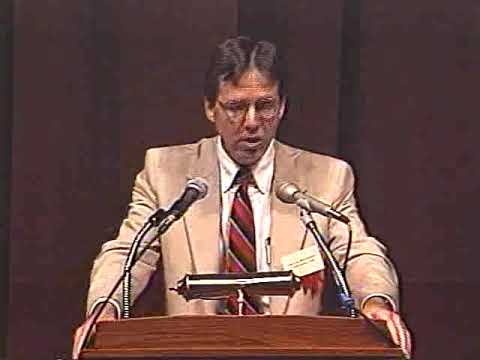
An unnamed presenter in Missoula recounted the history of the U.S. Northern West, focusing on European and American exploration, the fur trade, treaty-making, and the later arrival of railroads that reshaped the region.
Presenter delivered a roughly 39‑minute public lecture in Missoula that traced the history of the "Northern West," the northern tier of states stretching from the Red River to the Strait of Georgia. The talk reviewed early European and American exploration, the 19th‑century fur trade, treaty-making with Indigenous nations, and the arrival of railroads that consolidated U.S. control of the region.
The speaker framed the talk as an exploration of an "occasional region," saying, "It's a pleasure to be in Missoula," and noting that, in his view, "the two garden spots in Washington territory...were the Bitterroot Valley and Whidbey Island." He defined the Northern West to include North Dakota, South Dakota, Montana, Wyoming, Idaho, Oregon and Washington and emphasized common threads such as transcontinental railroad routes and Lewis and Clark's legacy.
The lecture recounted early European attempts to reach the Pacific, highlighting explorers such as Pierre de la Vérendrye and Captain James Cook and commercial discoveries by Robert Gray, whose 1792 entry to the Columbia River the presenter described as foundational to later American claims. The speaker also discussed Arctic and Pacific expeditions that spurred fur trading activity along the Northwest Coast.
A substantial portion described the fur trade and its social institutions: trading brigades, rendezvous, and the dominance of companies headquartered in St. Louis and, in the north, the Northwest Company and the Hudson's Bay Company. The presenter listed mountain men and traders including Jedediah Smith, William Sublette, Jim Bridger and Hugh Glass and noted places that grew from the fur trade era, such as Fort Benton and Astoria.
On American expansion, the lecture covered the Louisiana Purchase (noting its scale and the speaker's figure of 820,000 square miles purchased for 3 cents an acre) and the Lewis and Clark expedition's dual scientific and territorial objectives. The presenter described how Lewis and Clark demonstrated that a practical water route to the Pacific did not exist and how their crossing of the Bitterroot Mountains and contact with tribes shaped later settlement patterns.
The speaker addressed missionary activity and early settlements, naming Marcus and Narcissa Whitman, Henry and Eliza Spalding, and Father Jean‑Pierre De Smet, and noting the role of mission stations and fur‑trade infrastructure in early community formation. He also discussed Isaac Stevens's 1853 railroad survey, his treaty councils with Indigenous nations (including the Hell Gate councils) and the immediate conflicts that followed, which the presenter said undermined short‑term stability.
The lecture concluded with the political subdivision of the region and the coming of railroads: the creation of territories (Washington Territory in 1853; Dakota and Idaho in 1861; Montana in 1864; Wyoming in 1868), the Northern Pacific reaching Bismarck, and rail connections from the Columbia River to Tacoma by 1873. The presenter argued that these developments fulfilled the long‑standing American objective of a Pacific outlet, closing the era enshrined in Jefferson's and later leaders' visions.
The talk ended with thanks from the presenter.