Get Full Government Meeting Transcripts, Videos, & Alerts Forever!
Get email alerts on the Court Procedures Remote Arraignments topic
No spam. Unsubscribe anytime.
Judge Hayward details rights, plea options and Zoom procedures during Clayton County arraignments
Summary
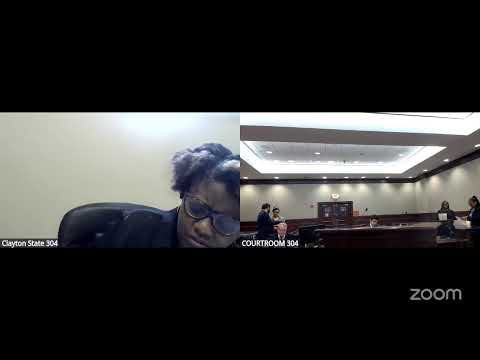
At the May 12 arraignment calendar in Clayton County State Court (Courtroom 304), Judge Tammy Long Hayward reviewed defendants' rights, explained plea options including no contest (nolo), and gave step‑by‑step instructions for remote participants to display full names and use breakout rooms and interpreter services.
Judge Tammy Long Hayward opened the Clayton County State Court arraignment calendar for May 12, 2025, and told defendants what to expect when their cases are called: plea options, remote‑hearing procedures and limits on self‑representation.
The judge advised video participants to put their full first and last names on the Zoom roster so staff can identify them and credited them as present. “So if you don't know how to change it, click on the box that [your] name appears on,” Hayward told the remote audience, then walked through the blue‑dots › Rename › enter full name sequence.
The explanation mattered because the arraignment calendar is the first appearance in trial court for many cases and determines whether a defendant pleads guilty, not guilty or “nolo contendere” (no contest). “I expect to hear one of three things, a plea of not guilty, guilty, or no low,” Hayward said. She described what each plea means, the protections the defendant gives up by pleading guilty or nolo, and the state's burden at trial.
Why it matters: the judge's instructions framed both legal rights (including the Fifth Amendment protection against self‑incrimination) and practical consequences — for example, how certain pleas can affect driving records and future appeals.
Most important procedural points
- Counsel and confer: Everyone is “entitled to have an attorney represent you,” the judge said. If a defendant cannot afford counsel or needs appointment, they should tell the court when their name is called.
- Remote identification: Hayward repeatedly instructed remote participants to use the Zoom rename function and to keep devices muted during conferences. Court staff used chat messages and breakout rooms to collect phone numbers and to confer privately with counsel.
- Plea implications and appeals: Hayward advised that a not‑guilty plea preserves the right to trial and that a conviction at trial can be appealed within 30 days of the verdict. She described the maximum penalties for trial convictions frequently used by the court: up to 12 months in jail, a $5,000 fine, or both per offense, as she explained on the record.
- Nolo (no contest) eligibility: The judge said a nolo plea may help in traffic cases to avoid points or license suspension, but only if the defendant is “Nolo eligible,” meaning the plea has not been used in the past five years for the same or similar offense.
- Commercial driver's licenses: Hayward warned defendants holding commercial driver’s licenses that the court cannot predict how a plea or conviction will affect federal or state commercial‑license rules and encouraged defendants to investigate those consequences before pleading.
Accommodations and accessibility
The court used interpreters and other accommodations where needed. In one case the judge and counsel arranged for the defendant to view a pinned video and to have the court speak louder for a person who said she was hearing impaired; the judge also put defendants into breakout rooms so probation staff could explain reporting requirements and special conditions.
Probation and reporting
Hayward emphasized that probation reporting is mandatory and that “the quickest way to get rearrested or to fail in probation is to not go to your probation reports.” The court assigned probation officers to explain conditions in breakout rooms after plea proceedings.
What the court instructed defendants to do next
Defendants were repeatedly told to: (1) check their bond conditions with the state court clerk's office on the First Floor, (2) update their address and contact information so mailed notices reach them, (3) consult counsel before entering pleas that might affect employment (especially commercial drivers), and (4) report promptly to probation if placed on supervision.
Ending note
Hayward closed the arraignment instructions by reminding participants that trials are in‑person events and that proceeding without counsel is uphill work. The court then called calendars and used breakout rooms, chats and directed conferences to resolve or schedule cases.