Get Full Government Meeting Transcripts, Videos, & Alerts Forever!
Get email alerts on the Labor History topic
No spam. Unsubscribe anytime.
Author J. Anthony Lucas traces Haywood trial, Coeur d'Alene labor clashes and Montana’s role
Summary
At a Helena Public Library lecture, author J. Anthony Lucas outlined his research on the 1907 trial of labor leader “Big Bill” Haywood, the 1905 assassination of former Idaho Gov. Frank Steunenberg and cross‑border labor conflicts that drew federal troops into Idaho and Montana.
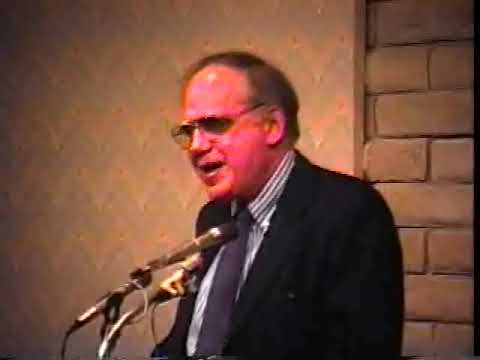
Author J. Anthony Lucas, a two‑time Pulitzer Prize winner, told an audience at the Helena Public Library that his current book examines the 1907 trial of William “Big Bill” Haywood and the earlier labor violence and federal response in the Coeur d'Alene mining district that prosecutors said led to the 1905 assassination of former Idaho Gov. Frank Steunenberg.
Lucas said the case grew out of a string of labor confrontations in northern Idaho, including a violent 1899 episode at the Bunker Hill mill and an 1892 incident in Burke that drove nonunion miners toward Montana. He described how James McParland, the Pinkerton detective who infiltrated labor organizations in the Pennsylvania coalfields, became the principal investigator in the Steunenberg murder and obtained the confession of a man who identified himself as Harry Orchard.
“Facts are nothing without their nuance, sir,” Lucas quoted Norman Mailer, recounting his view that journalism and history must capture the subtler motives and contexts behind events. He said that impulse—to trace “personal, family and tribal” histories—was part of why he moved from daily reporting to longer historical work.
Lucas described Montana’s entwined role in the story: Butte unionists helped organize and fund efforts across the border in Idaho, and some miners fled into Montana after violent confrontations. He recounted military and law‑enforcement movements across state lines, including actions by troops of Company D, 24th Infantry, which accompanied Idaho deputies into Montana in operations to detain suspected fugitives.
Lucas summarized federal correspondence and congressional hearings he reviewed, saying telegrams from Lieutenant Henry G. Lyon to General Henry Clay Merriam expressed mounting frustration with local Montana officials in Missoula and other places. He read Lyon’s line that a “secret raid executed at 2 this morning was frustrated by indifference or treachery of local officers,” and noted Republican and Democratic committee findings disagreed over Merriam’s conduct during the operations.
Lucas placed the 1907 Haywood trial in Boise in that broader context, calling it “the trial of the century” in its time and saying it followed the prosecution’s theory that union leaders had orchestrated violent acts in retaliation for mine owners’ actions. He told listeners he had been drawn to the story by its cast—detectives, newspaper figures and violent confrontations—and by the difficulty of conveying nuance in daily journalism.
Lucas concluded by noting the regional resonance of the events for Montana audiences and reiterated that his current book will explore the Haywood trial and the surrounding labor strife.