Get Full Government Meeting Transcripts, Videos, & Alerts Forever!
Get email alerts on the Massage Therapy topic
No spam. Unsubscribe anytime.
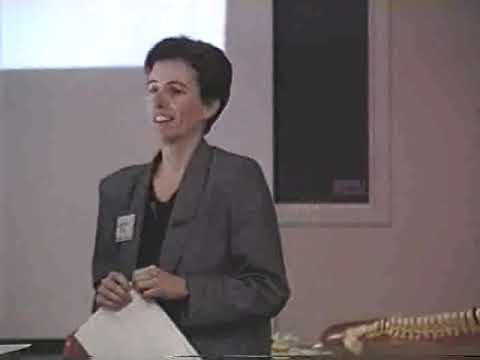
Massage therapy presented as clinical tool for chronic pain at Missoula conference
Summary
At a Missoula conference, a massage therapist told medical practitioners and patients that massage can interrupt pain cycles and aid remediation of chronic muscular problems, and urged more integration and research.
At a public conference hosted by the Institute Of Medicine And Humanities in Missoula, a presenting massage therapist described clinical massage as a hands‑on modality that can interrupt pain cycles and aid remission of chronic soft‑tissue dysfunction.
The presenter said the work is effective for many patients who have not found relief from other treatments. "Pain is a great motivator," the presenter said. "Massage therapy is effective. It works for them." The speaker described massage as affecting the sensory‑motor reflex arc and said trained touch can introduce new sensory input that changes motor response and reduces pain.
The session drew conventional medical practitioners, medical historians and a range of alternative practitioners, and included a brief demonstration of self‑massage for the audience. The presenter said the field of bodywork is broad and that practitioners grouped massage into a scope‑of‑practice model in 1991 that ranges from relaxation to remedial clinical work to holistic practice.
In describing clinical effects, the presenter said massage can "mechanically force out the toxic irritants that accumulate at nerve receptor sites which cause the pain" and that it can eradicate trigger points. The presenter referred to research and clinical writing by Janet Travell and David Simmons on myofascial pain and called massage "a therapy of choice for treating trigger points." The speaker emphasized that massage therapists train specifically in types of touch and their physiological effects.
The presenter also discussed practical limits in Montana, saying the state then lacked uniform regulation of massage training and licensure. That lack of regulation, the presenter warned, can mean variability in practitioner skill when massage is applied in remedial or clinical settings.
Quantitative details mentioned during the talk included the presenter’s statement that "there are more than 100 techniques of bodywork and massage therapy" and the claim that although the United States will spend roughly $1,000,000,000,000 on health care in a year, "$64,000,000,000 of that ... two thirds of that $1,000,000,000,000 will be spent to alleviate the pain due to ischemia" — an apparent numeric inconsistency in the speaker’s remarks that was recorded verbatim.
Panelists and patients on the program described massage as part of a rehabilitation sequence in which massage reduces hyperconstriction and other therapies (for example, physical therapy) follow to restore strength and function. The presenter said the most successful clients "are the one who take responsibility for their own healing process," and urged further education and research so massage can be used more fully in mainstream care.
The panel closed with the presenter expressing hope for continued dialogue and education: "I'm looking forward to a continued dialogue, and I thank you again for your time and your attention."