Get Full Government Meeting Transcripts, Videos, & Alerts Forever!
Get email alerts on the Insurance Deductible Savings topic
No spam. Unsubscribe anytime.
Committee advances bill allowing tax‑deductible deductible savings accounts for insurance deductibles
Summary
House Bill 127 would let policyholders make tax‑deductible contributions to savings accounts to cover insurance deductibles and fortified‑roof upgrades; the Ways and Means Committee voted to report the bill favorably.
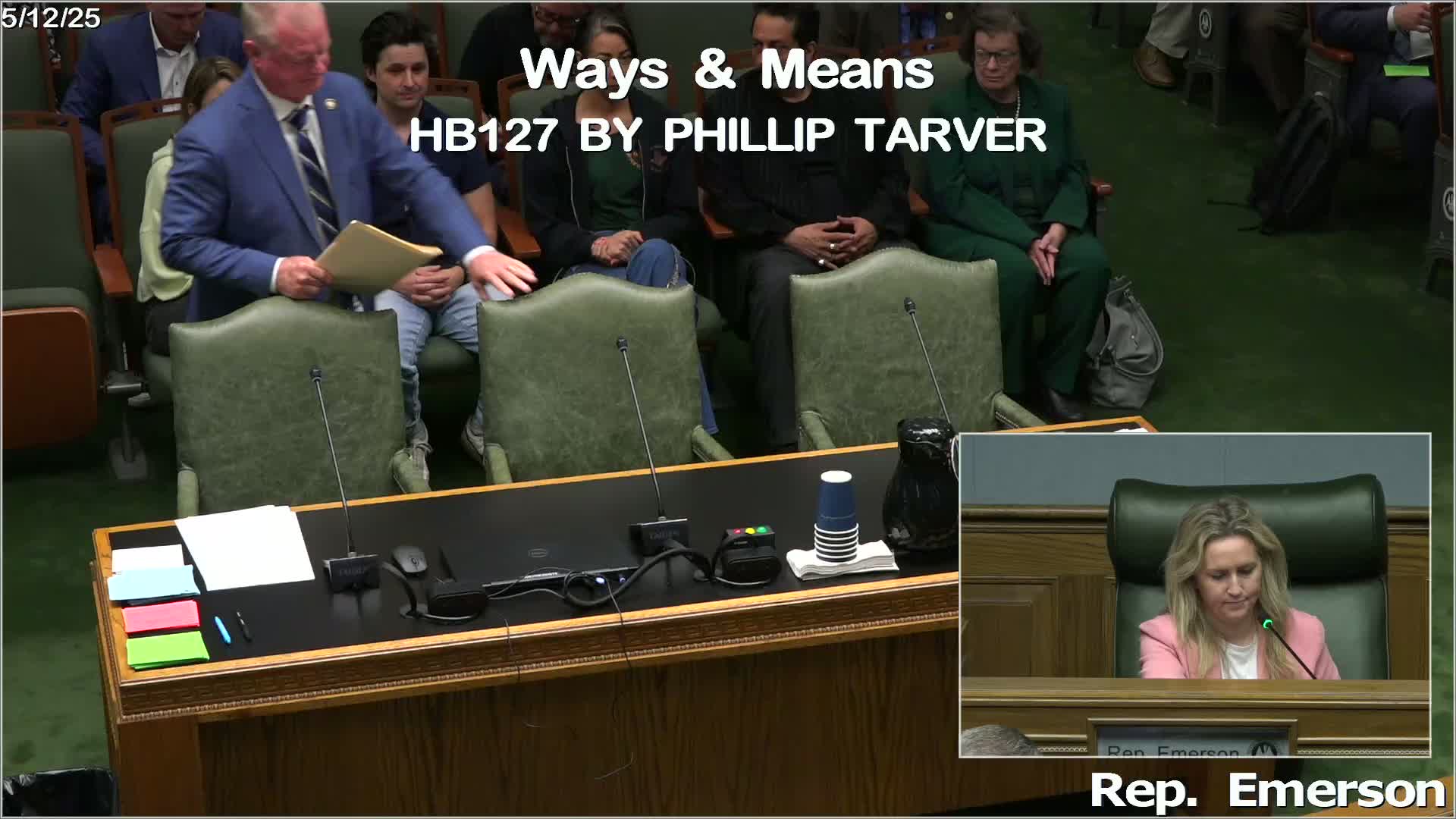
Representative Tarver introduced House Bill 127, which would allow policyholders to make tax‑deductible contributions to designated savings accounts (regular or money‑market) to cover allowable uses including a policyholder’s deductible, fortified‑roof upgrades, or supplemental additional living expenses. The bill sets a maximum contribution equal to twice the policyholder’s qualifying deductible or $25,000, whichever is less.
Tarver described the proposal as “a little piece of the puzzle” to help homeowners cover the out‑of‑pocket deductible that often delays repairs after a loss. Adam Patrick of the Department of Insurance spoke in support and offered to answer member questions. Insurance Commissioner Tim Temple was present and had a white card on file. Representative Farnham voiced support and moved to report the bill favorably; the committee agreed by voice and the bill was reported favorably.
Why it matters: supporters said the deduction would help homeowners begin repairs without waiting for insurer payments and could ease cashflow pressure after storms. The committee recorded no objections and advanced HB 127 to the next stage.
Details: permitted uses include paying a policyholder’s deductible, installing a fortified roof, or covering additional living expenses while a residence is uninhabitable; the contribution cap is twice the qualifying deductible up to $25,000.