
Senate expands felony penalties for endangering children, elderly and disabled by fentanyl (House Bill 166)
Get AI-powered insights, summaries, and transcripts
Subscribe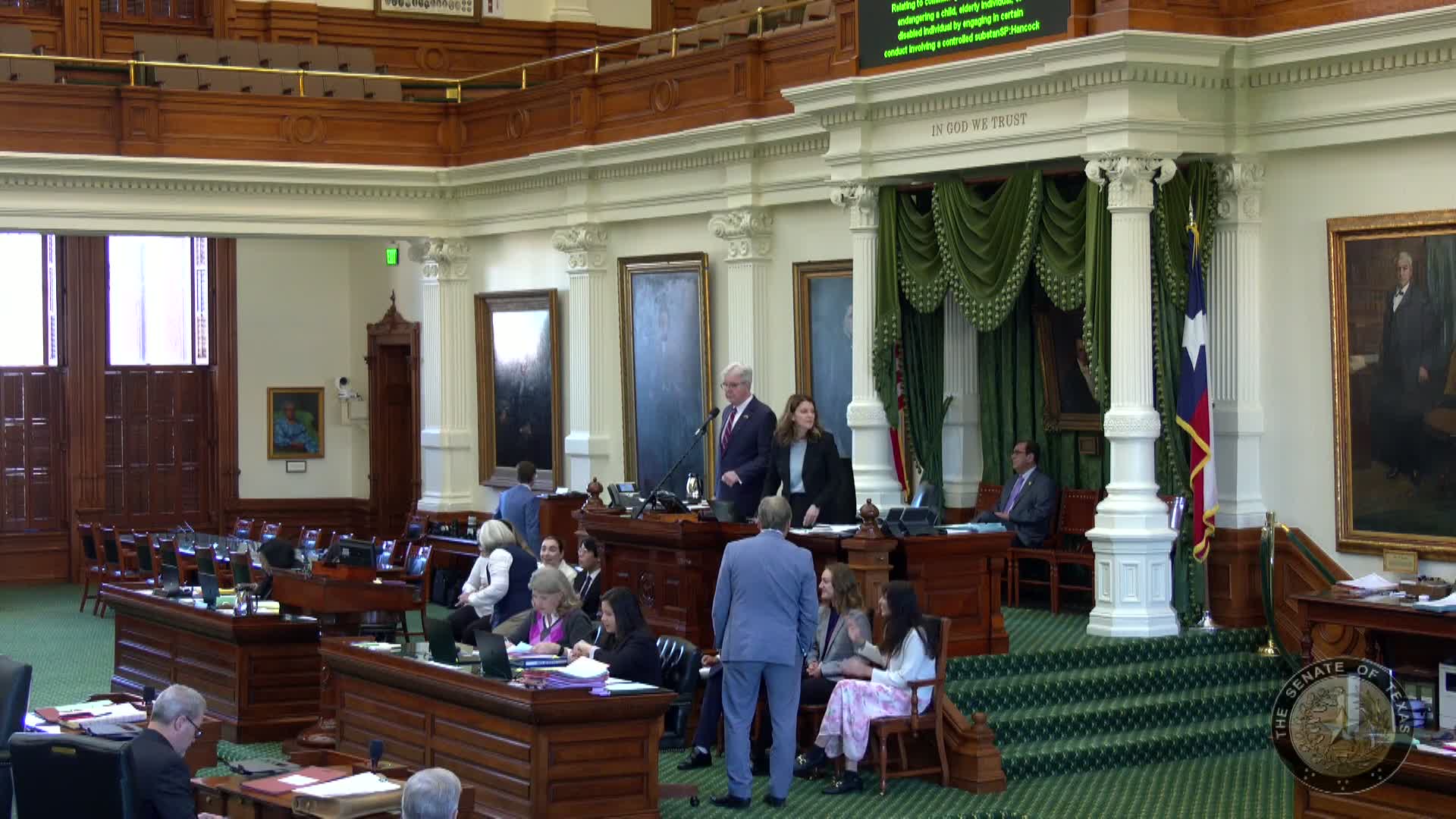
Summary
The Senate passed House Bill 166 to add fentanyl and related substances to the penalty group used for prosecutions of endangering a child, elderly person, or disabled person, raising the offense's severity in cases involving those vulnerable populations.
Senator Hancock presented and the Senate passed House Bill 166, which expands the substances covered by the statute that criminalizes endangering a child, elderly individual, or disabled individual by exposing them to certain controlled substances.
Under existing law, exposing a vulnerable person to methamphetamine in a way that places them in imminent danger can be a state jail felony. House Bill 166 adds fentanyl and related opioids to the penalty group applicable to the offense, bringing them into the penalty group 1B category that already covers fentanyl and similar substances.
"With this, we strengthen protections to children, elderly individuals, and disabled individuals by expanding the substances listed in the penal code that endangered these vulnerable populations," Senator Hancock said on the floor. Sponsors said the change increases penalties in cases where fentanyl exposure places a vulnerable person at imminent risk of death, bodily injury or mental impairment.
The Senate passed the bill on third reading and final passage after suspending rules; the roll call shows final passage with 30 ayes and 1 nay. The bill's caption, as read on the floor, addresses the criminal offense of endangering a child, elderly individual, or disabled individual by engaging in conduct involving a controlled substance.
If enacted, the statute will treat certain fentanyl-related conduct that endangers vulnerable people under the more severe penalty grouping identified in statute; the transcript did not specify retroactivity, sentencing ranges or required changes to charging practices by prosecutors.