
Legislative subcommittee hears two‑dozen hours of capital requests; 257 signed up, $2 billion sought for roughly $500 million available
Get AI-powered insights, summaries, and transcripts
Subscribe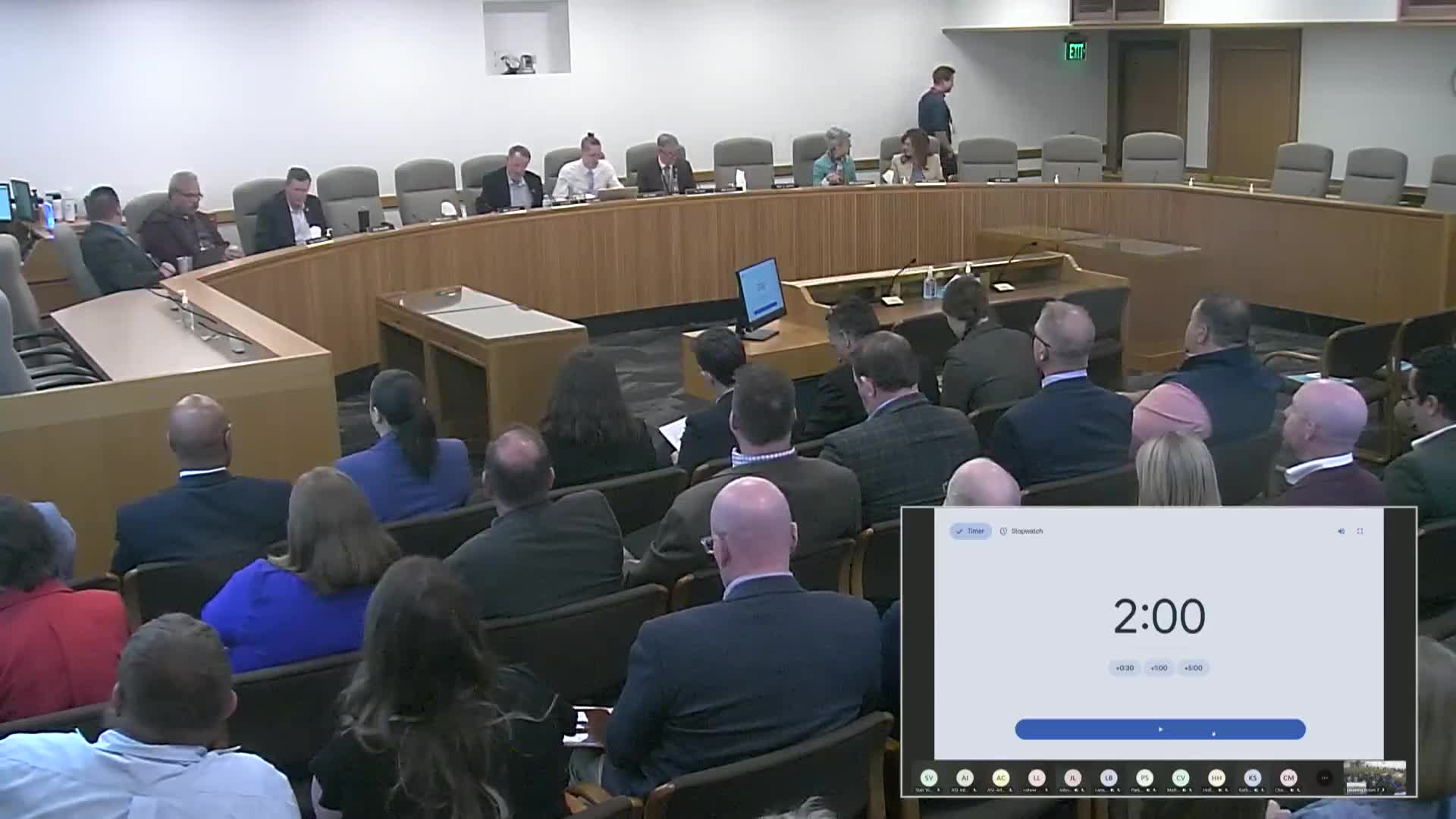
Summary
The Joint Capital Construction Subcommittee opened public testimony on Senate Bill 5531 on May 9, 2025, with committee leadership warning the room it had 257 people signed up to speak and about $2 billion in capital requests while roughly $500 million remained available.
The Joint Capital Construction Subcommittee opened public testimony on Senate Bill 5531 on May 9, 2025, with committee leadership warning the room it had 257 people signed up to speak and about $2 billion in capital requests on the table while roughly $500 million remained available.
The co‑chair said the committee would limit each project’s testimony to two minutes and that remote callers and duplicate project appearances would not be heard at the dais that day. “We have 257 people signed up to speak. That's 257. Obviously, we can't hear from everyone, so we've made it pretty easy,” the co‑chair said.
Why it matters: testimony covered dozens of projects across the state — from municipal water and wastewater upgrades to school buildings, affordable and middle‑income housing, childcare centers, emergency‑operations upgrades and cultural and community facilities. Committee members and witnesses repeatedly framed requests as prerequisites for housing production, public‑safety readiness, compliance with state and federal permits, or to keep locally planned developments affordable and shovel‑ready.
Most prominent numbers and context
The co‑chair told the room there were about $2,000,000,000 in funding requests and about $500,000,000 available in the package under discussion. Committee procedures limited speakers to two minutes per project and prioritized in‑room testimony over remote callers; the co‑chair said additional hearings and remote testimony sessions would follow.
What witnesses said
Local officials, nonprofit leaders and utility managers described specific capital needs. Nicole Rutherford, Coos Bay city manager, asked the committee to fund $5,700,000 for a pump station and forcemain to support the Timber Cove housing development, which she said would add 400 single‑family homes inside the city's urban growth boundary.
Danielle McBain, executive director of Mosaic Community Health, requested $4,000,000 in bond funding for a 42,000‑square‑foot Connors campus in Bend that she said would add clinical capacity co‑located with affordable housing and serve low‑income patients across Central Oregon.
Grant requests spanned the state and scales: municipal water or wastewater projects (requests ranged from small repairs to multi‑million dollar plant replacements), fire stations and backup generators, school and Head Start facility upgrades, port and navigation work, and cultural and community centers.
Process and next steps
Committee leadership repeatedly emphasized process limits: two minutes per project, speakers grouped by project, and a promise to continue hearing testimony at later sessions and by remote participation if time ran out.
No formal votes or funding decisions were taken at the May 9 hearing; the committee collected testimony to inform its capital budget deliberations and possible amendments to SB 5531.
Ending
Committee staff said a remote invited‑testimony session would be scheduled the following week for speakers who could not be heard in person. The committee will review testimony alongside agency reports and cost estimates as it shapes final funding recommendations.