
Committee advances State Lands budget and bills to create Elliott State Research Forest account; debate centers on timber revenue and past purchase costs
Get AI-powered insights, summaries, and transcripts
Subscribe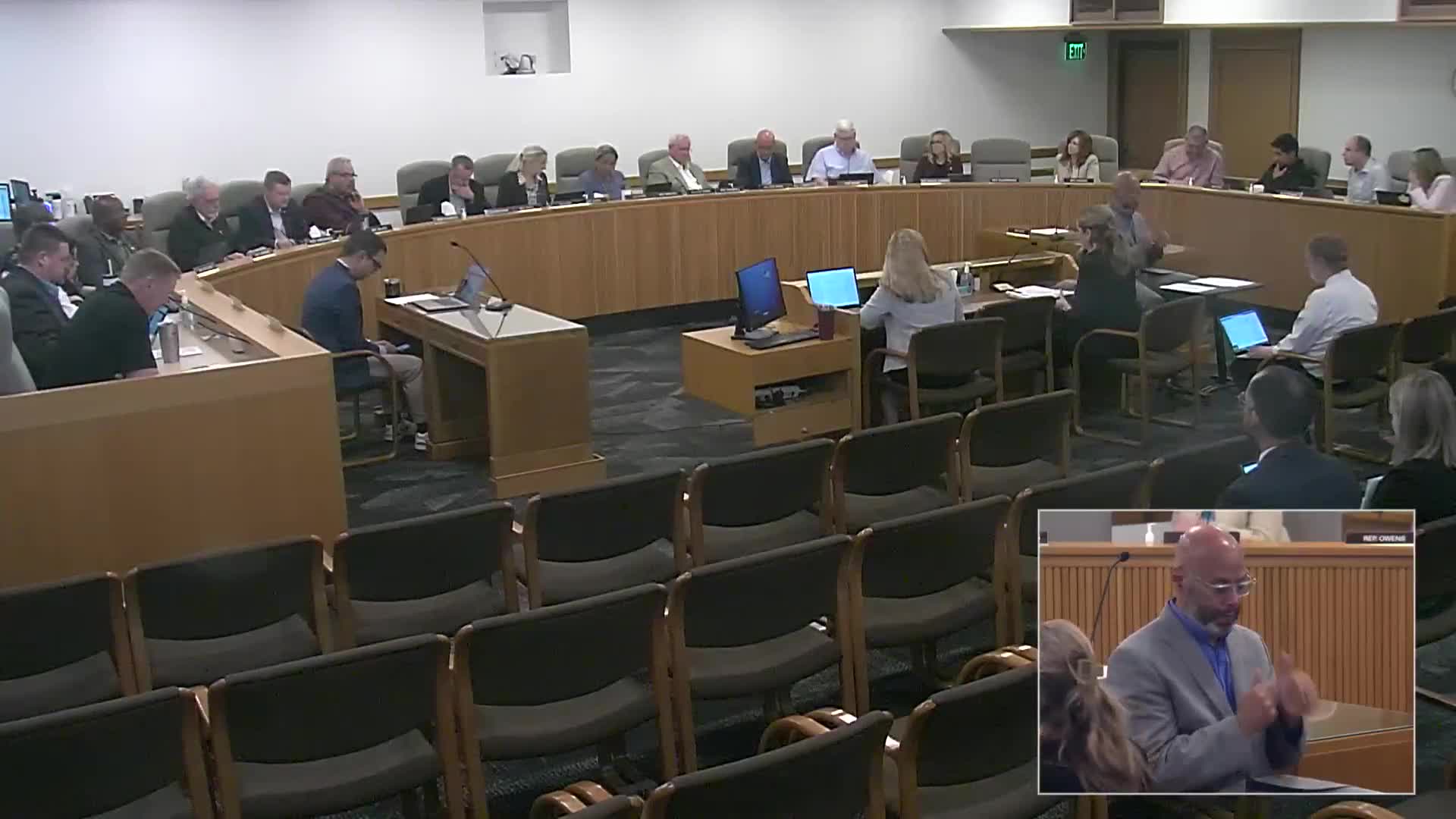
Summary
The Natural Resources Subcommittee recommended SB 5539 and SB 147 be reported out do pass as amended; debate focused on timber revenue timing, carbon credits and the state’s prior payments to the Common School Fund when the Elliott was decoupled.
The Natural Resources Subcommittee recommended Thursday that Senate Bill 5539, the Department of State Lands budget bill, and Senate Bill 147, relating to the Elliott State Research Forest, be reported out do pass as amended. Committee members debated projected timber revenues, federal permits and the state’s prior payments to the Common School Fund when the Elliott was decoupled from that fund.
Senator Anderson presented SB 5539 as the department’s budget bill. The subcommittee recommended a package that the presenter said totaled, in the transcript, a figure described variously; the recommendation reflected a large increase above current service levels driven in part by continuation of earlier one‑time funding for the Portland Harbor Superfund, technology investments and funding for abandoned and derelict vessel removal and continued management of the Elliott.
Specific allocations mentioned in the work session included $7,500,000 for legal, operational and remediation costs related to the Portland Harbor Superfund site; $3,500,000 for final implementation of the lands administration system replacement; $11,200,000 for the abandoned and derelict vessel program; $10,000,000 for geological carbon research on state lands; and $12,000,000 for continuing forest management of the Elliott State Forest, Research Forest. The subcommittee recommended SB 5539 be amended by the dash‑1 amendment and reported out do pass as amended.
Senate Bill 147, presented later in the session by Senator Anderson, renames the Elliott State Forest to the Elliott State Research Forest, transfers management responsibilities from the Oregon Department of Forestry to the State Land Board (with administration by Department of State Lands under the dash‑a‑4 amendment), decouples the Elliott from the Common School Fund, and establishes the Elliott State Research Forest account. The amendment continuously appropriates funds to the Department of State Lands as the administrative agency and removes the ability to transfer monies into the new account, according to the presenter.
Legislative Fiscal Office staff estimated revenue for the Elliott at about $8,900,000 in harvest receipts anticipated in the 2027–29 biennium, with potential carbon credit revenue estimated at about $900,000 per year over a 20‑year period once those credits begin; LFO staff said a start date for credits is not established. The budget for the Elliott’s operations in the 2025–27 biennium was described as $10,000,000, with roughly $2.1 million for staffing and $6.9 million for contracts related to monitoring, harvest and an anticipated Habitat Conservation Plan that is pending federal approval.
Senator Brock Smith described the plan as returning timber harvest to local loggers and mills, saying, “we will be having trees, harvested by local loggers and those sticks are going to be going to local mills and it will be generating revenue again for the first time in decades.” Other members raised concerns about duplicative wetland mitigation with the Army Corps of Engineers, costs to counties and long‑term management funding. One speaker described the policy as a shift from using forest assets to fund schools toward storing timber and selling carbon credits.
Committee members also discussed how the state financed the Elliott purchase: the transcript records that the state made two payments into the Common School Fund when the Elliott was decoupled — the first a $100 million issuance of certificates of participation and the remaining $121 million paid from the general fund — and that debt service on the COPs remains outstanding and is being paid from the general fund.
Action: The Natural Resource Subcommittee recommended SB 5539 be amended by the dash‑1 amendment and reported out do pass as amended and recommended SB 147 be amended by the dash‑a‑4 amendment and reported out do pass as amended. Several members said they would vote no on SB 147; the transcript records individual statements of opposition but does not include a roll‑call tally.
Why it matters: The bills move management and funding authority for the Elliott and allocate millions for remediation, research and forest management. Projections for harvest revenue and carbon credits, and outstanding debt tied to the forest’s purchase, shaped committee members’ support and opposition.
What’s next: The bills were recommended out of subcommittee and will continue through the Ways and Means process; some implementation elements are contingent on federal approvals such as an incidental take permit and the Habitat Conservation Plan.