
Committee advances 98 funding bill after fraught debate over rate and scope
Get AI-powered insights, summaries, and transcripts
Subscribe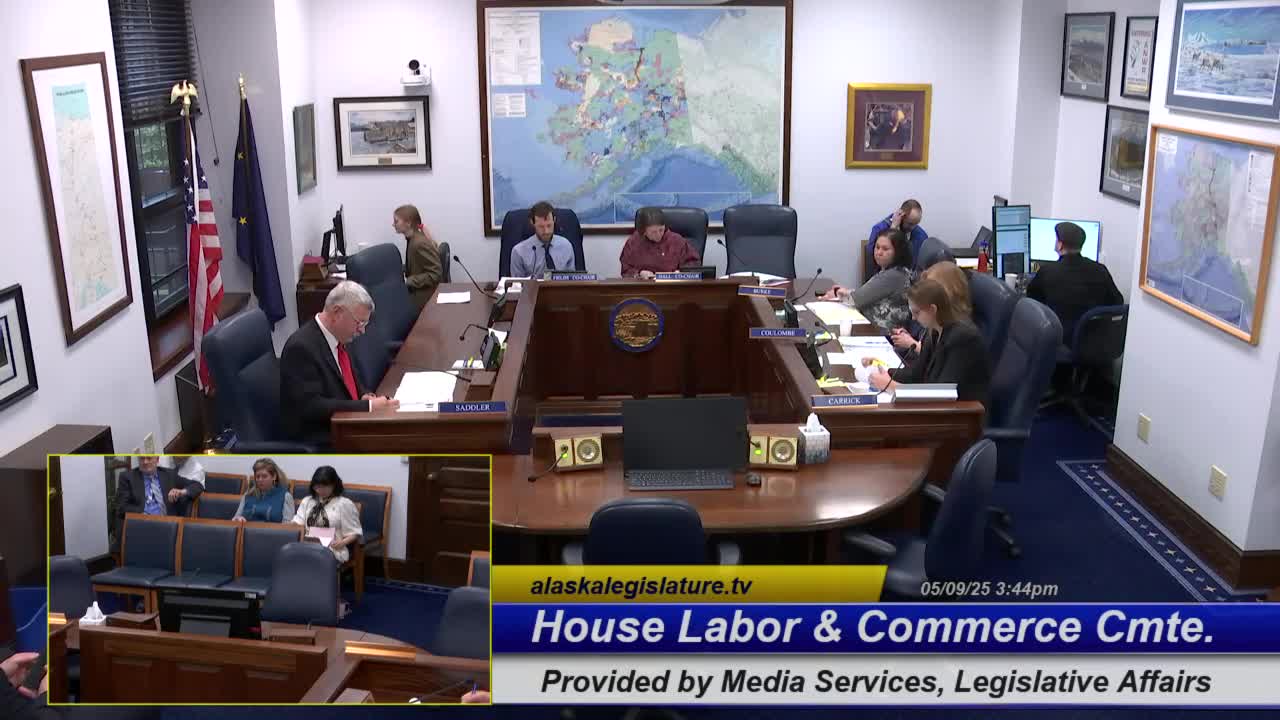
Summary
The House Labor and Commerce Committee advanced House Bill 138 to create a telephone surcharge to fund behavioral‑health crisis services, approving the bill as amended after months of debate over the per‑line fee and permitted uses.
The Alaska House Labor and Commerce Committee voted 4‑2 to report House Bill 138 out of committee as amended, advancing legislation that would create a monthly surcharge on wireless and landline telephone service to fund behavioral‑health crisis services, including 988 crisis‑line support, mobile crisis teams and crisis stabilization centers.
Supporters from state boards, health systems and first responders said the surcharge would provide a sustainable funding stream for growing demand. Kermit Wilson, executive director of the governor’s advocacy boards for the Alaska Board of Mental Health and the Advisory Council on Alcoholism and Drug Abuse, said calls to crisis services set a record in 2024 at "just under 40,000 calls." South Central Foundation told the committee it is investing more than $120 million to build crisis stabilization and residential centers; Darcy Nazaroff, director of operations for South Central Foundation’s Behavioral Services Division, said the surcharge would help make those facilities sustainable.
Opponents — including utilities — warned the surcharge is regressive and could push low‑income customers off service. Jason Custer, vice president of Alaska Power & Telephone, said a 98‑cent monthly surcharge would raise a typical Lifeline bill of about $8 by roughly 12% and that utilities would likely pass administrative costs to consumers. "We anticipate the rate increase will cause some customers to just discontinue telephone service," he told the committee.
Committee debate focused on the per‑line amount and allowable uses for the new fund. Representative Colom offered amendments to lower the surcharge (proposed 48¢) and to restrict expenditures to 988 operations; those narrower amendments failed on recorded votes of 2‑4. Representative Sadler proposed an amendment to allow the surcharge to be adjusted annually based on actual costs but with a cap; that amendment also failed 2‑4 after a conceptual change was rejected. Representative Fields offered an amendment to delay the bill’s effective date to 2026 to give telecommunications providers more time to implement billing changes; that amendment was adopted.
Representative Mina, the bill sponsor, said she is open to excluding Lifeline telephone lines from the surcharge to reduce burden on low‑income Alaskans.
Representative Sadler warned the bill could be seen as a "phone line tax" and said altering the 988 structure risks losing federal grant eligibility; he voted against the committee report. The committee attached individual recommendations and fiscal notes; the bill moves forward for further consideration.